

Dr. Caroline J.S. (Kay) Picart
Publications & ResearchBook Manuscripts
Published or Forthcoming:
- Dr. Picart's 22nd book is forthcoming with Cambridge Scholars Publishing. Caroline Joan ("Kay") S. Picart, Resisting Jihadi Chic: Gender, Terrorism, Law (Cambridge Scholars Publishing, forthcoming).
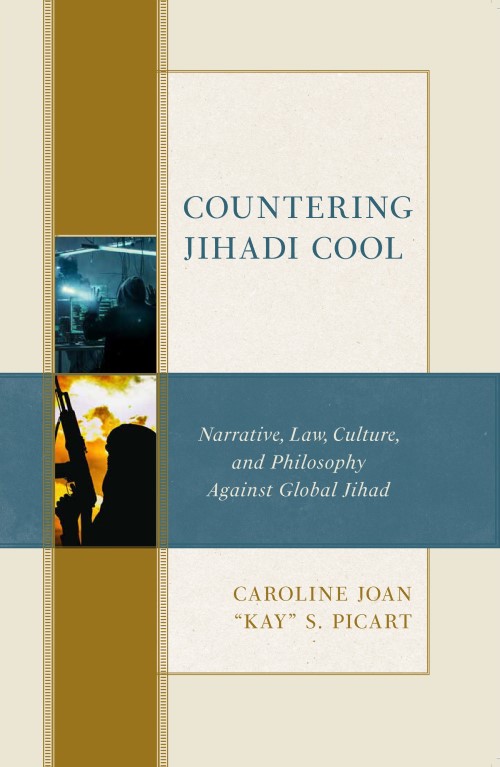
- Dr. Picart's 21st book has been published with the Fairleigh Dickinson University Press. Caroline Joan ("Kay") S. Picart, Countering Jihadi-Cool: Narrative, Law, Culture and Philosophy Against Global Jihad (Fairleigh Dickinson University Press, September 2025).
- Bloomsbury | Cinematic Trailer Video 1 | Cinematic Trailer Video 2 | User Generated Content
- Podcast on Countering Jihadi-Cool: Narrative, Law, Culture and Philosophy Against Global Jihad.
- Direct Link
-
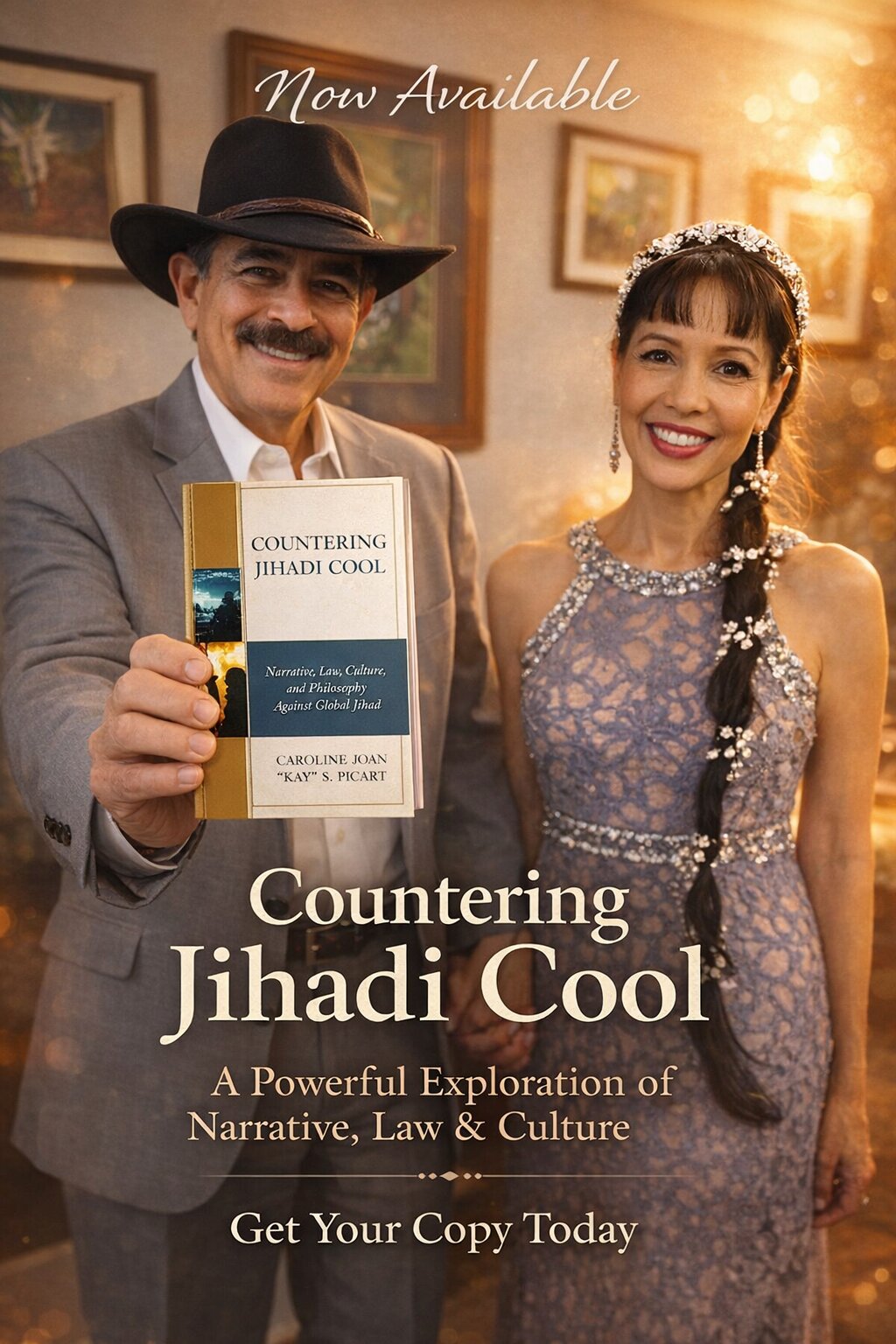
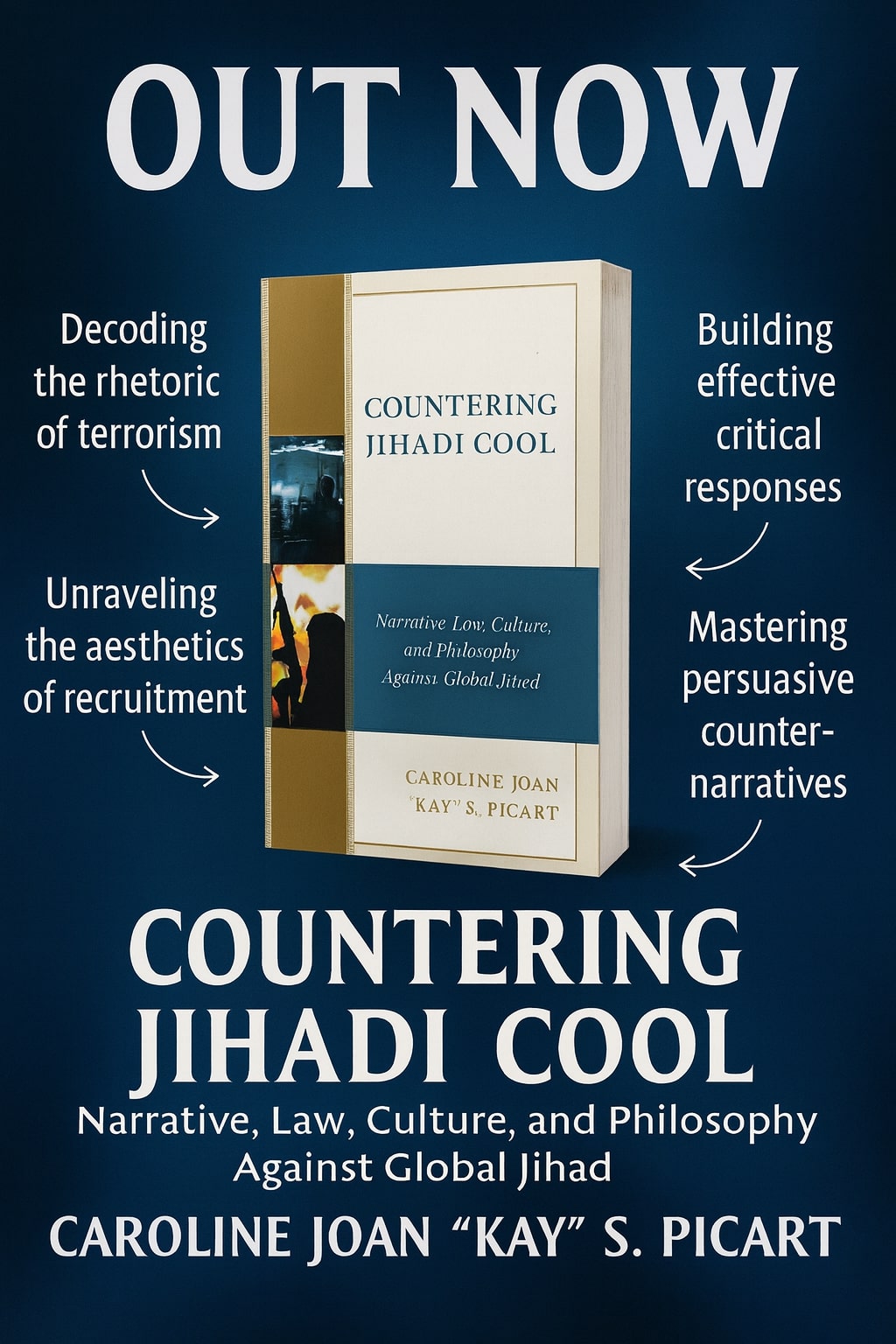
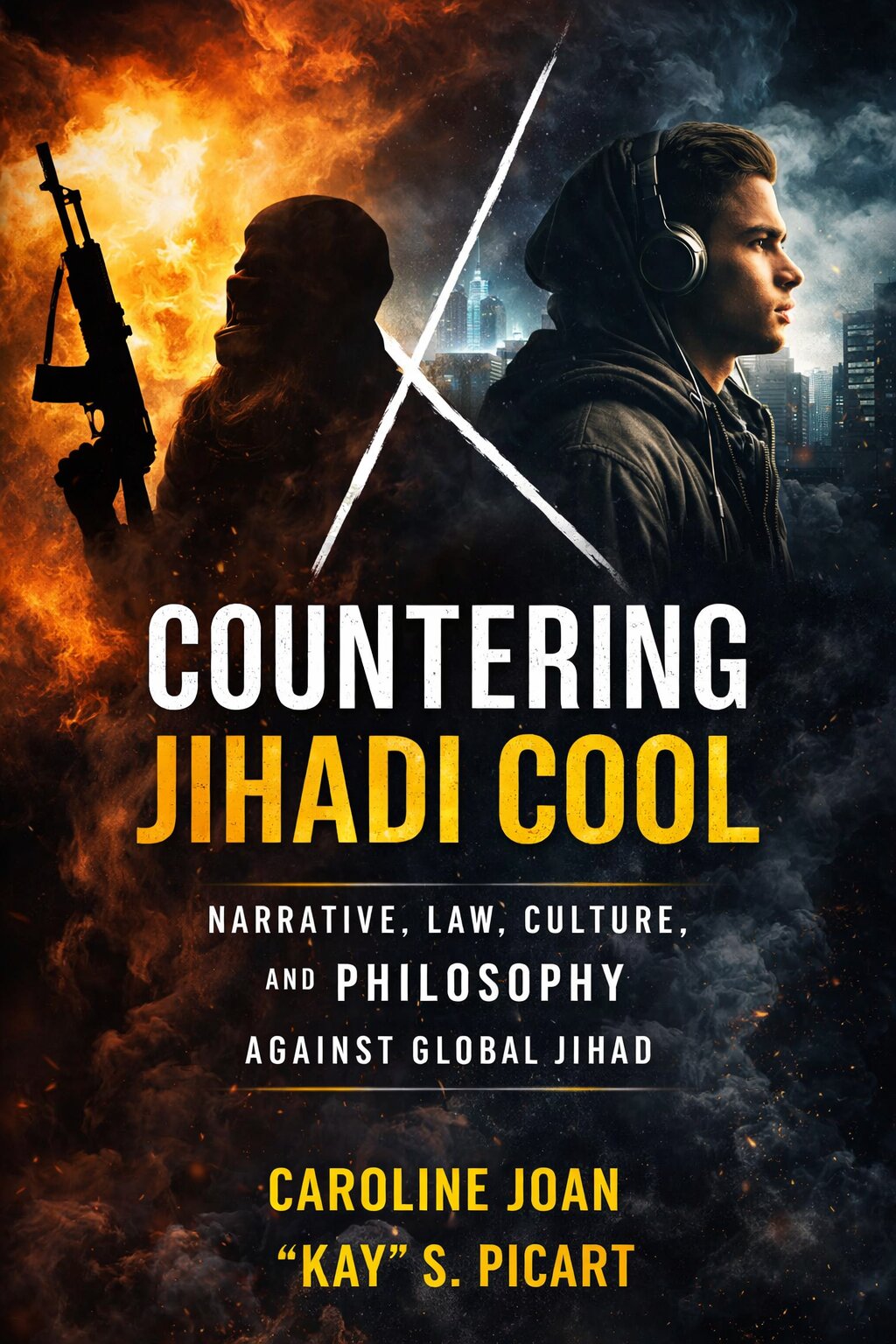
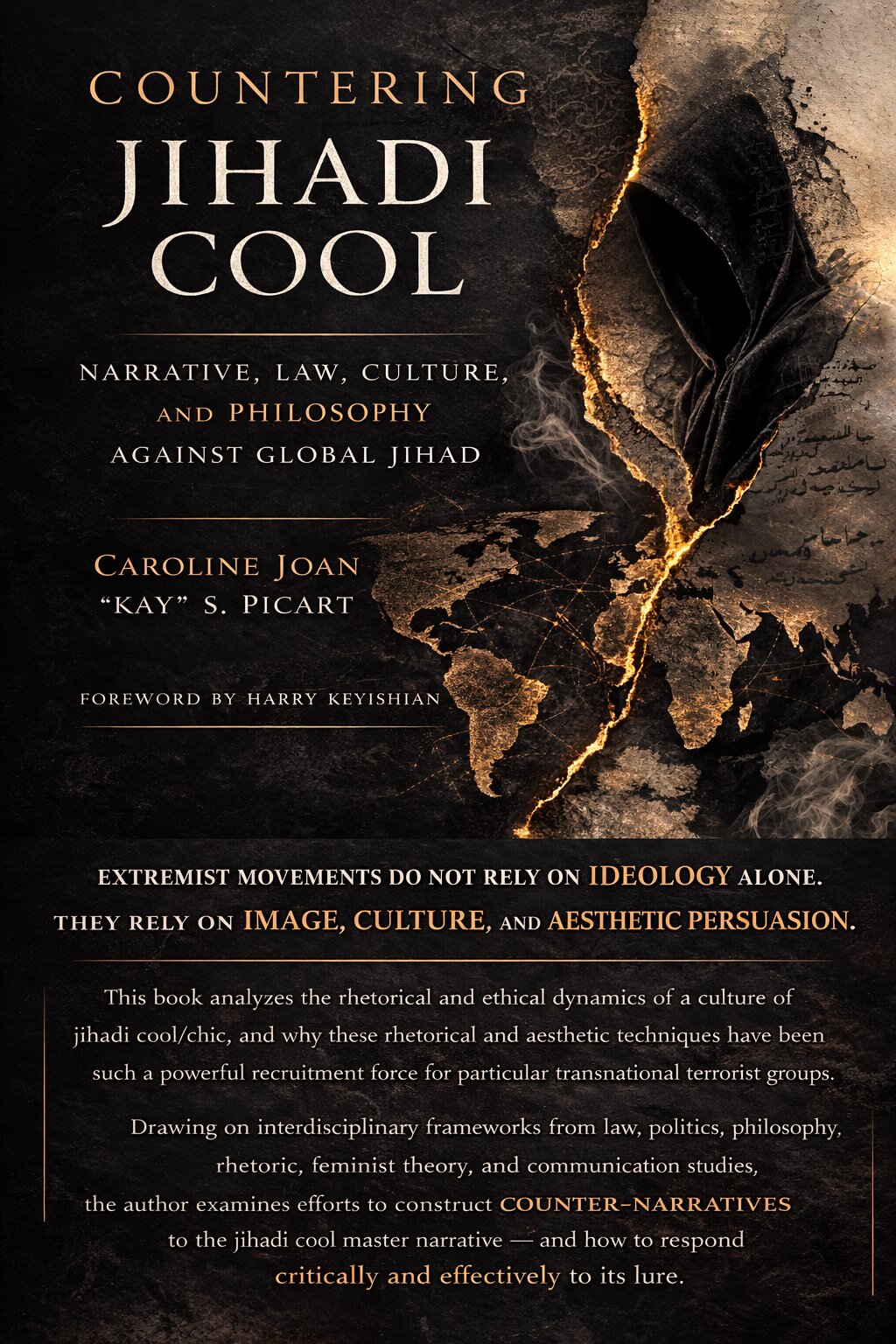
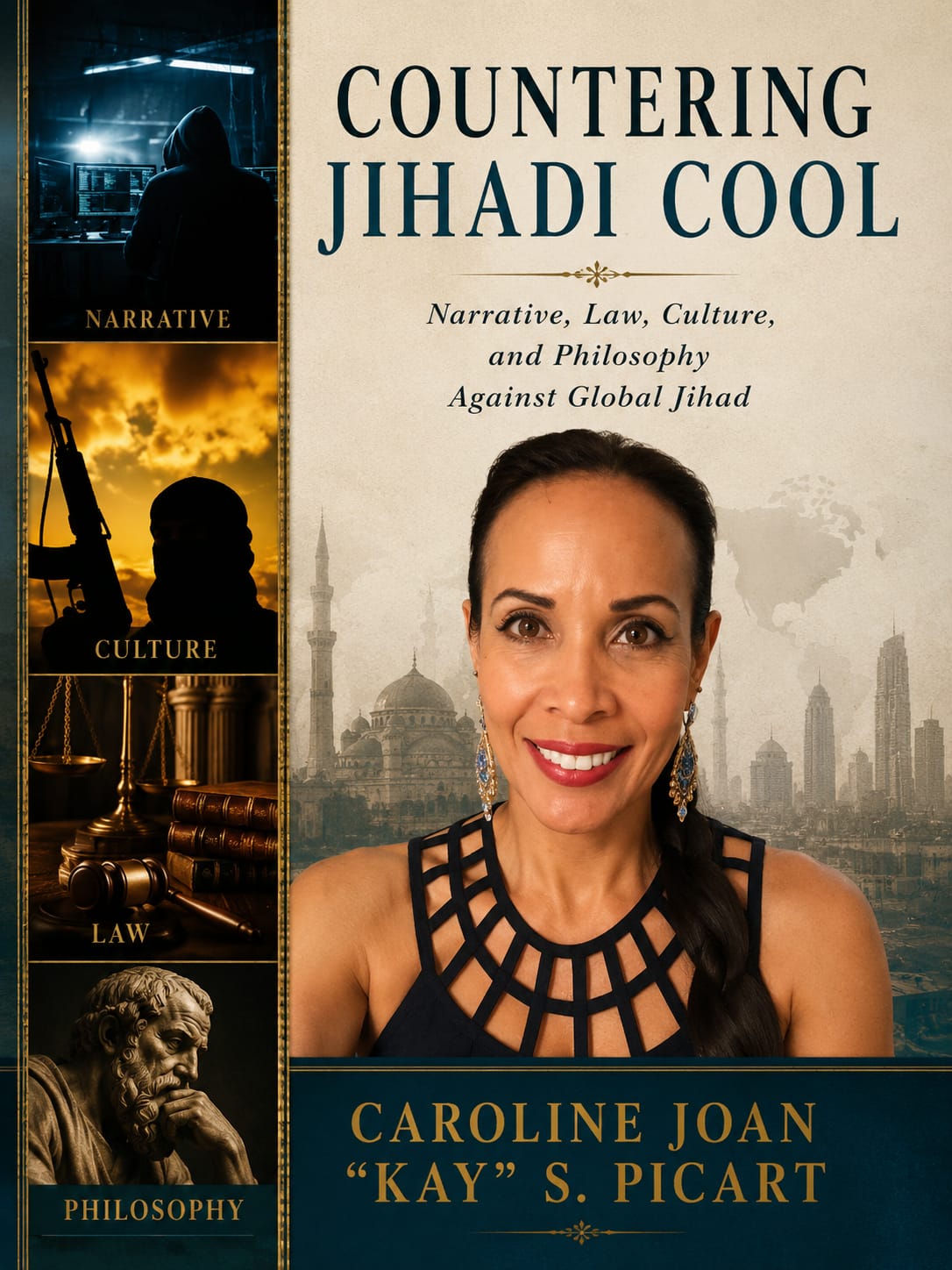
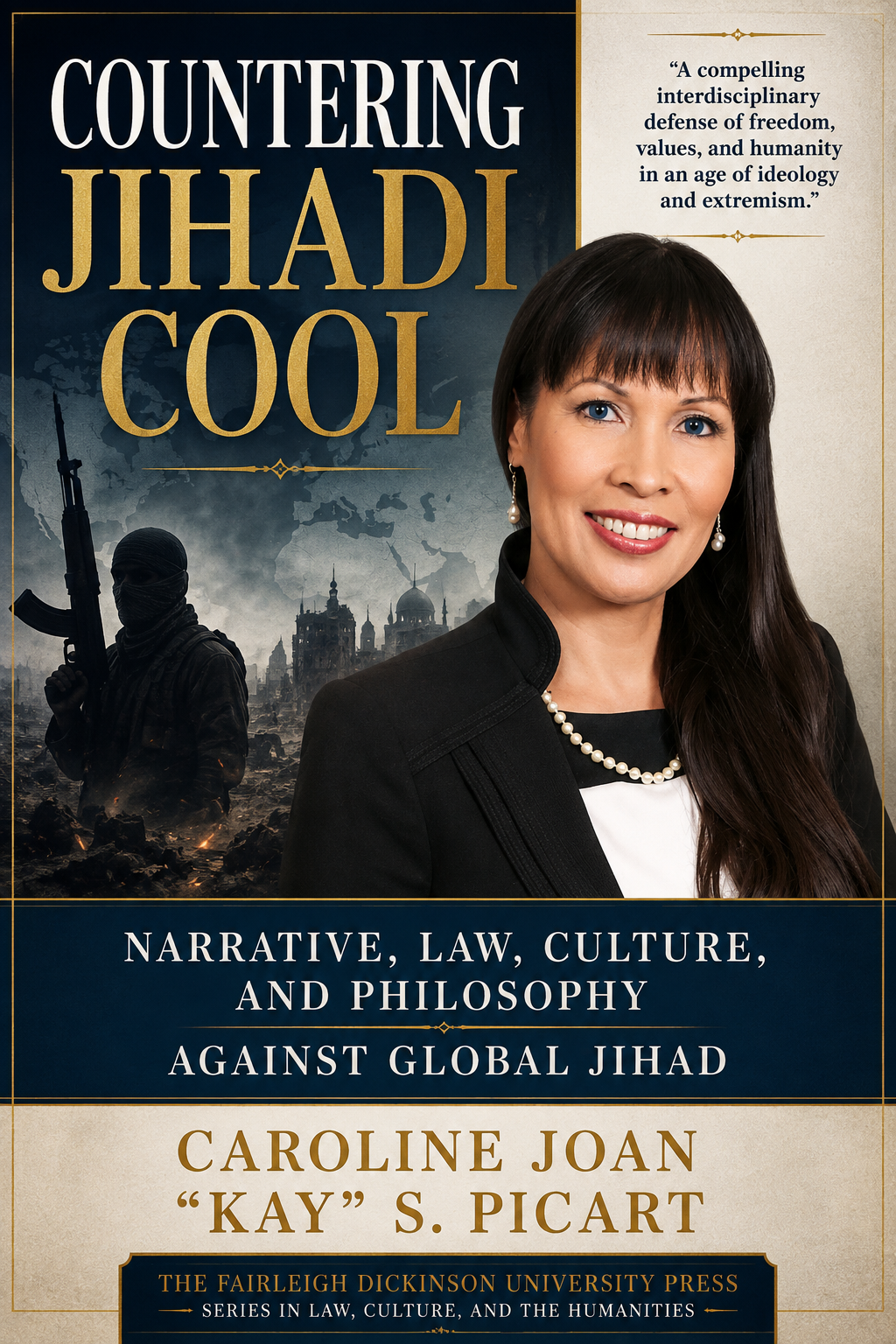
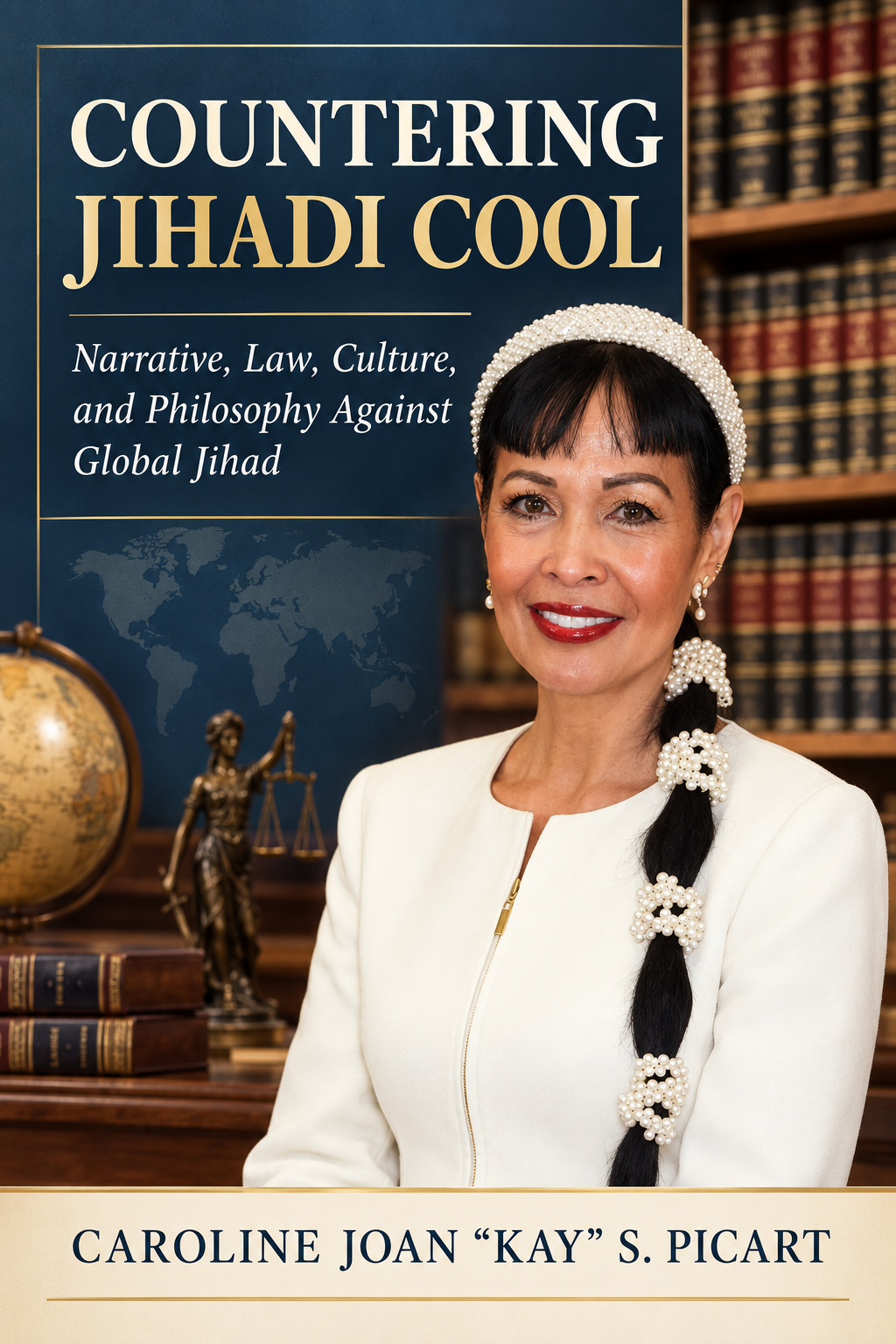
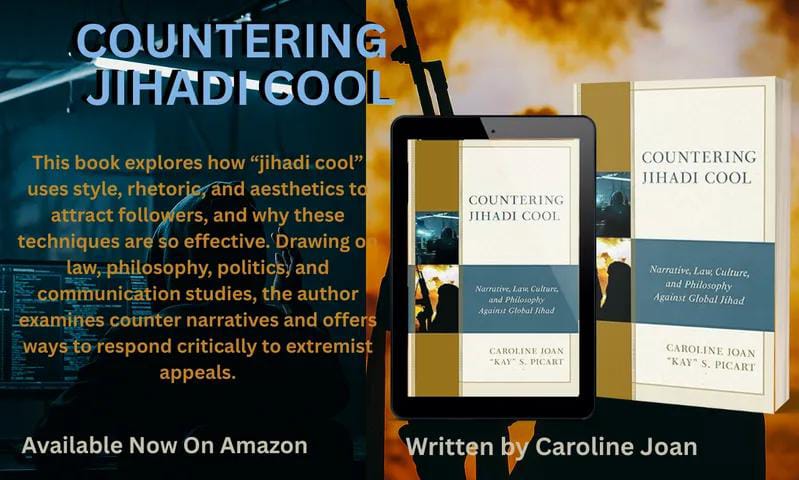
- Countering Jihadi Cool: Narrative, Law, Culture, and Philosophy Against Global Jihad by Caroline Joan Kay S. Picart (Review by Booksforbadal, March 2026)
- Countering Jihadi Cool: Narrative, Law, Culture, and Philosophy Against Global Jihad by Caroline Joan "Kay" S. Picart is a deeply analytical and intellectually rigorous exploration of how extremist groups leverage culture, aesthetics, and narrative to attract global recruits-and, more importantly, how those narratives can be effectively challenged.
At the heart of the book is the concept of "jihadi cool," a term used to describe the stylized, emotionally compelling, and often visually striking propaganda that reframes extremism as something heroic, or rebellious. Rather than focusing solely on ideology or politics, Picart examines how these groups construct identity and belonging through media, symbolism, and storytelling. This shift in focus-from what is being said to how it is being communicated-is one of the book's most compelling contributions.
What makes this work particularly valuable is its interdisciplinary approach. Drawing from law, philosophy, communication studies, feminist theory, and political analysis, Caroline Joan "Kay" S. Picart builds a layered understanding of how recruitment narratives function. She does not treat extremism as a one-dimensional problem but instead reveals it as a complex cultural phenomenon shaped by emotion, perception, and social context.
The book also critically evaluates existing counter-narratives, questioning why many of them fail to resonate. Rather than simply advocating for opposition messaging, Picart highlights the importance of authenticity, cultural awareness, and ethical responsibility in crafting responses. She argues that countering such powerful narratives requires more than facts or condemnation-it demands equally compelling storytelling grounded in truth and human experience.
Another strength of the book is its ethical depth. It raises important questions about freedom of expression, state intervention, and the limits of persuasion. The discussion moves beyond strategy into the realm of philosophy, encouraging readers to consider not just what works, but what is right.
The writing is academic yet accessible for readers familiar with critical theory and cultural studies. While it may feel dense for casual readers, those interested in media, law, global politics, or counter-extremism will find it highly rewarding. The evidence-based approach adds credibility, and the careful analysis ensures that arguments are well-supported rather than speculative.
Ultimately, Countering Jihadi Cool: Narrative, Law, Culture, and Philosophy Against Global Jihad is not just a study of extremist propaganda-it is a broader examination of how narratives shape belief systems and influence behavior in the modern world. It challenges policymakers, scholars, and readers alike to rethink how we respond to persuasive and dangerous ideas.
For anyone interested in understanding the intersection of culture, communication, and global security, this book offers a thoughtful, nuanced, and highly relevant perspective. - Countering Jihadi Cool: Narrative, Law, Culture, and Philosophy Against Global Jihad by Caroline Joan Kay S. Picart (Review by Book by Emma, March 2026)
- Countering Jihadi Cool: Narrative, Law, Culture, and Philosophy Against Global Jihad by Caroline Joan Kay S. Picart is an intellectually rich and deeply considered study that examines how extremist ideologies are not only communicated, but made attractive through carefully crafted cultural narratives. What struck me most while reading was Picart's emphasis on the concept of "jihadi cool" as an aesthetic phenomenon-something that operates beyond mere ideology and instead taps into identity, belonging, and emotional resonance.
The book is structured in a way that gradually builds its argument, beginning with an exploration of how extremist groups construct visually and rhetorically compelling narratives. Picart's analysis of imagery, language, and symbolism is particularly insightful; she demonstrates how these elements mirror aspects of global youth culture, rebellion, and even cinematic storytelling. This approach made me reconsider how propaganda functions-not as crude messaging, but as something far more sophisticated and psychologically engaging.
One of the most impressive aspects of the book is its interdisciplinary nature. By weaving together law, philosophy, feminist theory, and communication studies, Picart creates a layered framework that allows the reader to see the issue from multiple perspectives. I found her critique of existing counter-narratives especially thought-provoking. She convincingly argues that many responses fail because they do not engage with the same emotional and cultural depth that makes these extremist narratives so powerful in the first place.
The later chapters, which focus on potential responses, feel particularly important. Rather than offering simplistic solutions, Picart encourages a more critical and reflective approach-one that acknowledges the complexity of the problem. Her discussion of ethical responsibility, especially in media and legal contexts, adds further weight to her conclusions.
Admittedly, the book can be quite dense at times, particularly when engaging with theoretical concepts. However, this complexity ultimately enhances its credibility and depth. Overall, this is a compelling and thought-provoking work that offers valuable insights into the cultural mechanics of extremism and the challenges of countering it effectively. - Countering Jihadi Cool: Narrative, Law, Culture, and Philosophy Against Global Jihad by Caroline Joan Kay S. Picart (Review by Jithendrajithu, March 2026)
- This book offers a deeply reflective and intellectually engaging study of how extremist ideologies are not only spread through doctrine but carefully packaged through culture and aesthetics. Picart invites readers to look beyond surface-level explanations of radicalization and instead examine the subtle, often overlooked ways in which imagery, storytelling, and identity construction play a crucial role in recruitment. The result is a book that feels both academically rich and urgently relevant.
At the center of the work is the concept of "jihadi cool," which Picart analyzes with precision and nuance. She demonstrates how extremist groups strategically craft narratives that resonate emotionally, particularly with individuals seeking belonging, purpose, or rebellion. What makes this analysis compelling is the way it reframes extremism as not just a political issue, but a cultural phenomenon. By doing so, the book helps readers understand why these narratives can feel so persuasive, even when their underlying ideology is destructive.
Picart's interdisciplinary approach is one of the book's strongest features. Drawing from fields such as law, philosophy, feminist theory, and media studies, she constructs a layered argument that reflects the complexity of the issue at hand. This blending of disciplines allows her to explore not just how these narratives function, but also the ethical implications of responding to them. It's a demanding read at times, but one that rewards careful attention with meaningful insight.
Equally important is the book's critical examination of counter-narratives. Picart does not simply advocate for opposing extremist messaging; she questions why many existing efforts fail to connect with their intended audiences. Her argument that counter-narratives must be as emotionally compelling and culturally aware as the messages they seek to challenge is particularly striking. It shifts the conversation from reactive strategies to more thoughtful and creative forms of engagement. 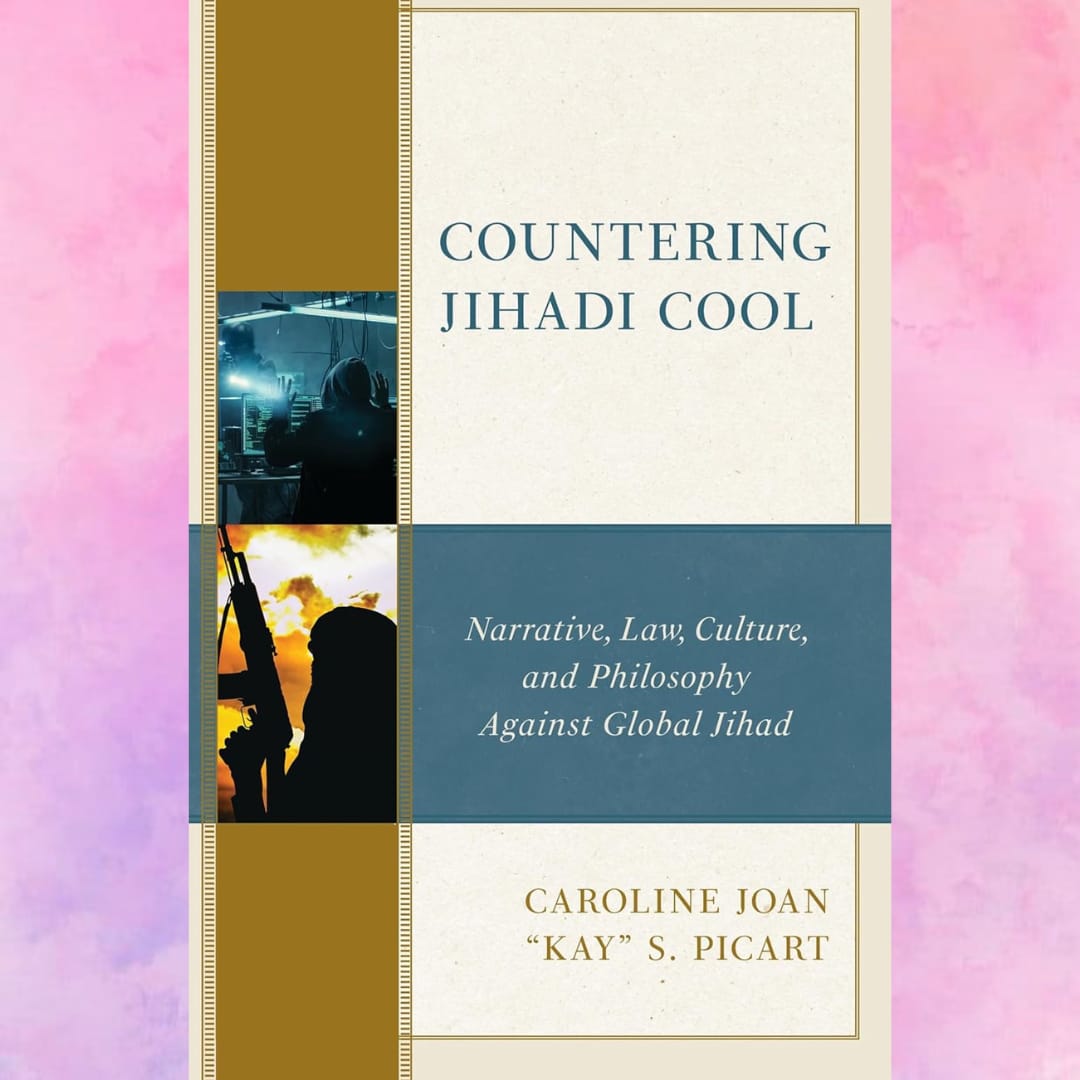
- Countering Jihadi Cool by Caroline Joan "Kay" S. Picart (Review by The Authors Life, March 2026)
- Countering Jihadi Cool by Caroline Joan Kay S. Picart is one of those rare academic works that feels urgently connected to real-world concerns. The concept of aestheticized extremism-how imagery, style, and rhetoric can glamorize violence-is explored with remarkable depth and precision. I found myself underlining passages constantly.
- 💡 What stands out most is the author's commitment to interdisciplinary analysis. By weaving together philosophy, politics, feminist theory, and legal scholarship, Picart offers a nuanced framework for understanding both the problem and potential solutions. She challenges readers to think critically rather than react emotionally.
- 📘 For students, researchers, and engaged global citizens, this book is an essential resource. I highly recommend purchasing it if you're seeking a sophisticated, research-based perspective on countering extremist narratives. It's a powerful and necessary contribution to contemporary discourse.
- Countering Jihadi Cool by Caroline Joan "Kay" S. Picart (Review by The Books Cafe, October 2025)
- Understanding the Allure of Extremism In Countering Jihadi Cool, Caroline Joan "Kay" S. Picart presents a compelling and intellectually rigorous examination of how extremist movements create cultural allure through aesthetics, narrative, and ideology. Rather than concentrating exclusively on political or religious factors, Picart explores the emotional and symbolic aspects of radicalization — illustrating how violence can be reframed as something heroic, fashionable, and even appealing. What distinguishes this work is its profound recognition that the battle against terrorism occurs not only on physical battlegrounds but also within the realm of imagination. Picart reveals how extremist organizations adeptly utilize film, music, memes, and online platforms to foster a sense of belonging and identity — shaping what she terms the "jihadi cool." This type of cultural allure, she contends, transforms acts of destruction into expressions of defiance and purpose for disenchanted youth. By integrating perspectives from law, communication studies, philosophy, and feminist theory, Picart provides a unique interdisciplinary viewpoint. Her methodology connects academic inquiry with social significance, investigating how gendered and ethical narratives affect both recruitment and resistance. She also emphasizes global efforts and innovative strategies that confront extremist narratives through counter-storytelling — empowering communities to engage with empathy, education, and dialogue instead of fear or repression. Picart’s writing is both scholarly and approachable, striking a balance between theoretical depth and emotional insight. She does not simply analyze extremist propaganda; she encourages readers to contemplate the narratives societies construct — regarding power, belonging, and justice. Countering Jihadi Cool is a work that surpasses the confines of conventional counterterrorism literature. It serves as a call to reconsider how culture influences ideology and how understanding, rather than fear, can dismantle hatred.
- Countering Jihadi Cool by Caroline Joan “Kay” S. Picart (Review by Kindle Library, June 2025)
- In Countering Jihadi Cool, Caroline Joan “Kay” S. Picart offers a scholarly, nuanced, and thought-provoking analysis of how extremist organizations utilize aesthetics, narrative, and cultural appeal to influence and recruit individuals on a global scale. Instead of depending on stereotypes or sensationalism, Picart thoroughly investigates how the notion of “jihadi cool” — a combination of media-savvy rhetoric, symbolism, and charm — has been weaponized to draw in followers, particularly among the youth. What distinguishes this work is its interdisciplinary methodology. By integrating insights from law, communication studies, philosophy, and feminist theory, Picart delivers a multifaceted examination of how these narratives are formed and perpetuated. More significantly, she investigates the initiatives aimed at challenging and dismantling these narratives — through counter-storytelling, legal frameworks, and ethical critique. This book is not centered on fear; rather, it focuses on understanding, strategy, and hope. Picart urges readers to critically evaluate the media we engage with, the cultural messages we absorb, and the influence of storytelling — both for harm and for healing. Articulated with clarity and depth, Countering Jihadi Cool serves as a vital resource for academics, educators, policymakers, and anyone interested in gaining a deeper understanding of the cultural aspects of radicalization and how to respond in a constructive manner. It is a call to combat harmful ideologies not merely through force, but through meaningful, values-driven narratives that resonate with dignity, justice, and human connection.
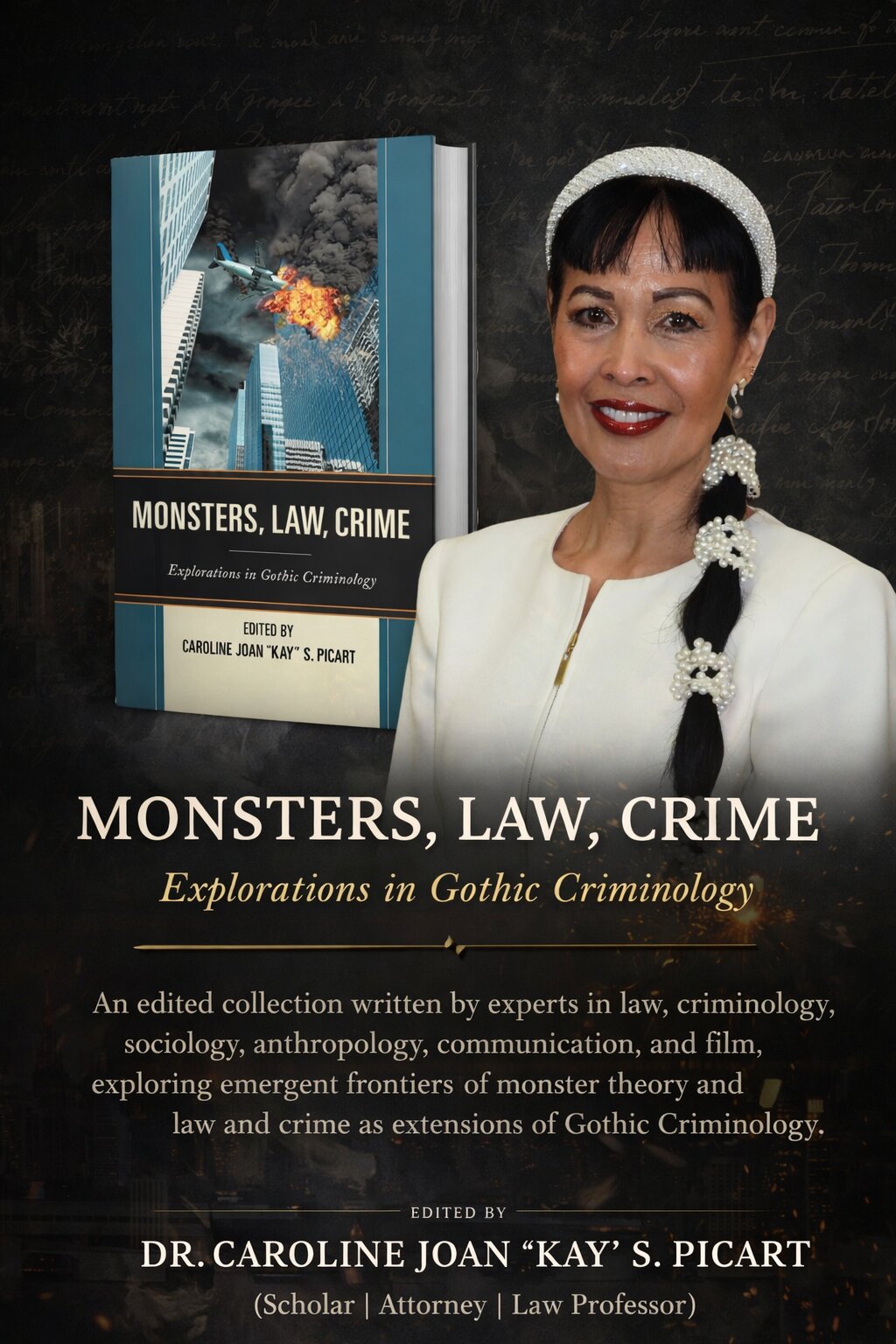
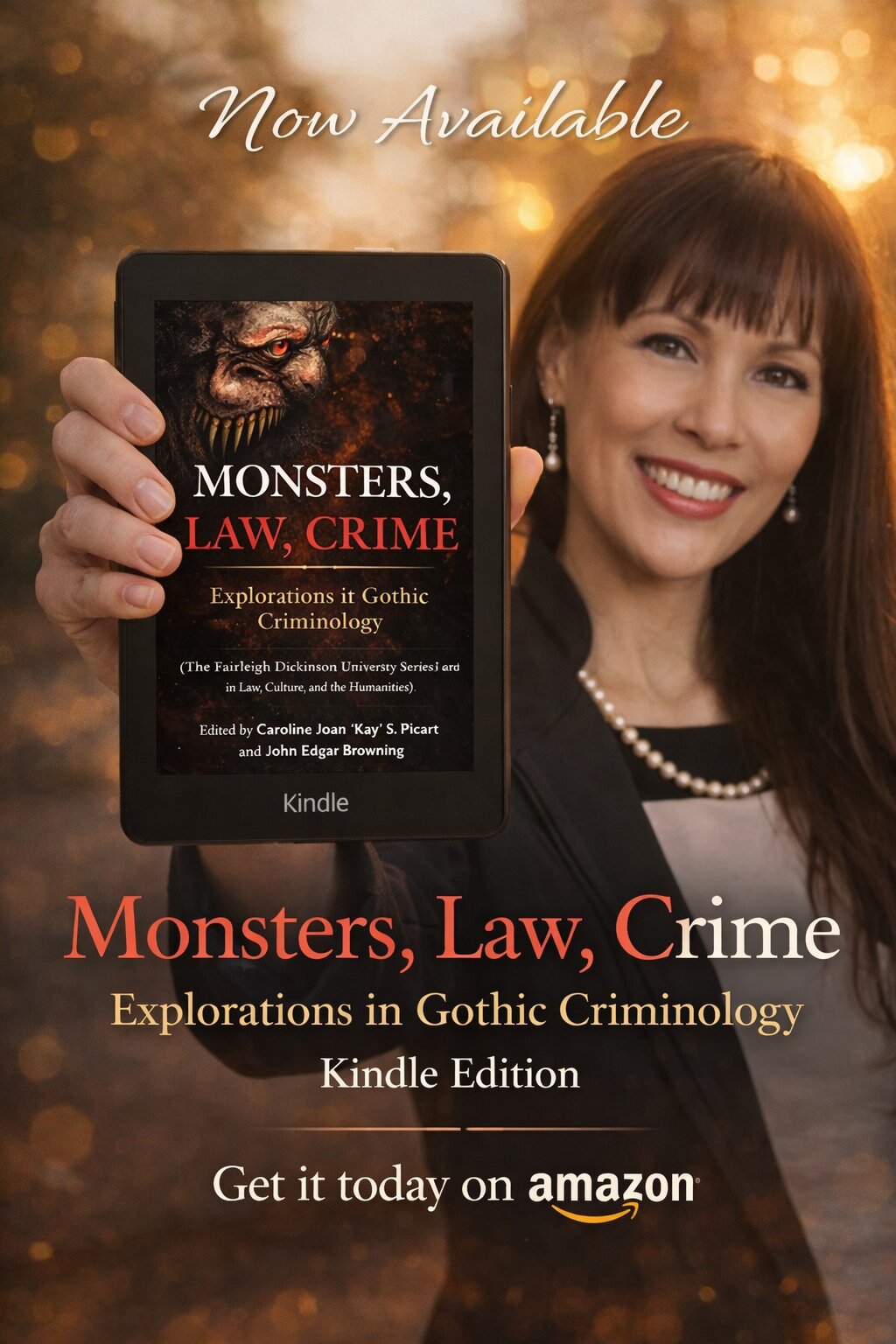
- Dr. Picart’s 20th book was published by the Fairleigh Dickinson University Press in December 2020. Caroline Joan “Kay” S. Picart, ed., Monsters, Law, Crime: Explorations in Gothic Criminology (Fairleigh Dickinson University Press, December 2020).
Book Details | Reviews | Cinematic Trailer Video 1 | Cinematic Trailer Video 2 | Cinematic Trailer Video 3 | Cinematic Trailer Video 4 | User Generated Content
Caroline Joan ‘Kay’ S. Picart, “The Journey of Analyzing Terror, On and Offscreen: on Monsters, Law, Crime,” [an interview] Film International, December 21, 2020.
Link to Interview
-
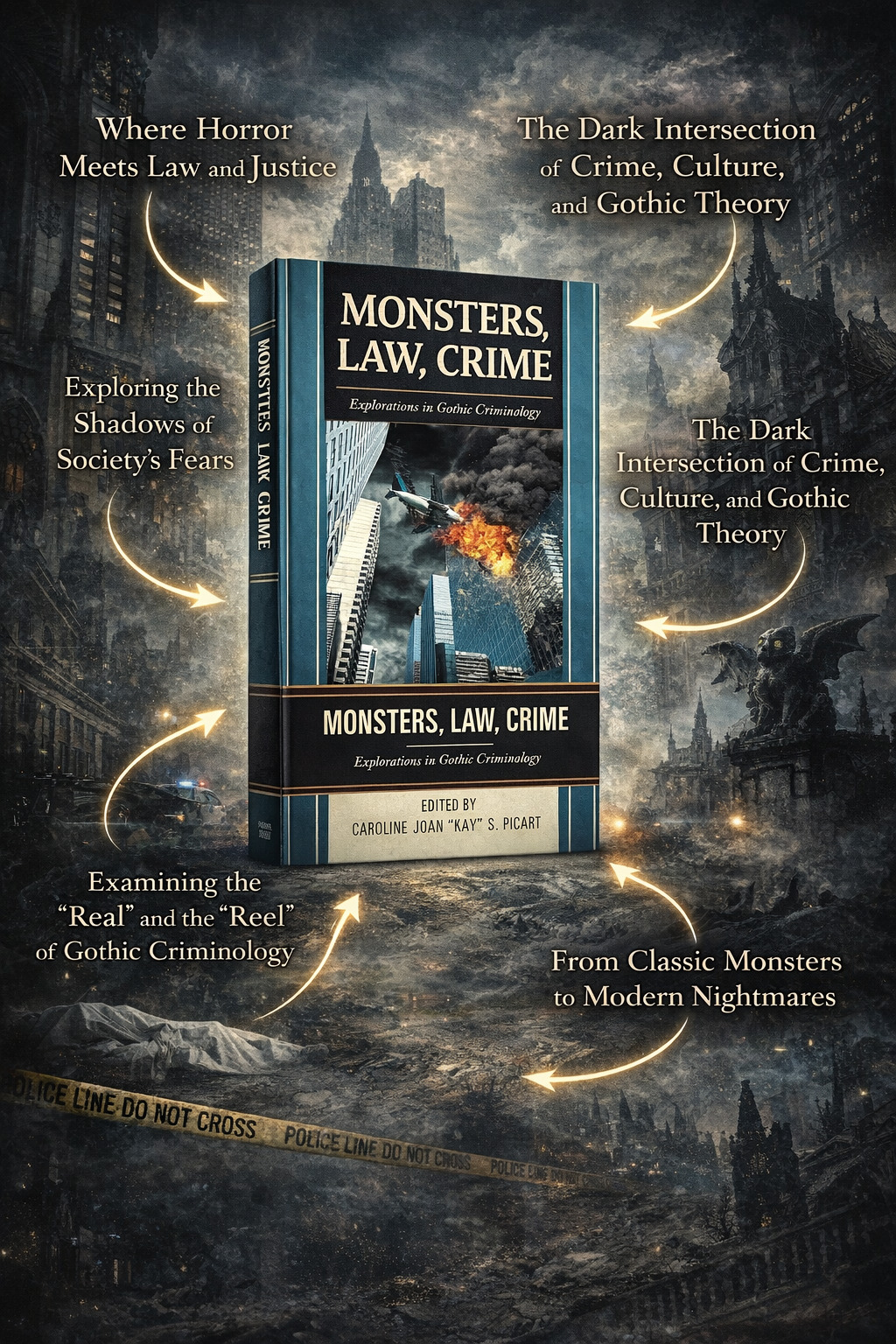
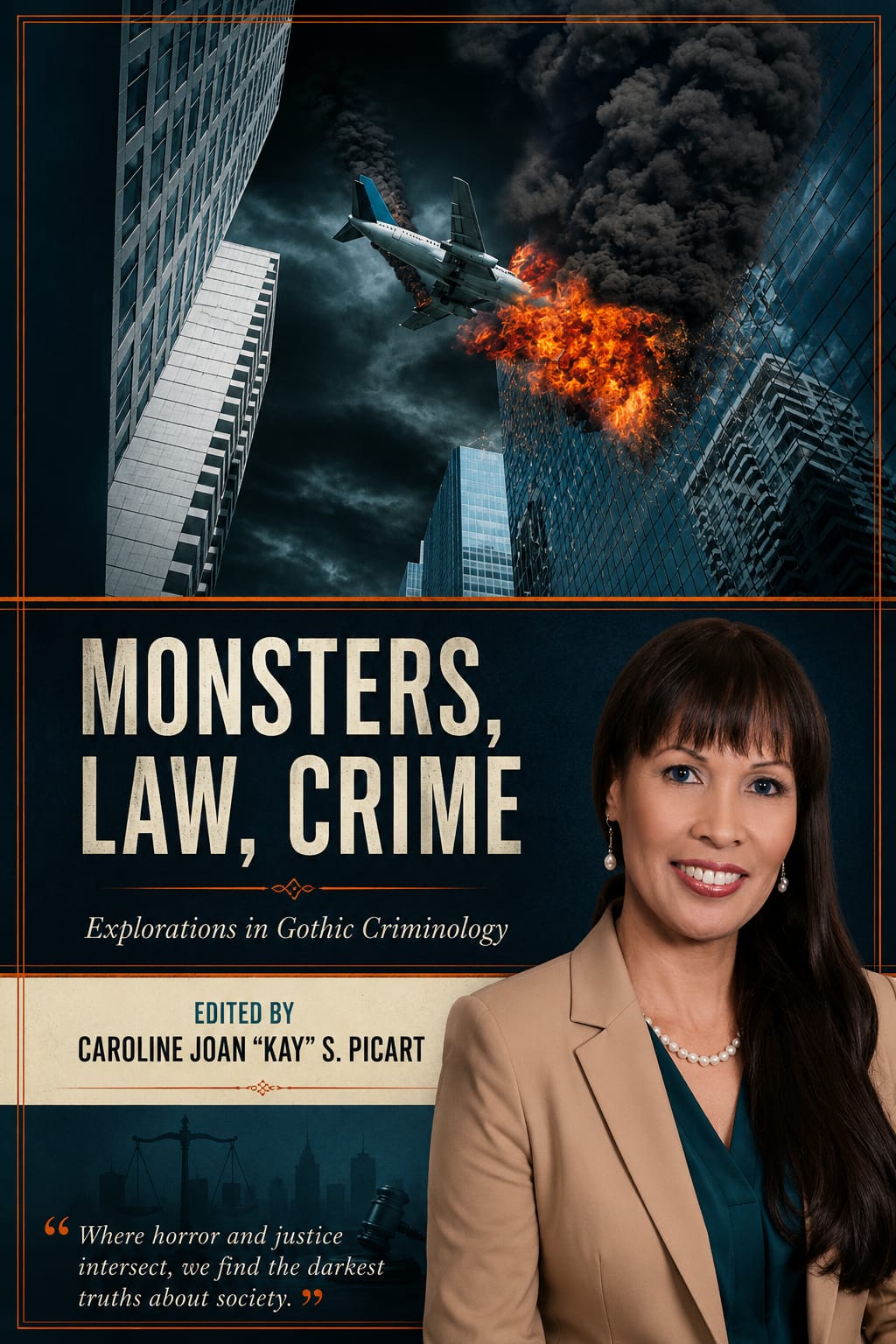
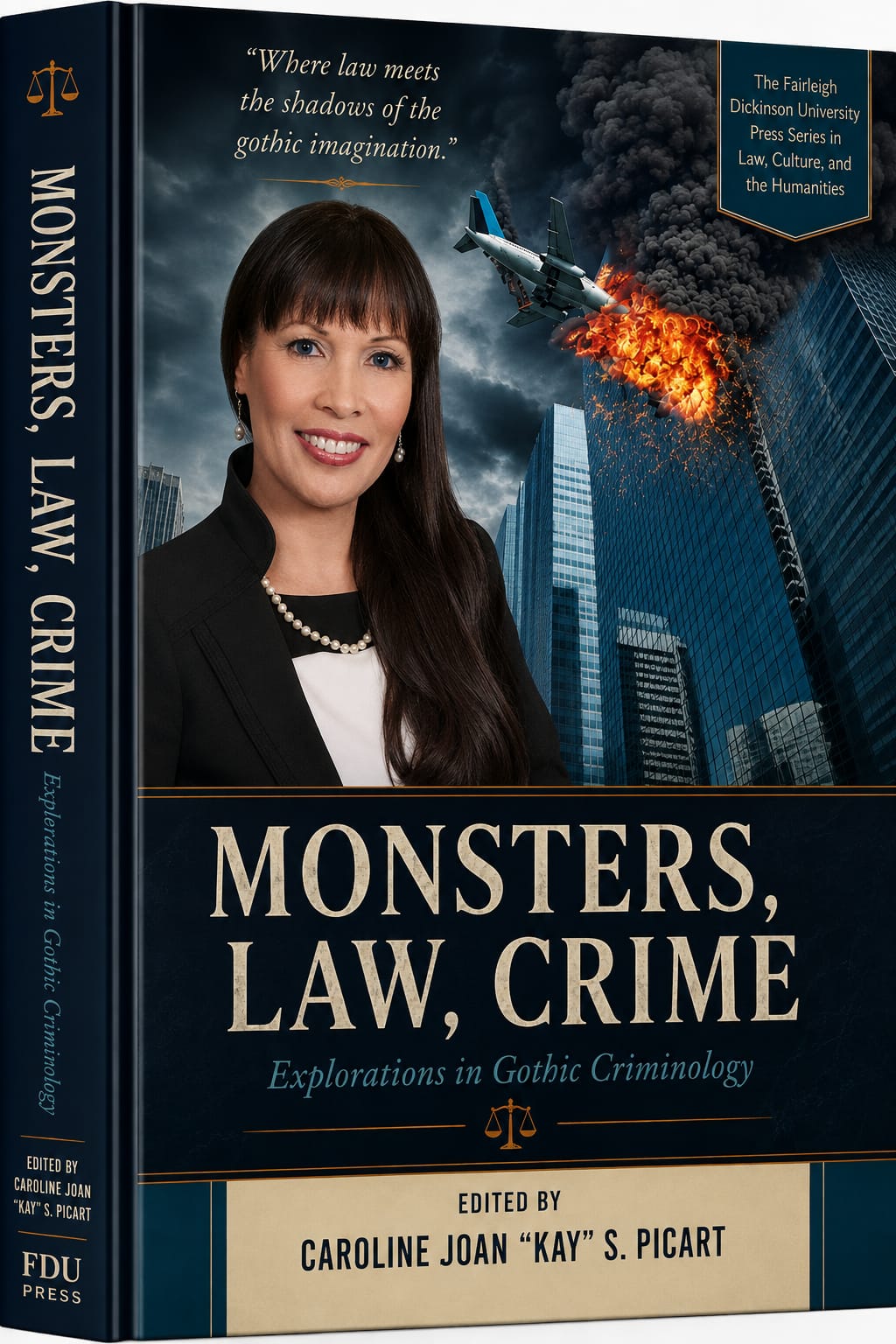
- Monsters, Law, Crime: Explorations in Gothic Criminology, edited by Caroline Joan Kay S. Picart (Review by Books by Emma, March 2026)
- Monsters, Law, Crime: Explorations in Gothic Criminology, edited by Caroline Joan “Kay” S. Picart and her collaborators, is a strikingly original and intellectually ambitious collection that challenges conventional ways of thinking about crime, law, and society. Drawing from a wide range of disciplines—including criminology, sociology, anthropology, law, and film studies—the book constructs a compelling framework in which the figure of the “monster” becomes central to understanding how societies define deviance and justice.
One of the most engaging aspects of this collection is its exploration of “monster-talk” as both metaphor and method. The essays convincingly argue that the language and imagery of monstrosity are not merely confined to Gothic fiction or popular culture, but are deeply embedded in legal discourse and public perceptions of crime. Whether examining media portrayals of criminals or legal narratives that dehumanise offenders, the contributors demonstrate how the label of “monster” serves to simplify complex social realities, often obscuring structural inequalities and moral ambiguities.
Picart’s foundational concept of Gothic Criminology—developed alongside Cecil Greek—runs as a unifying thread throughout the volume. The interplay between the “real” and the “reel” is particularly thought-provoking, as the book highlights how cinematic and literary representations shape, and are shaped by, legal and criminological practices. Several chapters stand out for their nuanced readings of film and media, offering fresh insights into how fear, spectacle, and moral panic influence both public opinion and policy-making.
What makes this collection particularly effective is its balance between theoretical depth and accessible analysis. While some essays are undeniably dense, they reward careful reading with rich, layered interpretations. The interdisciplinary nature of the work ensures that each chapter brings a distinct perspective, yet together they form a coherent and persuasive argument for rethinking the boundaries between culture, crime, and law.
Overall, Monsters, Law, Crime is a thought-provoking and timely contribution to contemporary legal and criminological research scholarship. It will appeal especially to readers interested in critical theory and the cultural dimensions of justice, leaving a lasting impression with its bold reimagining of what it means to confront the “monstrous” in modern society. - Monsters, Law, Crime: Explorations in Gothic Criminology, edited by Caroline Joan Kay S. Picart (Review by Booksforbadal, March 2026)
- Monsters, Law, Crime: Explorations in Gothic Criminology, edited by Caroline Joan Kay S. Picart, is a bold and intellectually stimulating collection that pushes the boundaries of traditional criminological inquiry. Situated at the crossroads of law, culture, and interdisciplinary scholarship, this volume offers a fascinating exploration of how the concept of the “monster” functions within legal, social, and cultural discourses.
At the core of the book is the theoretical framework of Gothic Criminology, originally developed by Picart and sociologist Cecil Greek. This approach challenges conventional understandings of crime and deviance by examining the symbolic and narrative dimensions through which society constructs the idea of the “criminal.” Rather than viewing crime solely through empirical or legal lenses, Gothic Criminology interrogates how fear, imagination, and cultural storytelling shape perceptions of justice, danger, and otherness.
One of the most compelling aspects of this edited collection is its interdisciplinary richness. Featuring essays from scholars across law, criminology, sociology, anthropology, communication, and film studies, the book brings together diverse perspectives that collectively deepen the analysis. Each contribution engages with the central theme of “monster-talk”—the language and imagery used to depict individuals or groups as threatening, deviant, or beyond the bounds of normal society. These representations, as the book reveals, are not merely fictional or symbolic; they have real-world implications, influencing public opinion, legal frameworks, and policy decisions.
The volume’s exploration of the relationship between the “real” and the “reel” is particularly insightful. By analyzing how Gothic metaphors and narratives circulate between popular culture and legal discourse, the book highlights the porous boundaries between fiction and reality. Monsters in films, literature, and media often serve as stand-ins for societal fears—fears that can become embedded in legal practices and institutional responses to crime. This dynamic underscores the power of narrative in shaping not only cultural imagination but also tangible systems of justice.
Another strength of the collection lies in its ability to update and expand upon earlier discussions of monster theory. The essays engage with contemporary issues, demonstrating how Gothic Criminology remains relevant in understanding modern forms of social anxiety and control. Whether examining marginalized groups, controversial legal cases, or media portrayals of crime, the contributors consistently reveal how the label of “monster” is applied, contested, and redefined across different contexts.
Stylistically, the book is dense and scholarly, reflecting its academic orientation. The arguments are complex and often theoretical, requiring careful reading and engagement. However, for readers with an interest in critical theory and interdisciplinary studies, the intellectual rewards are significant. The collection not only introduces innovative ways of thinking about crime and law but also encourages readers to question the assumptions that underpin these fields.
In conclusion, Monsters, Law, Crime is a thought-provoking and original contribution to contemporary scholarship. By bridging the gap between cultural theory and legal analysis, it offers a unique perspective on how societies construct and respond to deviance. For academics, researchers, and readers interested in the intersections of law, culture, and representation, this book provides a compelling and insightful exploration of the “monstrous” dimensions of justice. - Monsters, Law, Crime: Explorations in Gothic Criminology, edited by Caroline Joan Kay S. Picart (Review by Jithendrajithu, March 2026)
- This book is an ambitious and thought-provoking collection that challenges readers to rethink the foundations of criminology. Instead of relying solely on legal frameworks or empirical data, the book delves into the cultural and symbolic dimensions of crime. It argues that our understanding of criminality is deeply shaped by narrative, fear, and representation—an approach that feels both innovative and intellectually daring.
Central to the collection is the concept of Gothic Criminology, originally developed by Picart and Cecil Greek. This framework reframes crime as something more than a social or legal violation; it becomes a cultural construct infused with meaning. The idea of the “monster” is used as a lens to examine how societies label certain individuals or groups as dangerous or deviant. This perspective reveals how fear and imagination play a significant role in shaping legal responses, often blurring the line between rational judgment and emotional reaction.
What makes this volume particularly engaging is its interdisciplinary nature. The essays draw from a wide range of fields, including sociology, anthropology, film studies, and communication, creating a layered and multifaceted discussion. Each chapter contributes a unique viewpoint, yet they all remain connected through the central theme of “monster-talk.” This diversity not only enriches the analysis but also demonstrates how pervasive these narratives are across different areas of study and public discourse.
Another standout aspect is the book’s exploration of the relationship between popular culture and legal systems. By examining how Gothic imagery and storytelling circulate through films, media, and literature, the collection highlights how these representations influence real-world perceptions of crime. - Monsters, Law, Crime: Explorations in Gothic Criminology by Caroline Joan “Kay” S. Picart (Review by The Books Cafe, October 2025)
- Where Horror Meets Justice In Monsters, Law, Crime: Explorations in Gothic Criminology, Caroline Joan “Kay” S. Picart presents a bold and intellectually audacious anthology that challenges traditional perspectives on law, crime, and cultural identity. Building upon her groundbreaking work in Gothic Criminology, initially developed with sociologist Cecil Greek, Picart positions the “monster” not merely as a figure of horror, but as a symbolic framework through which societies delineate deviance, morality, and order. This collection compiles contributions from esteemed scholars across various fields—law, sociology, anthropology, film, and communication—who together unravel the ways in which monstrous figures infiltrate both popular imagination and institutional justice. Through essays that connect fiction with reality, Monsters, Law, Crime illustrates how the imagery of monstrosity impacts real-world policies, courtroom discourse, and public perceptions of criminality. What distinguishes this anthology as truly innovative is its ability to connect cultural myth-making with the mechanisms of justice. From cinematic villains and serial killers to political scapegoats and media-driven fears, each essay uncovers how “monster-making” acts as a form of social control—establishing boundaries between the acceptable and the condemned. Picart’s editorial acumen guarantees that these explorations remain both scholarly and approachable, intertwining horror aesthetics with critical legal analysis. Instead of viewing monsters as mere metaphors, the volume encourages readers to perceive them as reflections of societal anxieties—manifestations of the collective fears that shape our legal and moral frameworks. It urges us to consider not only who we designate as monsters, but also why these labels endure and how they serve to uphold hierarchies of power and exclusion.
- Monsters, Law, Crime by Caroline Joan Kay S. Picart (Review by Kindle Library, July 2025)
- Monsters, Law, Crime: Explorations in Gothic Criminology is an intriguing anthology that courageously reinterprets our understanding of crime, justice, and cultural narratives. Edited by Caroline Joan “Kay” S. Picart, a trailblazer in both legal and academic fields, this book connects monster theory with modern legal and criminological research in a groundbreaking manner. This collection features essays from distinguished scholars in law, sociology, anthropology, communication, and film studies, investigating how the concept of the “monster” infiltrates both popular culture and legal discussions. It builds upon the foundational contributions of Picart and sociologist Cecil Greek, who initially formulated the idea of Gothic Criminology to examine the indistinct boundaries between reality and cinematic representation in relation to crime. What distinguishes this book is its bold examination of how societies construct “monsters” to represent moral panic, fear, and deviance—and how these entities influence actual policies, justice systems, and societal standards. With themes encompassing horror, law, and societal perception, Monsters, Law, Crime presents a unique intellectual perspective that encourages readers to reflect not only on how we characterize monsters—but also on the reasons behind these definitions. An essential read for enthusiasts of criminology, gothic theory, and critical legal studies.
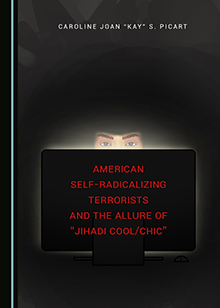
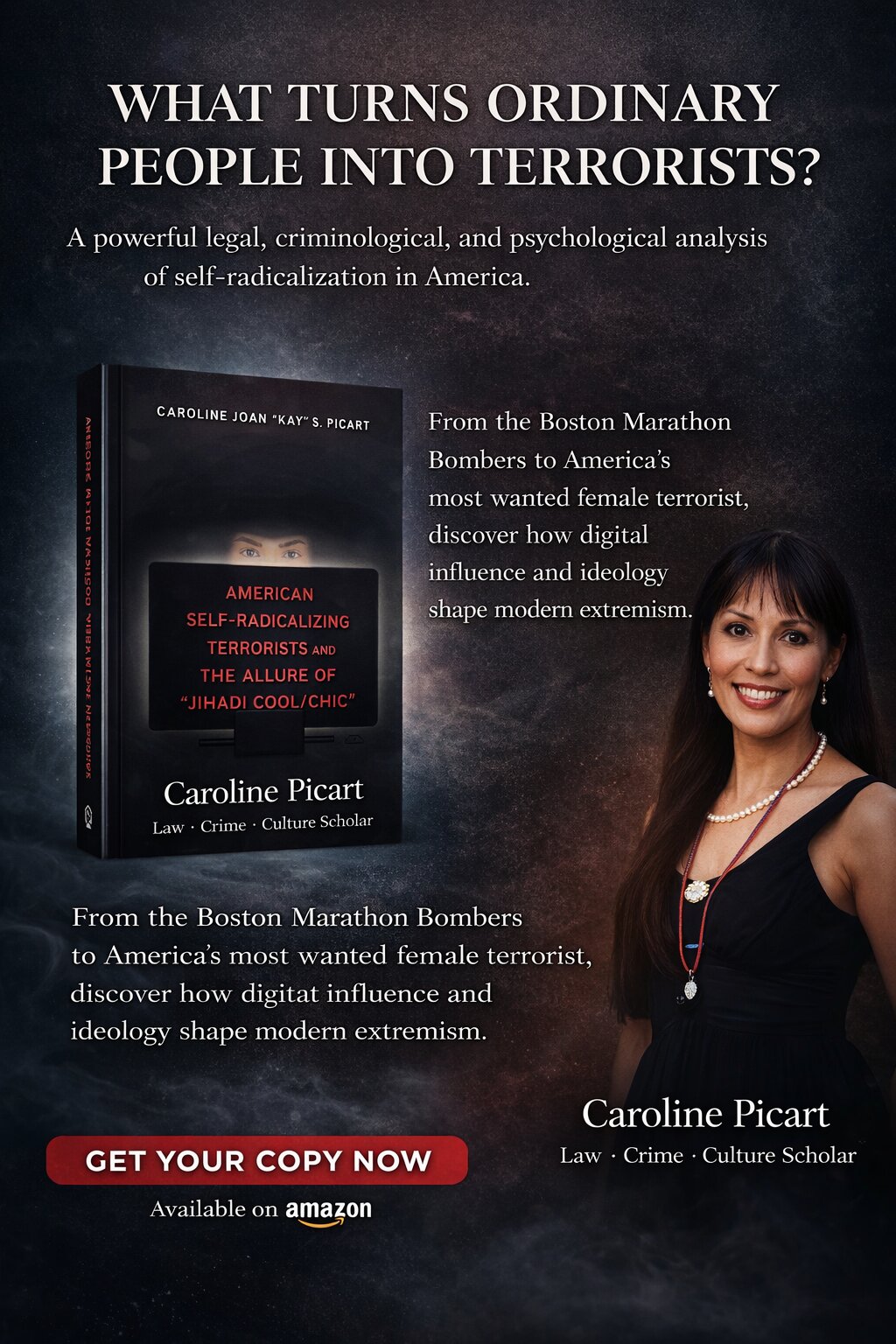
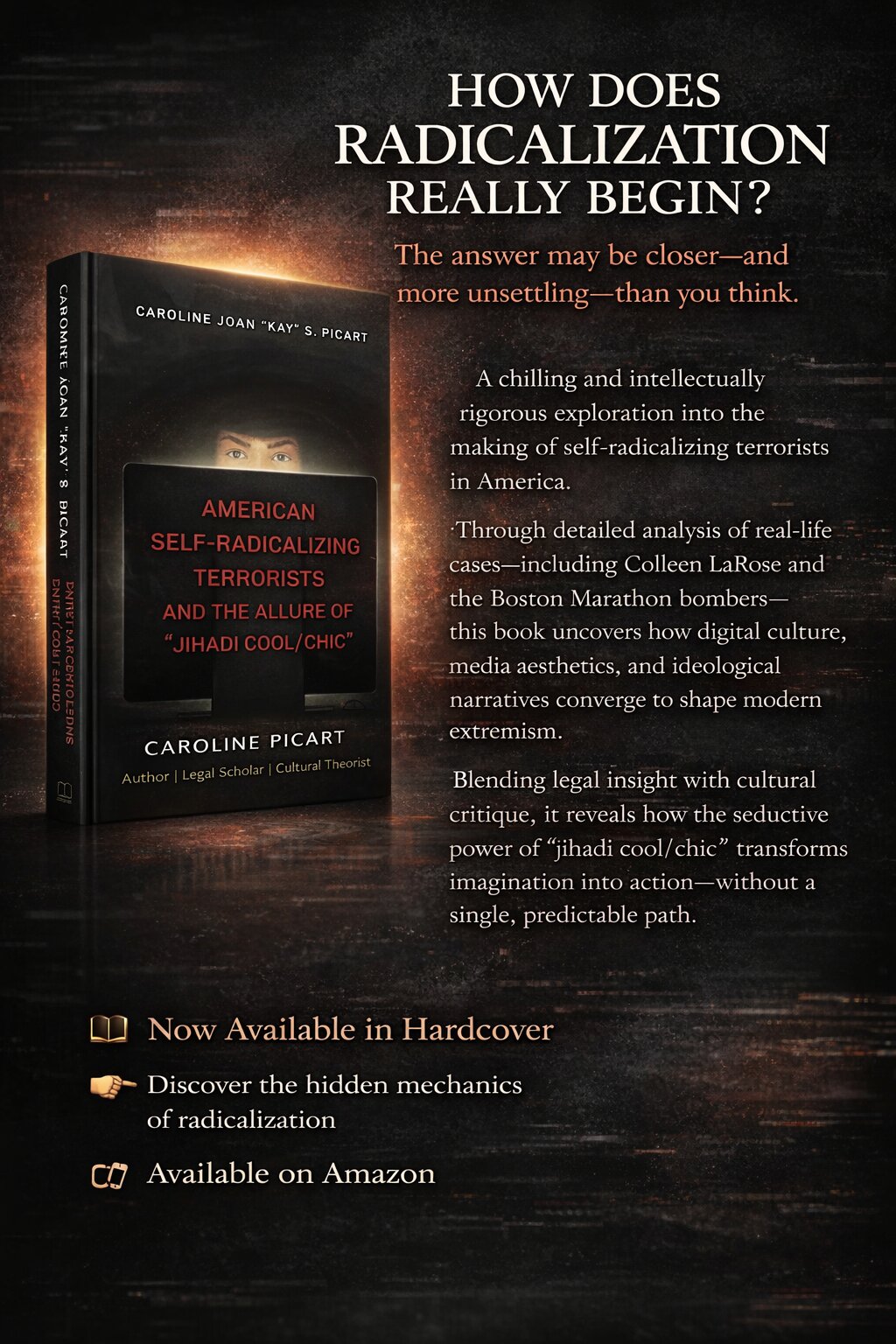
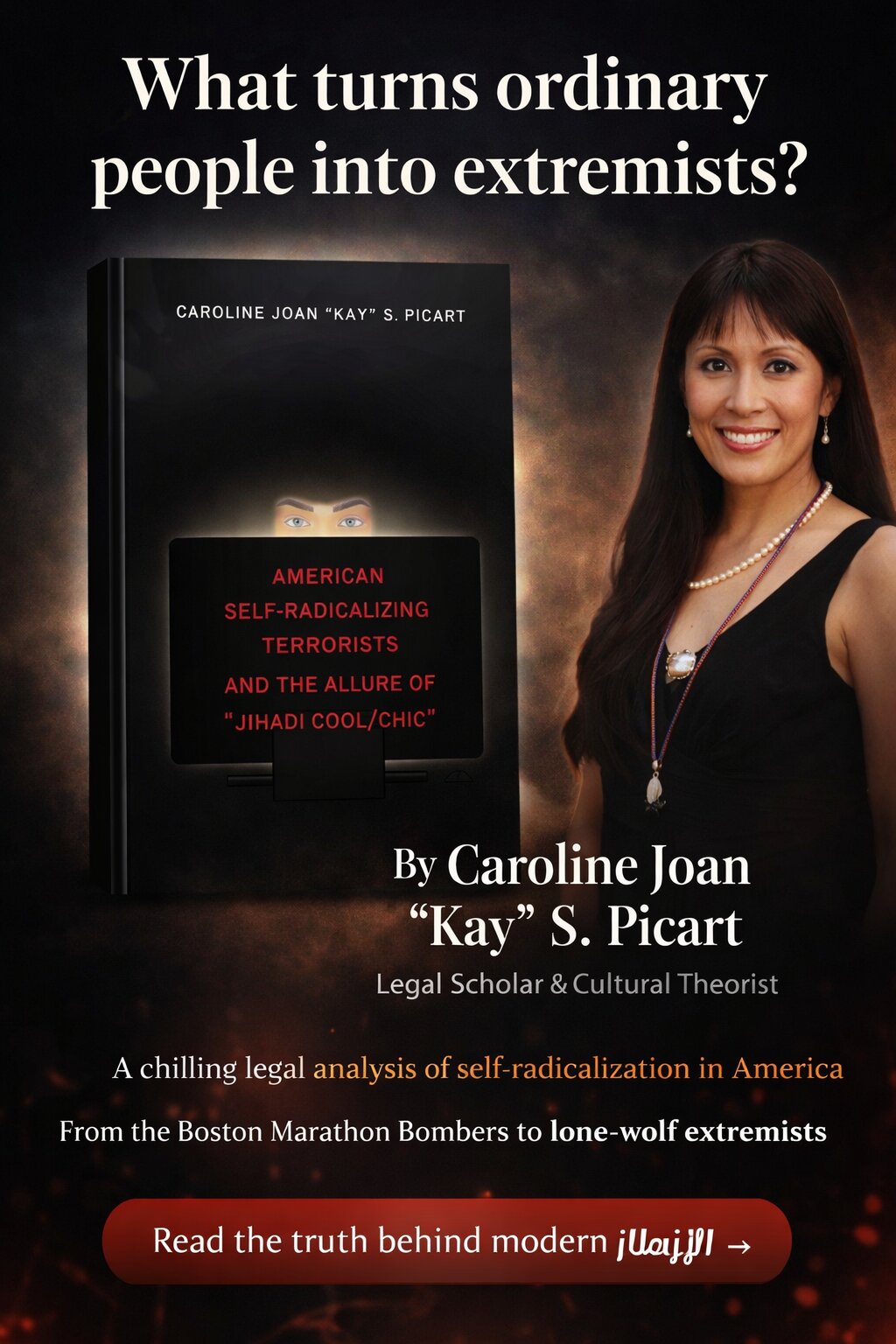
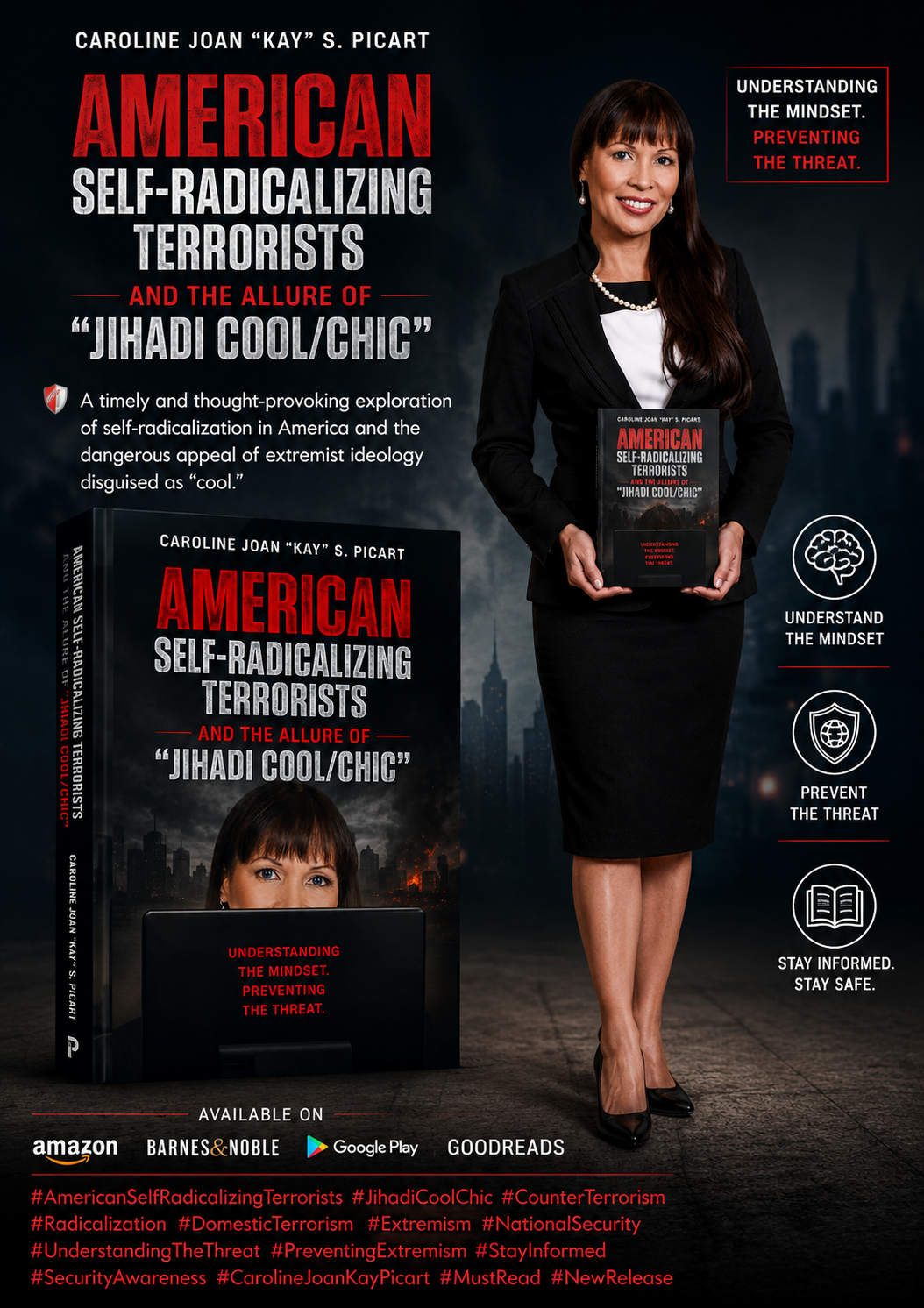
- Dr. Picart’s 19th book was published by Cambridge Scholars Press. Caroline Joan "Kay" S. Picart, American Self-Activating Terrorists and the Allure of Jihadi Cool/Chic, (Cambridge Scholars Publishing, March 2017).
Book Details | Reviews | Video | Cinematic Trailer Video 1 | Cinematic Trailer Video 2 | User Generated Content
Donald D. Denton (2020) American Self-Radicalizing Terrorists and the Allure of “Jihadi Cool/Chic”, Terrorism and Political Violence, 32:2, 427-429, DOI: 10.1080/09546553.2019.1710958
Link to Review
-
- American Self-Radicalizing Terrorists and the Allure of “Jihadi Cool/Chic” by Caroline Joan “Kay” S. Picart (Review by Jithendrajithu, March 2026)
- American Self-Radicalizing Terrorists and the Allure of Jihadi Cool/Chic is a striking and intellectually layered work that challenges conventional understandings of terrorism by shifting the focus inward—toward culture, media, and identity formation within American society itself. Written by Caroline Joan S. Picart, the book refuses to treat radicalization as something distant or purely ideological. Instead, it frames it as a complex, deeply human process shaped by storytelling, digital environments, and the search for belonging. From the very first chapters, the tone is analytical yet unsettling, inviting readers to confront how close to home these transformations can occur.
A major strength of the book lies in its narrative depth, particularly through its exploration of real-life figures like Colleen LaRose and the brothers Tamerlan Tsarnaev and Dzhokhar Tsarnaev. Rather than presenting them as one-dimensional villains, Picart carefully reconstructs their paths toward radicalization, showing how personal dislocation, emotional vulnerability, and online exposure intertwine. This approach does not excuse their actions, but it does make the process more comprehensible—and therefore more disturbing. It underscores the idea that radicalization is not always the result of a single influence, but a gradual immersion into a persuasive narrative world.
What makes this book particularly unique is its focus on the aesthetic dimension of extremism, encapsulated in the concept of “jihadi cool/chic.” Picart’s analysis of how extremist propaganda mimics the techniques of mainstream media—cinematic visuals, heroic framing, and emotionally charged storytelling—is both original and deeply insightful. She argues that these stylistic choices are not accidental; they are designed to resonate with modern audiences who are already accustomed to consuming identity through screens. This perspective adds a cultural and psychological layer to the study of terrorism that is often overlooked in more traditional analyses.
The book also stands out for its detailed engagement with the legal system, especially in its discussion of United States v. Tsarnaev. By examining courtroom narratives, media coverage, and public reactions, Picart reveals how acts of terror are interpreted and reframed within institutional settings. These legal insights highlight the tension between justice and storytelling—how the need to explain and categorize such violence can sometimes simplify or distort the complexities behind it. This section of the book is particularly compelling for readers interested in how law and culture intersect.
In the end, Picart’s work leaves a lasting intellectual and emotional impact. It is not an easy read, nor is it meant to be. Instead, it demands careful reflection, urging readers to think critically about the media landscapes and cultural narratives that shape modern identity. By exposing the seductive power of extremist storytelling and the vulnerabilities it exploits, the book serves as both an academic contribution and a cautionary examination of our digital age. It’s a powerful, thought-provoking study that lingers long after the final page, raising questions that have no simple answers. - American Self-Radicalizing Terrorists and the Allure of “Jihadi Cool/Chic” by Caroline Joan “Kay” S. Picart (Review by The Books Cafe, October 2025)
- Unmasking the Cultural Machinery of Radicalization In her work, American Self-Radicalizing Terrorists and the Allure of “Jihadi Cool/Chic,” Caroline Joan “Kay” S. Picart presents a bold and intellectually rigorous examination of the roots of radicalization within American society—not through far-off battlefields, but via the captivating influence of media, culture, and digital identity. Utilizing real-life examples such as Colleen LaRose (“Jihad Jane”) and the Tsarnaev brothers, Picart charts the disturbing path of self-radicalization in an era defined by online connectivity and performative ideology. What sets this work apart is its emphasis on aesthetics and narrative as tools of extremism. Picart investigates how “jihadi cool” or “jihadi chic”—a cinematic and stylized type of propaganda—recasts terrorism as an enticing spectacle. Through intricate imagery, tales of rebellion, and the allure of belonging, extremist media exploits cultural themes of heroism and sacrifice, taking advantage of the vulnerabilities of individuals in search of meaning within fragmented digital environments. Picart’s inquiry extends beyond theoretical frameworks; she delves into the intersection of law, justice, and representation by analyzing courtroom discourse and media portrayal in prominent cases such as United States v. Tsarnaev. These investigations uncover how narratives surrounding terrorism are formed, challenged, and absorbed within the public sphere. By weaving together insights from law, communication, and cultural studies, Picart develops a framework that elucidates not only the mechanisms of radicalization but also the reasons for its persistent allure in contemporary America. Her research highlights the aesthetic and emotional forces that drive extremism, calling upon policymakers, educators, and the public to acknowledge and address these cultural dynamics.
- American Self-Radicalizing Terrorists and the Allure of “Jihadi Cool/Chic” by Caroline Joan Kay S. Picart (Review by Kindle Library, July 2025)
- In this daring and insightful publication, Caroline Joan Kay S. Picart presents a detailed legal and cultural examination of how certain individuals in the United States become independently radicalized. American Self-Radicalizing Terrorists and the Allure of “Jihadi Cool/Chic” investigates the intricate processes underlying this phenomenon through notable case studies, such as Colleen LaRose and the Tsarnaev brothers. Utilizing policy reports, legal documents, media analysis, and expert commentary, Picart delves into how digital platforms can cultivate emotional and ideological ties between individuals and radical groups. A key focus of this analysis is the notion of “jihadi cool” — the stylized, cinematic representation of extremism that employs contemporary media aesthetics to attract diverse audiences. The book underscores that there is no singular route to radicalization, while also emphasizing the significant influence of media, rhetoric, and perceived affiliations on susceptible individuals. Through meticulous legal examination and cultural critique, Picart revisits pivotal trials, including United States v. Tsarnaev, providing insights into the judicial response to such cases. This significant work offers scholars, legal practitioners, and the general public a more profound comprehension of a delicate and evolving topic with clarity, balance, and accountability.
- American Self-Radicalizing Terrorists and the Allure of “Jihadi Cool/Chic” by Caroline Joan Kay S. Picart 2017 (Review by M Wshyar, 2019) Newcastle upon Tyne: Cambridge Scholars Publishing
- Research on terrorism has only started to be taken seriously in academic circles a few decades ago. Terror and Taboo: The Follies, Fables, and Faces of Terrorism by Joseba Zulaika and William Douglass and Writing the War on Terrorism by Richard Jackson are among the few. Caroline Joan “Kay” S. Picart’s American Self-Radicalizing Terrorists and the Allure of "Jihadi Cool/Chic" fills a critical gap in the field of terrorism studies by focusing on self-radicalizing terrorists. The five chapters of the book not only explore the theoretical backgrounds of the main theme but also present several case studies on terrorists from different cultural backgrounds.
- The first chapter discusses rise of self-radicalization in America and gives a historical overview. The main issue that is investigated in this chapter is gun ownership laws of the United States of America, which gives citizens easy access to firearms—a controversial topic in and of itself—, and its influence on the rise of terrorism in the country. Controlling the spread of self-radicalization is made more difficult by the ease of access to promotional material on the topic of terrorism through various platforms. Using the example of Inspire, an online English language magazine maintained by Al-Qaeda in the Arabian Peninsula (AQAP), an affiliate of Al-Qaeda, Picart demonstrates the easy access to the tools of self-radicalization. Picart argues that such virtual platforms can enable and facilitate the process of individuals becoming self-activating terrorists by making it unnecessary for them to travel abroad to receive training. At the same time, this ease of access complicates the work of the police and American intelligence agencies, as they cannot track and monitor suspects traveling to training camps, as they did in the past.
- Besides websites, the use of social networks, such as Facebook or Twitter, provides another asset for self-radicalized terrorists in promoting their ideas as well as in recruiting new members. Social networks are used in addition to online forums, which have previously been the main method of convincing civilians to join various terrorist groups and perform terrorist activities. Monitoring such platforms is becoming increasingly crucial for security and secret service agencies in understanding as well battling radicalization. Carter and Carter (2012) argue that “complex criminality, such as terrorism or white-collar crime, requires more planning before the criminal act occurs” (145). Laundering money and making other financial transactions as well as acquiring the necessary tools for carrying out a terrorist attack are all time-consuming, and the use of social networks and other virtual methods of communication may make planning much easier not only because they reduce the time needed for planning, but also because they reduce the need for money and logistical support. More effort is necessary on the side of counter-terrorist organizations to find ways of monitoring virtual platforms.
- The terms "Jihadi Cool/Chic" emerged as part of the contemporary trend to respond to a celebrity culture which people can copy in order to appear similarly special. Recently, ISIS has targeted females in particular and offered them certain desirable conditions that would make them feel respected, such being protected from the social threats or a loyal husband. The feeling of being distinct seems to have been one of the main motivations behind the actions of many radicals who had previously experienced being neglected by and not wanted in their communities. What is more, Picart also claims that music and various media tactics can contribute to the building of this image of “coolness:” the increasing number of rap songs and music videos about jihad may make it appear cool, especially among members of the younger generations. The new techniques used in recording the terrorist organizations’ activities make them much more attractive as well, as the very high quality of the videos essentially resembles the films produced in Hollywood.
- Following the introductory chapter on terrorism, radicalism, "Jihadi Cool/Chic" and the methodology of the book, Picart applies these theories to the case studies of three people, namely Colleen LaRose, Tamerlan Tsarnaev, and Jahar Tsarnaev. Picart uses a four-stage model that was developed by two senior intelligent analysts at the New York City Police Department, Mitchel Silber and Arvin Bhatt, to carry out these case studies in the upcoming chapters. The four steps of the model are (1) pre-radicalization, (2) self-identification, (3) indoctrination, and (4) jihadization. The first stage examines the everyday life of an individual with no prior criminal record; the next step is a tragic event traumatizes the individual, leading them to look for a new place to consider home and for a new group to identify themselves as part of; the third step is to establish a connection with other members who share similar thoughts and ideologies while the last stage is the actions of the radicalized individual in which they accept their duties and attack the targets designated by the particular terrorist organization they had joined.
- The lives and family backgrounds of the three previously-mentioned terrorists are also discussed in details in this volume. In comparison with LaRose, the Tsarnaev brothers, who were involved in the Boston Marathon bombing, were more educated. People become self-radicalized terrorists mostly when they fail in some aspect of their lives and they are left without any support or they are neglected by the community. Tamerlan is a typical example of this; he was a very successful boxer before he became an outsider due to his family problems, which can be seen as a main motivation behind his self-radicalization, in addition to his family issues. It seems that Muslim homegrown terrorism is not a serious threat in the USA at the moment as there is no reference showing any type of motivation of Muslim Americans to harm their fellow citizens (Brooks 10). Picart also criticizes that the only terrorist attacks that attract the attention of the mass media are the ones in which Muslims are involved, while similar attacks undertaken by people with different beliefs receive less consideration.
- The book is a well-structured volume that answers many questions about terrorism, jihadism and self-radicalization. Picart considers many aspects behind the self-radicalization of Americans, from education to social life, but lacks testimonies. The roles of society and education are not fully considered as motivations behind self-radicalization. Elaborating on these in more detail could make the arguments stronger and provide a better structure for the whole book. There is no direct reference to tackle the issue of terrorism from the roots, even though it would be important to suggest ways to combat the issue after giving a detailed analysis of self-radicalizing terrorism itself. It is strongly recommended to researchers, academics, and students in the fields of conflict, terrorism, peace and violence.
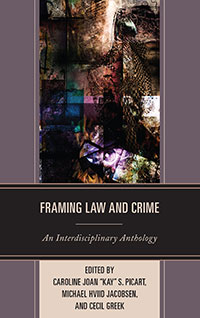
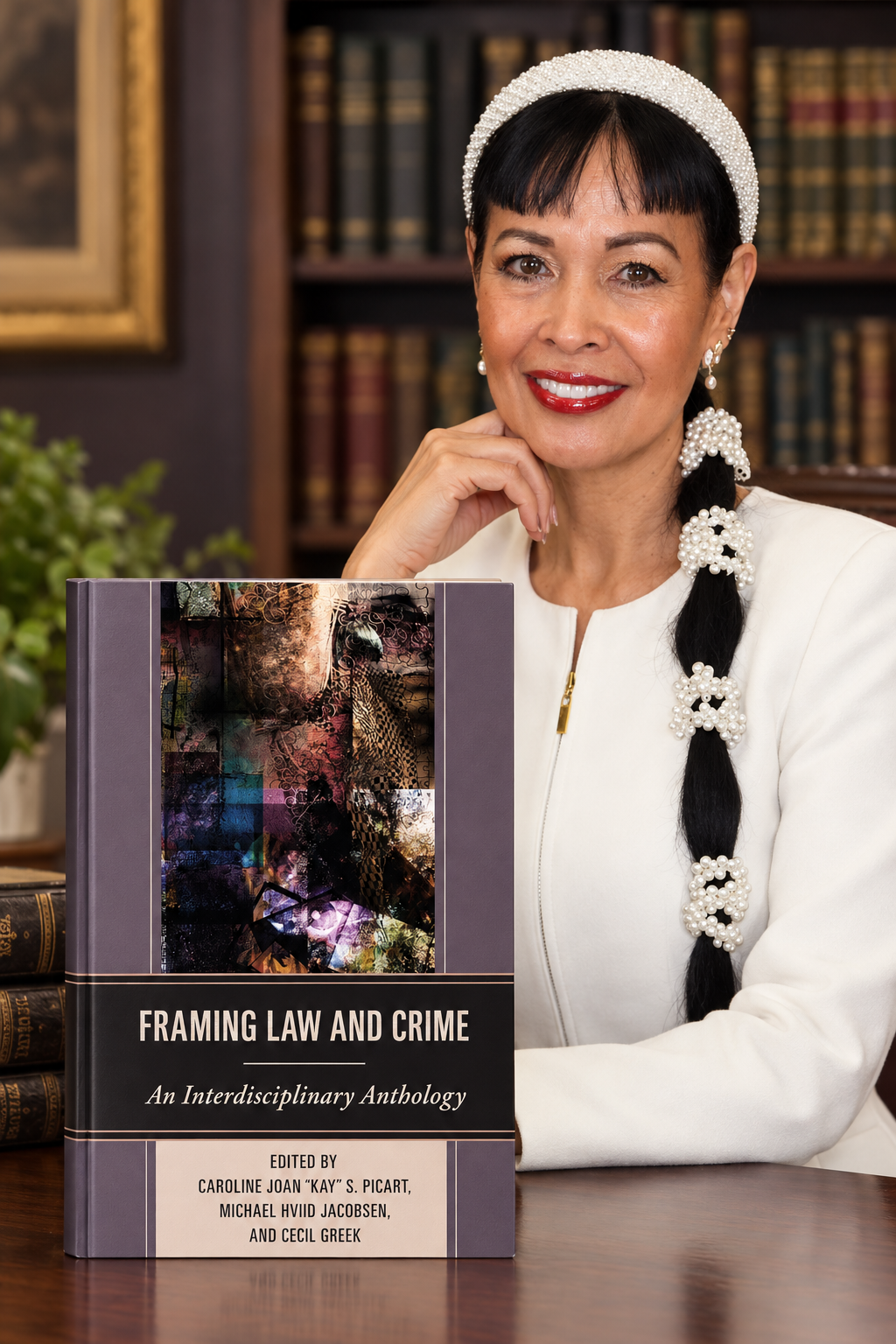
- Dr. Picart’s 18th book was published with the Fairleigh Dickinson University Press and Rowman and Littlefield in March, 2016. Caroline Joan S. Picart, Michael Hviid Jacobsen, and Cecil Greek, editors, Framing Law and Crime (Fairleigh Dickinson University Press and Rowman and Littlefield, March, 2016).
- Book Details | Reviews | Film International Blog | Cinematic Trailer Video 1 | Cinematic Trailer Video 2 | Cinematic Trailer Video 3
-
-
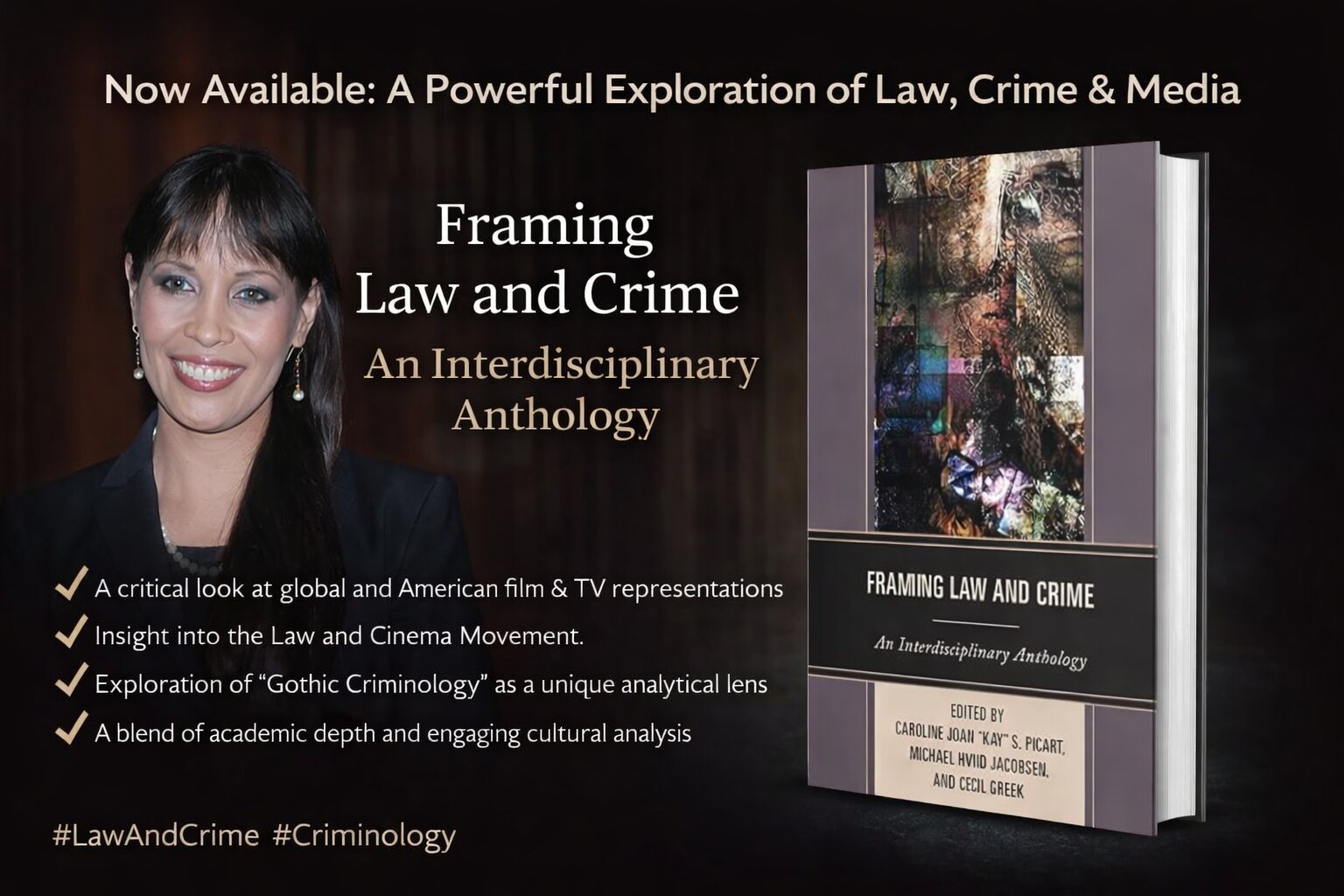
- Framing Law and Crime: An Interdisciplinary Anthology edited by Caroline Joan "Kay" S. Picart (Review by Jithendrajithu, March 2026)
- This book is a thought-provoking and academically rich collection that examines how law and crime are portrayed across film and television. From the outset, the book establishes itself as more than a simple analysis of media; it is a deep exploration of how visual storytelling shapes our understanding of justice, authority, and morality. By bringing together essays from scholars across multiple disciplines, the anthology creates a layered conversation that feels both comprehensive and intellectually engaging.
One of the most impressive aspects of the book is its interdisciplinary nature. The contributors approach the subject from varied perspectives, including legal theory, criminology, sociology, and film studies. This diversity allows for a more nuanced discussion, as each essay builds upon different frameworks and methodologies. Rather than presenting a single narrative, the anthology encourages readers to see how law and crime can be interpreted in multiple ways depending on context, culture, and medium.
The structure of the book also contributes to its strength. Divided into distinct thematic sections, it guides readers through different areas of focus, from the historical development of law in cinema to global perspectives and finally to American film and television. This organization makes it easier to navigate what could otherwise feel like an overwhelming volume of material. Each section adds a new dimension to the discussion, gradually expanding the reader's understanding of how these themes operate across different contexts.
A particularly interesting element of the anthology is its exploration of less conventional approaches, such as the concept of "Gothic Criminology." This section stands out for its creative and analytical depth, examining how darker, more symbolic portrayals of crime and justice reflect deeper societal anxieties. It challenges readers to think beyond traditional interpretations and consider how mood, imagery, and narrative tone influence our perception of law and morality. - Framing Law and Crime: An Interdisciplinary Anthology by Caroline J. S. Picart, Michael Hviid Jacobsen & Cecil Greek (Review by The Books Cafe, October 2025)
- In Framing Law and Crime: An Interdisciplinary Anthology, Caroline J. S. Picart, Michael Hviid Jacobsen, and Cecil Greek compile a remarkable assortment of essays that investigate how visual storytelling—spanning film, television, and documentary—shapes our perceptions of justice, authority, and deviance. The outcome is a captivating blend of legal scholarship, cultural critique, and cinematic theory that prompts readers to view crime and law not merely as social constructs, but as cultural performances crafted through imagery, narrative, and ideology. The anthology’s organization offers a rich, multi-layered experience. The initial chapters outline the development of the Law and Cinema movement, framing it as both an academic discipline and a cultural phenomenon. From post-apocalyptic narratives to modern documentaries, the essays examine how visual media conceptualize justice in the aftermath of moral decay, governmental dysfunction, or social upheaval. Subsequent sections shift focus to global cinema, uncovering how various nations express their own anxieties and ideals through portrayals of legal systems—reminding us that “law” is never impartial, but always culturally situated. One of the anthology’s most intriguing sections presents the idea of Gothic Criminology—a domain that investigates how horror and the grotesque infiltrate representations of law, punishment, and criminality. In this framework, monsters, murderers, and moral outcasts serve as reflections of societal fears regarding authority and disorder. This groundbreaking perspective connects aesthetic evaluation with sociological analysis, indicating that popular culture’s intrigue with crime is not merely voyeuristic but profoundly linked to issues of identity, morality, and control.
- Framing Law and Crime: An Interdisciplinary Anthology by Caroline Joan Kay S. Picart (Review by Kindle Library, August 2025)
- Caroline J. S. Picart’s Framing Law and Crime (co-edited with Michael Hviid Jacobsen and Cecil Greek) is an innovative anthology that investigates how cinema and television portray—and influence—our comprehension of two of society’s most persistent issues: law and crime. This volume compiles 17 scholarly essays from prominent figures in law, sociology, criminology, and film studies, offering a thorough, interdisciplinary perspective on how moving images create narratives surrounding justice, power, and morality. The anthology is divided into five sections, each focusing on various facets of the relationship between media and law. The introductory essays outline the evolution of the Law and Cinema movement, explore the emergence of post-apocalyptic fiction, and contemplate the socio-political ramifications of Canadian documentary. Subsequently, the anthology broadens its focus, examining international cinema to assess how legal systems are depicted across different cultures. These global viewpoints underscore both the universality and cultural particularity of cinematic representations of law and order. The third section concentrates on American media, expanding beyond conventional film to encompass television series—recognizing the medium’s growing cultural significance and its role in shaping the American perception of crime and justice. The fourth section is especially intriguing, presenting the idea of “Gothic Criminology” as a framework for analyzing portrayals of monstrosity, fear, and moral ambiguity in representations of law and crime. Ultimately, the anthology concludes with reflections on pedagogy, epistemology, and ethics, encouraging readers to contemplate how moving images can be examined, taught, and interpreted in a responsible manner. What sets this anthology apart is its capacity to merge rigorous scholarship with cultural accessibility. It not only analyzes narrative strategies and historical patterns but also places them within a wider socio-political framework.
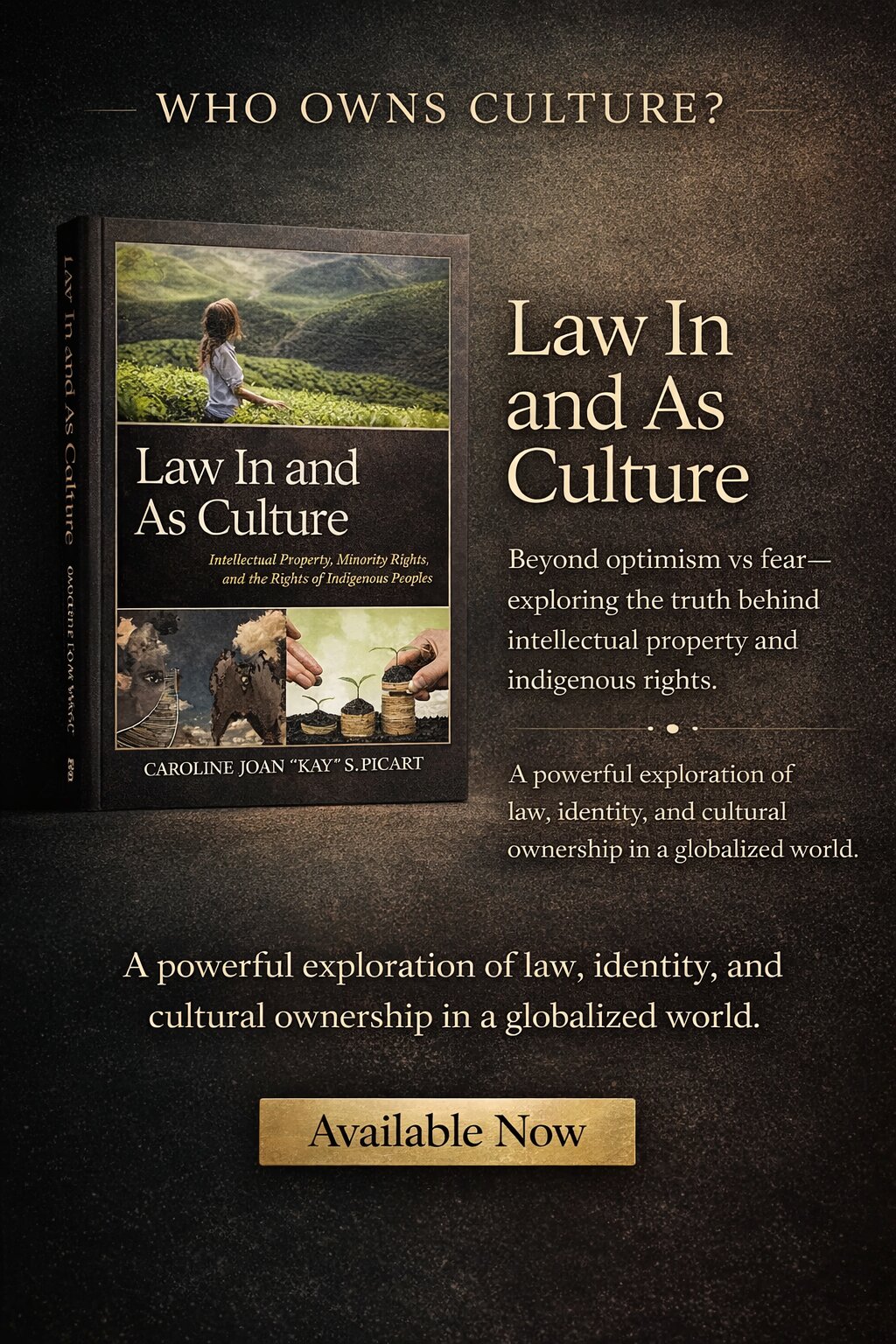
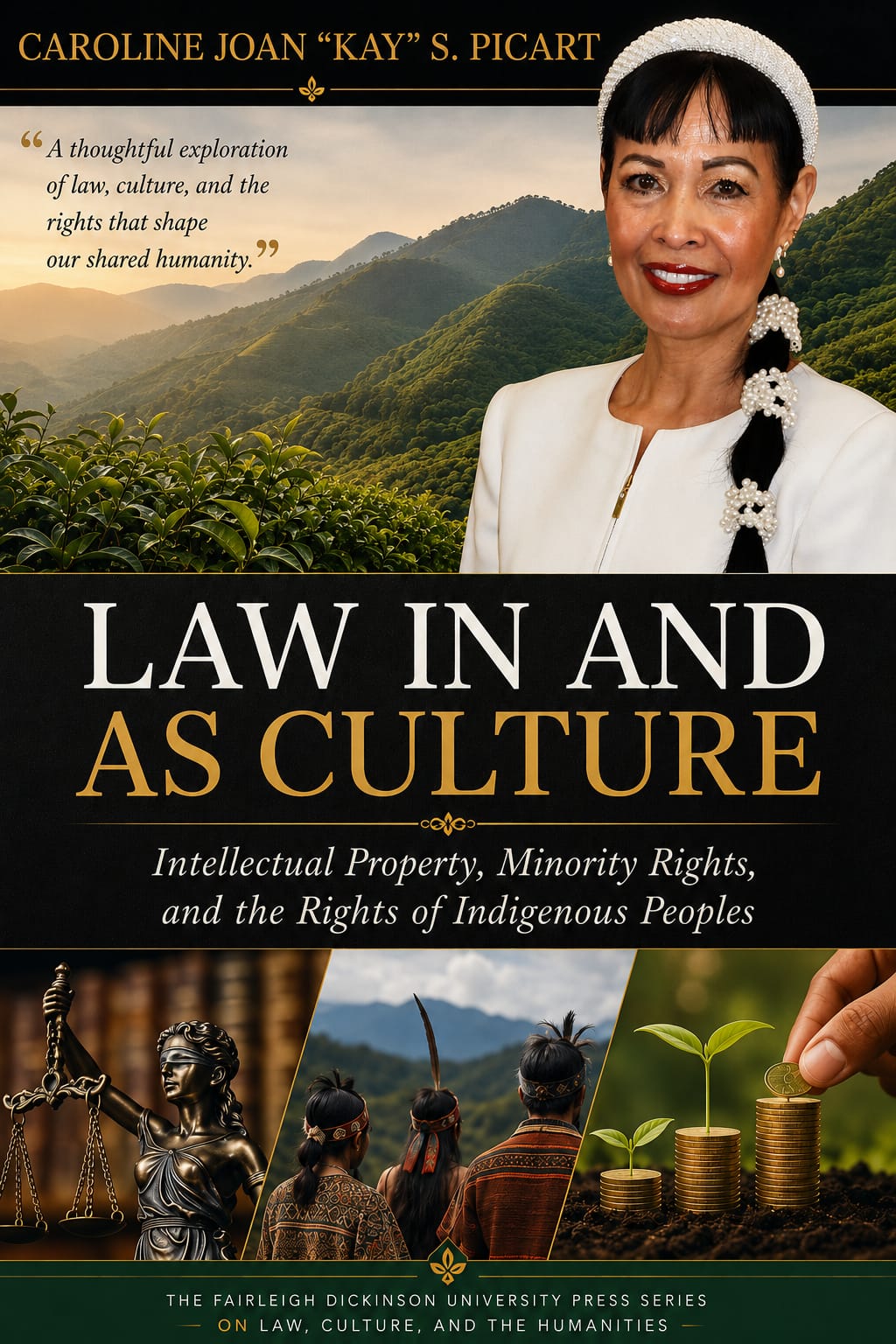
- Dr. Picart’s 17th book was published with the Fairleigh Dickinson University Press and Rowman and Littlefield in February, 2016. Caroline Joan S. Picart, Law In/As Culture: Intellectual Property, Minority Rights, and the Rights of Indigenous People (Rowman & Littlefield/Fairleigh Dickinson University Press and Rowman and Littlefield, February 2016).
- Book Details | Reviews | Cinematic Trailer Video 1 | Cinematic Trailer Video 2 | Cinematic Trailer Video 3 | User Generated Content
-


-

- Law In and As Culture: Intellectual Property, Minority Rights, and the Rights of Indigenous Peoples by Caroline Joan “Kay” S. Picart (Review by Jithendrajithu, March 2026)
- This book is an intellectually rich and deeply reflective work that examines the complex relationship between law, culture, and identity. Rather than presenting law as a neutral or purely legal framework, Picart positions it as something deeply embedded within cultural narratives and power structures. From the very beginning, the book encourages readers to question familiar assumptions and engage with the layered realities behind global discussions on intellectual property and minority rights.
One of the most compelling aspects of the book is its critique of the two dominant narratives surrounding globalization and indigenous cultures—optimism and fear. Picart carefully unpacks both perspectives, showing how each carries its own persuasive force while also oversimplifying reality. Instead of choosing one side, she navigates a middle ground that acknowledges both the possibilities of cultural exchange and the risks of cultural erasure. This balanced approach adds depth to the discussion, making the book feel thoughtful rather than one-sided.
The use of case studies is particularly effective in grounding the book’s theoretical arguments. By exploring real-world examples—from disputes over traditional songs and land rights to issues of artistic ownership and collaboration—Picart brings abstract ideas into a tangible context. These stories highlight the lived experiences of indigenous peoples and minority communities, showing how legal systems can both empower and marginalize them. The diversity of cases also reinforces the global scope of the book, illustrating that these challenges are not confined to a single region.
Another strength of the work lies in its interdisciplinary approach. Drawing from law, cultural studies, anthropology, and communication, Picart creates a framework that is both comprehensive and insightful. - Law In and As Culture by Caroline Joan “Kay” S. Picart (Review by Booksforbadal, March 2026)
- Law In and As Culture: Intellectual Property, Minority Rights, and the Rights of Indigenous Peoples by Caroline Joan Kay S. Picart is a rigorous and intellectually engaging work that thoughtfully examines the complex intersection of law, culture, and identity in a globalized world. Positioned within interdisciplinary scholarship, the book offers a nuanced exploration of how intellectual property frameworks shape—and are shaped by—the lived realities of indigenous peoples and minority communities.
At the core of Picart’s analysis lies a compelling critique of two dominant narratives: the narrative of optimism and the narrative of fear. The former celebrates globalization as a vehicle for innovation, inclusion, and economic growth, while the latter warns of cultural erosion, exploitation, and the loss of traditional identities. Rather than aligning herself fully with either perspective, Picart skillfully navigates a middle ground, arguing that both narratives, while rhetorically powerful, oversimplify a far more intricate reality. This balanced approach is one of the book’s greatest strengths, encouraging readers to move beyond binary thinking and engage with the layered dynamics of cultural exchange and legal governance.
The book’s interdisciplinary methodology significantly enhances its depth and credibility. Drawing from Intellectual Property Law, cultural studies, anthropology, and communication, Picart constructs a multifaceted framework through which these issues can be understood. Her use of case studies is particularly effective, grounding abstract theories in real-world contexts. These examples span diverse geographical and cultural landscapes, illustrating how intellectual property disputes manifest differently across regions and communities.
Among the most striking case studies are those involving the ownership of a Taiwanese folk song, the land struggles of the Mapuche people in Chile, and the collaboration between the Kani tribe in India and a multinational corporation over a patented anti-fatigue agent. Each of these narratives highlights the tensions between traditional knowledge systems and modern legal structures, raising critical questions about ownership, consent, and fairness. The discussion of Australian Aboriginal artists further underscores the challenges of protecting cultural expression within frameworks that often fail to account for collective authorship and heritage.
Picart also broadens the conversation by examining the experiences of women of color, including Josephine Baker and Katherine Dunham. Through their struggles with issues of choreography, improvisation, and copyright, the book reveals how race, gender, and cultural identity intersect with legal recognition and protection. These perspectives add a critical dimension to the work, emphasizing that intellectual property is not merely a legal concern but a deeply cultural and political one.
Stylistically, the book is dense but rewarding, requiring careful reading and reflection. Picart’s arguments are well-supported and thoughtfully articulated, making the work particularly valuable for scholars, students, and professionals interested in law, humanities, and global cultural studies. While it may be challenging for casual readers, those willing to engage with its complexity will find it highly enlightening.
In conclusion, Law In and As Culture is a significant and thought-provoking contribution to contemporary discussions on globalization and cultural rights. By moving beyond simplistic narratives and embracing complexity, Picart offers a framework that is both critical and constructive. It is an essential read for anyone seeking to understand how law operates not just as a system of rules, but as a powerful cultural force shaping identities, rights, and histories across the world. - Law In and As Culture by Caroline Joan “Kay” S. Picart (Review by The Books Cafe, October 2025)
- Rethinking Justice Through the Lens of Culture In Law In and As Culture, Caroline Joan “Kay” S. Picart presents a deep and interdisciplinary investigation into the role of law as not merely a set of regulations but as a dynamic cultural force that influences, shapes, and at times threatens human expression. Central to the book is an examination of the intricate relationship between legal authority and cultural identity, especially as it pertains to indigenous peoples and minority groups who navigate the challenging landscape of intellectual property rights. Picart organizes her argument around two opposing global narratives—Optimism and Fear. The former perceives globalization as a means to foster innovation and cultural exchange, while the latter expresses concern over the loss of traditional heritage due to capitalist and colonial influences. Instead of siding with either extreme, Picart introduces a third, more sophisticated framework—one that acknowledges the interconnectedness of these dynamics and the necessity for equilibrium between preservation and advancement. Her case studies vividly illustrate this theoretical conflict. Through instances such as the contested authorship of a Taiwanese folk song, the Mapuche people's fight against land dispossession in Chile, the Kani tribe's partnership with a multinational corporation in India, and the artistic challenges faced by American figures like Josephine Baker and Katherine Dunham, Picart reveals how intellectual property law can act as both an instrument of empowerment and a source of exploitation. What sets this work apart is its combination of scholarly rigor and human empathy. Picart’s expertise in law, anthropology, and communication allows her to approach these narratives with both compassion and analytical clarity, emphasizing how each legal ruling impacts the cultural and emotional fabric of communities.
- Law In and As Culture by Caroline Joan Kay S. Picart (Review by Kindle Library, August 2025)
- In Law In and As Culture, Caroline Joan “Kay” S. Picart presents a thorough and insightful analysis of the dual role of law as both a legal framework and a cultural influence—especially in relation to the experiences of indigenous peoples and minorities concerning intellectual property rights. Picart skillfully navigates two prevailing narratives: Optimism, which views globalization as a means of fostering integration and innovation, and Fear, which laments the decline and erosion of traditional cultures. Although these viewpoints are frequently depicted as opposing forces, Picart contends that they are interdependent—each reliant on the other to inspire action—yet neither adequately captures the intricacies of reality. Instead, she proposes a more nuanced perspective, harmonizing hope with caution. The power of this work is evident in its engaging case studies. From the disputed ownership of a Taiwanese folk song to the Mapuche people’s struggle for land rights in Chile, Picart highlights the real stakes involved in these cultural and legal conflicts. She explores the partnership between India’s Kani tribe and a multinational corporation to patent an anti-fatigue agent, the initiatives of Australian Aboriginal artists to safeguard their folklore, and the challenges faced by American women of color, such as Josephine Baker and Katherine Dunham, in protecting their choreography and improvisational works. These narratives are not merely historical records; they serve as vivid illustrations of how intellectual property law can either empower or jeopardize marginalized communities, contingent upon its application and interpretation. Picart’s interdisciplinary methodology—incorporating insights from law, anthropology, communication, and cultural studies—enhances the analysis, rendering the work accessible to readers from various disciplines. In conclusion, Law In and As Culture offers a stimulating examination of the convergence of culture and law, prompting readers to rethink how legal frameworks influence cultural dynamics.
- Dr. Picart's 16th book was published with Palgrave Press in November 2013. Caroline Joan S. Picart, Critical Race Theory and Copyright in American Dance: Whiteness as Status Property (Palgrave-Macmillan, November 2013).
- Synopsis | Reviews | Cinematic Trailer Video 1 | Cinematic Trailer Video 2 | Cinematic Trailer Video 3 | User Generated Content
-
- Critical Race Theory and Copyright in American Dance: Whiteness as Status Property by Caroline Joan S. Picart (Review by Booksforbadal, March 2026)
- Critical Race Theory and Copyright in American Dance: Whiteness as Status Property by Caroline Joan Kay S. Picart is a compelling and intellectually rigorous examination of how race, gender, and law intersect within the evolution of copyright protection in American dance. Through a critical and historically grounded lens, Picart challenges readers to reconsider the seemingly neutral terrain of intellectual property law, revealing the deeply embedded power structures that have shaped its development.
At the heart of the book lies the argument that the recognition of choreography as a copyrightable form under the Copyright Act of 1976 was not merely a legal progression, but a contested cultural and political process. Picart demonstrates that this shift was influenced by racialized and gendered dynamics, where access to legal recognition was unevenly distributed. By framing “whiteness” as a form of status property, the book exposes how certain identities were privileged in the process of legitimizing artistic expression, while others were marginalized or excluded.
The historical analysis is one of the book’s strongest elements. Picart traces the journey of dance from being considered too ephemeral for legal protection to becoming an acknowledged category within copyright law. In doing so, she focuses on key figures such as Loïe Fuller, George Balanchine, and Martha Graham. These individuals serve not only as pioneers of modern dance but also as case studies through which the broader cultural and legal transformations can be understood. Picart’s analysis highlights how their work—and their identities—interacted with the evolving legal framework, shaping what was deemed worthy of protection.
What sets this book apart is its application of Critical Race Theory to the domain of copyright law. By doing so, Picart uncovers the implicit biases and hierarchies that have historically influenced legal recognition. The concept of whiteness as a form of property is particularly striking, as it reframes discussions around ownership and authorship, suggesting that cultural authority and legitimacy have often been tied to racial identity.
The book also raises important questions about the nature of choreography itself. Dance, as an art form rooted in movement and improvisation, resists easy categorization within traditional legal structures. Picart explores how this tension has been negotiated, and how the law has attempted to “fix” something inherently fluid and dynamic. This exploration adds a philosophical dimension to the work, encouraging readers to think critically about the relationship between art and legal systems.
Stylistically, the book is dense and scholarly, reflecting its interdisciplinary approach. Picart draws from law, cultural studies, history, and performance theory to construct a layered and nuanced argument. While this may make the text challenging for general readers, it significantly enriches the analysis for those willing to engage deeply with the material.
In conclusion, Critical Race Theory and Copyright in American Dance is a thought-provoking and important contribution to both legal scholarship and cultural studies. It not only documents a critical moment in the history of American dance but also exposes the broader social forces that shape legal recognition and artistic value. For readers interested in law, race, and the arts, this book offers a powerful and enlightening perspective. - Critical Race Theory and Copyright in American Dance: Whiteness as Status Property by Caroline Joan S. Picart (Review by Jithendrajithu, March 2026)
- This book is an intellectually rich and challenging exploration of how law, race, and art intersect in ways that are often overlooked. Rather than approaching copyright as a purely legal or technical subject, Picart reframes it as a cultural battleground shaped by power, privilege, and historical inequities. The book immediately sets itself apart by asking readers to question assumptions about fairness and neutrality within legal systems, especially in the context of artistic recognition.
A major strength of the work lies in its central argument that the inclusion of choreography under the Copyright Act of 1976 was not simply a progressive milestone, but a deeply contested development influenced by racial and gender hierarchies. Picart carefully unpacks how certain groups were positioned to benefit from this shift, while others remained marginalized. Her use of the concept of “whiteness as status property” is particularly striking, as it reveals how legal recognition can function as a form of social validation tied to identity rather than merit alone.
The historical narrative is both detailed and engaging, offering readers a clear sense of how dance evolved from an ephemeral, unprotected art form into one recognized by federal law. By focusing on figures like Loïe Fuller, George Balanchine, and Martha Graham, Picart provides concrete examples that ground her theoretical arguments. These case studies highlight how artistic innovation, personal identity, and institutional acceptance intersected, shaping the trajectory of dance as both an art and a legally protected form.
What makes this book particularly impactful is its application of Critical Race Theory to an area not often examined through this lens. Picart’s analysis exposes the subtle ways in which bias operates within systems that claim objectivity. Her writing encourages readers to see copyright not just as a set of rules, but as a reflection of broader societal values and inequalities. - Critical Race Theory and Copyright in American Dance by Caroline Joan “Kay” S. Picart (Review by The Books Cafe, October 2025)
- Rewriting the Choreography of Power and Recognition In Critical Race Theory and Copyright in American Dance, Caroline Joan “Kay” S. Picart presents a profoundly analytical and innovative examination that reconceptualizes the legal and cultural narrative of American choreography through the perspectives of race, gender, and privilege. This book transcends a mere legal discourse, serving as a potent critique of how systemic disparities have influenced the very concept of creative ownership in the realm of dance. Picart initiates her exploration by outlining the journey of choreography—initially regarded as transient and unworthy of protection—towards gaining acknowledgment under copyright legislation, culminating in the enactment of the 1976 Copyright Act. However, she contends that this progression was anything but impartial. Through astute analyses of prominent figures such as Loïe Fuller, George Balanchine, and Martha Graham, Picart uncovers how legal recognition frequently aligned with racial and gender hierarchies, favoring white artists while marginalizing the contributions of artists of color and other underrepresented creators. Utilizing critical race theory, Picart introduces the notion of “whiteness as status property,” illustrating how cultural legitimacy and legal safeguarding have historically operated as forms of social capital. Her argument is both incisive and empathetic—revealing how systemic frameworks of privilege become ingrained in artistic institutions, even as they profess to honor universality and creativity. What sets this work apart is its interdisciplinary brilliance. By integrating law, performance studies, feminist theory, and cultural critique, Picart establishes a framework that questions not only who creates art but also who possesses it in the eyes of the law. In conclusion, Critical Race Theory and Copyright in American Dance represents a vital contribution to both legal scholarship and the performing arts.
- Critical Race Theory and Copyright in American Dance by Caroline Joan Kay S. Picart (Review by Kindle Library, July 2025)
- In Critical Race Theory and Copyright in American Dance, Caroline Joan S. Picart presents a courageous and thoroughly researched analysis of the intersections between race, gender, and intellectual property in the realm of American choreography. This pioneering work delves into how the legal acknowledgment of dance as a copyrightable form of expression—previously denied—was influenced by systemic factors of whiteness and privilege. By concentrating on prominent figures such as Loïe Fuller, George Balanchine, and Martha Graham, Picart outlines the journey through which choreography transitioned from the periphery of legal protection to the center of copyright law as established by the 1976 Copyright Act. However, she does more than merely recount historical events—she critically examines how this transformation was shaped by racialized and gendered narratives that favored certain artists while marginalizing others. Utilizing a critical race theory perspective, Picart conceptualizes “whiteness as status property,” uncovering how cultural and legal frameworks frequently perpetuated inequality, even while ostensibly honoring creativity. This book is a vital resource for individuals interested in the interplay of performance, law, and representation. It prompts readers to rethink who is remembered, celebrated, and afforded legal protection within the cultural narrative of American dance.
- Dr. Picart's 15th book was published by Palgrave Press in July 2012. Caroline Joan S. Picart and John Edgar Browning, authors and eds., Speaking of Monsters: A Teratological Anthology (Palgrave-Macmillan, July 2012). (Purchase on Amazon)
- Discount Order Form | Reviews | Cinematic Trailer Video | User Generated Content 1 | User Generated Content 2
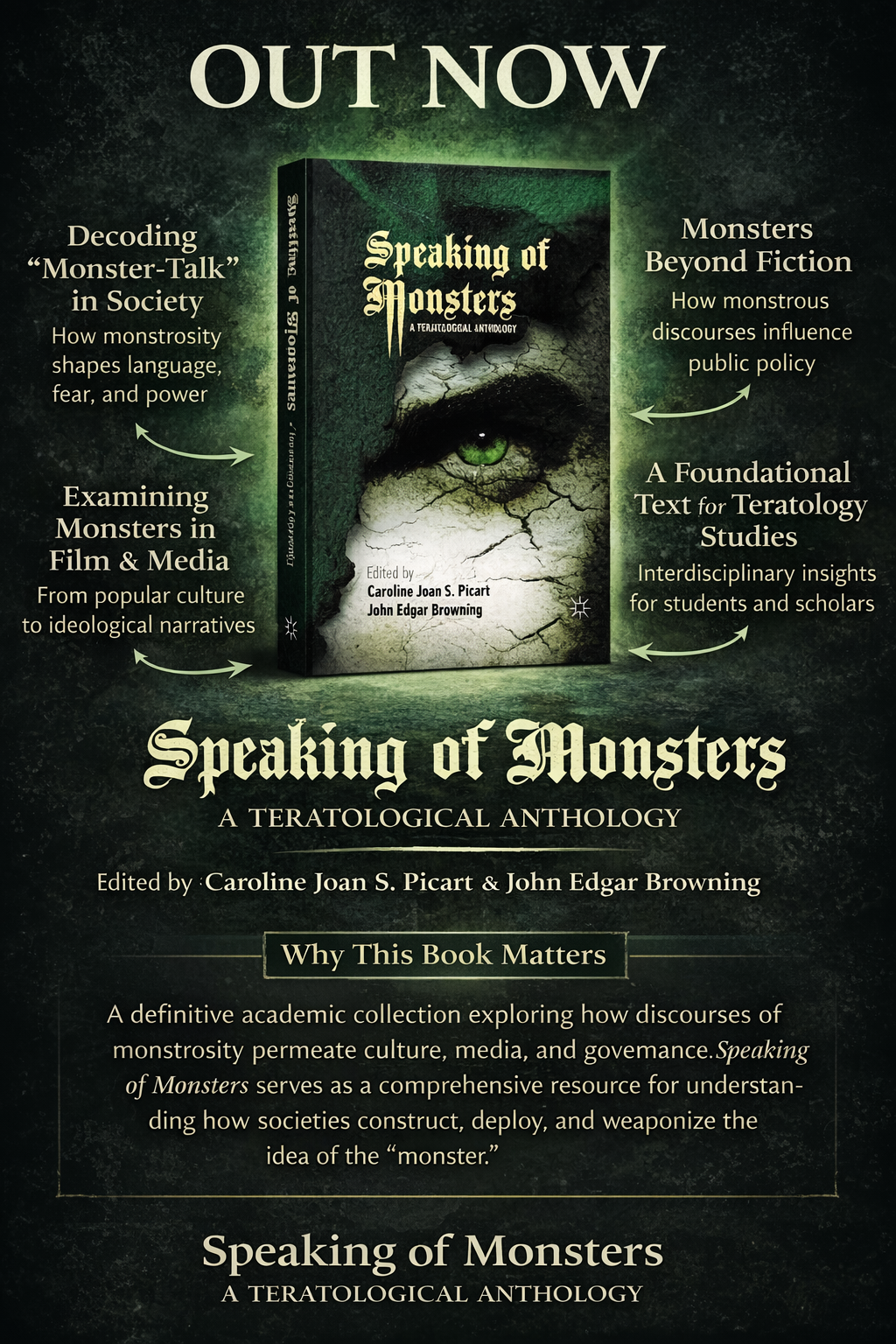
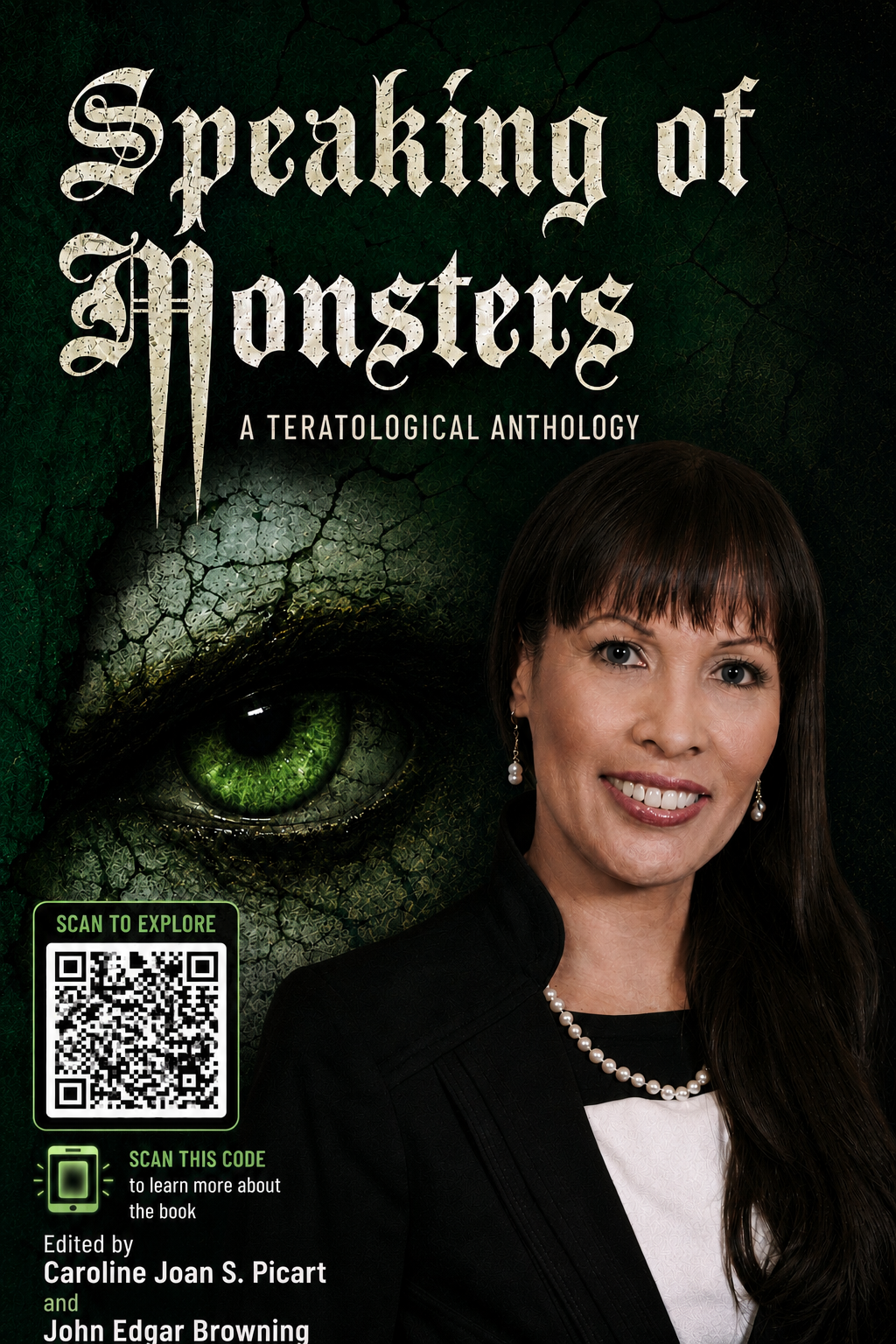
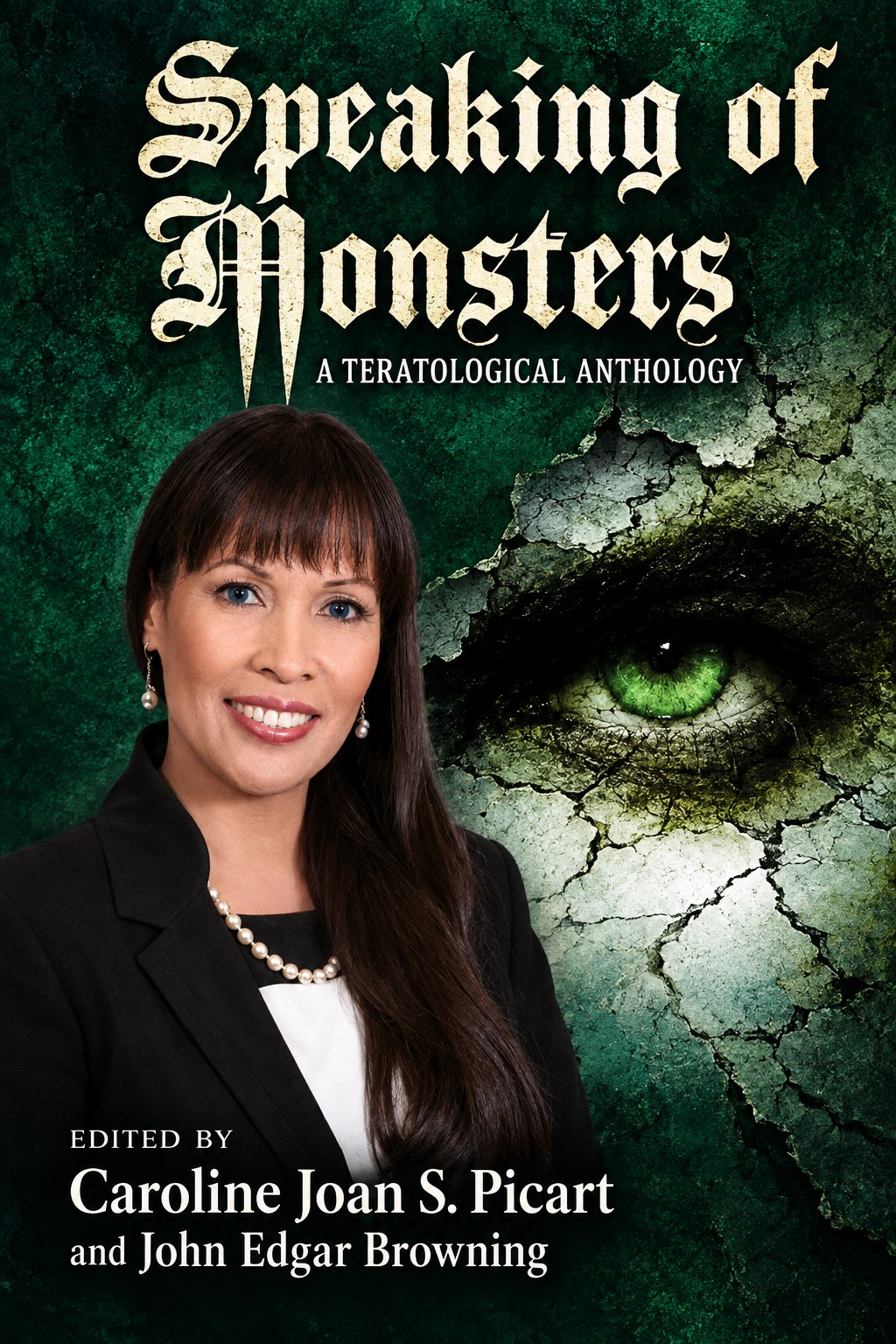
- Speaking of Monsters: A Teratological Anthology by Caroline Joan S. Picart & John Edgar Browning (Review by Jithendrajithu, March 2026)
- Speaking of Monsters: A Teratological Anthology is not your typical academic collection—it feels more like an intellectual excavation of the hidden ways society defines and fears “the other.” Edited by Caroline Joan S. Picart and John Edgar Browning, the anthology takes what could have been a niche topic and transforms it into something expansive, urgent, and surprisingly relevant. From the outset, the book makes it clear that monsters are not just creatures lurking in fiction; they are constructs deeply embedded in cultural narratives, politics, and everyday thinking.
What stands out most is the book’s ability to weave together diverse disciplines without feeling disjointed. Essays move fluidly between analyses of horror cinema, legal frameworks, and sociological perspectives, yet all remain anchored to the central idea of “monster-talk.” This gives the anthology a cohesive intellectual thread while still allowing each contributor to bring a unique voice and lens. As a reader, you’re not just consuming isolated arguments—you’re engaging in a broader conversation about how societies create and sustain the idea of monstrosity.
The writing itself strikes a balance between academic rigor and accessibility. While some essays lean heavily into theory, they are grounded with concrete examples—from vampires and serial killers to real-world figures who have been labeled as threats or outsiders. These examples make the arguments feel tangible, even unsettling at times. The book doesn’t just analyze monsters; it subtly forces you to question how easily such labels are applied in reality, and how often they serve to justify exclusion or control.
Another strength of the anthology is its underlying ethical dimension. It doesn’t simply dissect the concept of the monstrous—it interrogates the consequences of such classifications. By connecting cultural representations with systems of power, the book reveals how fear can be institutionalized, shaping laws, policies, and social attitudes. This makes the reading experience feel less like an academic exercise and more like a critical awakening, especially in a world where labeling and othering still carry real consequences.
In the end, this anthology leaves a lingering impact because it turns the lens back on the reader. It suggests that monsters are not distant or imaginary, but reflections of collective anxieties and biases. Speaking of Monsters is both intellectually dense and emotionally resonant, offering a reading experience that challenges, unsettles, and ultimately deepens your understanding of how societies define humanity itself. - Speaking of Monsters: A Teratological Anthology by Caroline Joan S. Picart & John Edgar Browning (Review by The Books Cafe, October 2025)
- Unmasking the Faces of the Monstrous Speaking of Monsters is an exceptionally engaging and intellectually stimulating anthology that transforms our perception of the monster—not merely as a figure of horror, but as a multifaceted cultural reflection of our most profound fears, biases, and aspirations. Co-edited by Caroline Joan S. Picart and John Edgar Browning, this collection extends well beyond conventional horror studies, framing "monster-talk" as an essential discourse regarding power, identity, and ethics in contemporary society. The anthology compiles a remarkable array of essays from various academic disciplines—film and media studies, law, criminology, gender theory, and philosophy—to investigate how the monstrous is both constructed and contested across different cultural contexts. Through examinations of vampires, serial killers, deviant bodies, and political scapegoats, the contributors reveal how monsters function as symbols through which societies delineate what is considered normal, moral, and human. Picart and Browning’s editorial perspective guarantees that Speaking of Monsters remains grounded and relevant. Each essay challenges the reader with provocative inquiries: Who is designated as a monster? What do these designations disclose about social structure and authority? And in what ways does fear become institutionalized through cultural and policy frameworks? By addressing themes of otherness, violence, and transgression, this anthology illustrates that monstrosity reflects societal anxieties as much as it does individual deviance. The monsters we create—be they cinematic vampires or real-life "outsiders"—ultimately reveal more about ourselves than about the beings we vilify. A significant contribution to Gothic studies, cultural theory, and social critique, Speaking of Monsters urges readers to attune themselves more closely to the discourse of monstrosity—and to acknowledge within it both our most sinister instincts and our capacity for empathy.
- Speaking of Monsters: A Teratological Anthology by Caroline Joan S. Picart & John Edgar Browning (Review by Kindle Library, July 2025)
- Speaking of Monsters is an insightful and interdisciplinary anthology that thoroughly investigates how society constructs, interprets, and reacts to the concept of the monstrous. Co-edited by Caroline Joan S. Picart and John Edgar Browning, this collection transcends horror fiction to examine the significant cultural, political, and psychological aspects of "monster-talk." The book presents a wide array of scholarly essays that analyze the representation of monsters in film, media, law, and public policy. It unites critical viewpoints from disciplines such as cultural studies, criminology, literature, gender theory, and philosophy to scrutinize how fear, otherness, and transgression influence our shared comprehension of what constitutes the monstrous. Whether addressing vampires, serial killers, monstrous femininity, or societal scapegoats, the anthology highlights that the monstrous is not merely a figure of fantasy but rather a reflection of genuine societal anxieties and power dynamics. Ideal for scholars, students, and anyone fascinated by Gothic studies or cultural criticism, Speaking of Monsters serves as a valuable resource for investigating the connections between myth, media, and meaning. It is more than just a book—it is an invitation to reassess the monsters we dread and the systems that give rise to them.
-
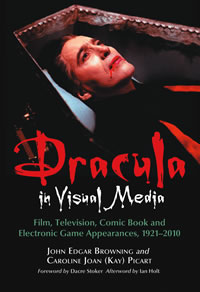 John Edgar Browning and Caroline Joan (Kay) Picart, Dracula in Visual Media
Film, Television, Comic Book and Electronic Game Appearances, 1921-2010,
John Edgar Browning and Caroline Joan (Kay) Picart, Dracula in Visual Media
Film, Television, Comic Book and Electronic Game Appearances, 1921-2010,
Foreword by Dacre Stoker; Afterword by Ian Holt,
McFarland Press, 2010
McFarland's publicity page for the book
Winner, Lord Ruthven Award for Non-Fiction, International Conference on the Fantastic in the Arts, 2011.
- Cinematic Trailer Video 1 | Cinematic Trailer Video 2 | User Generated Content
-

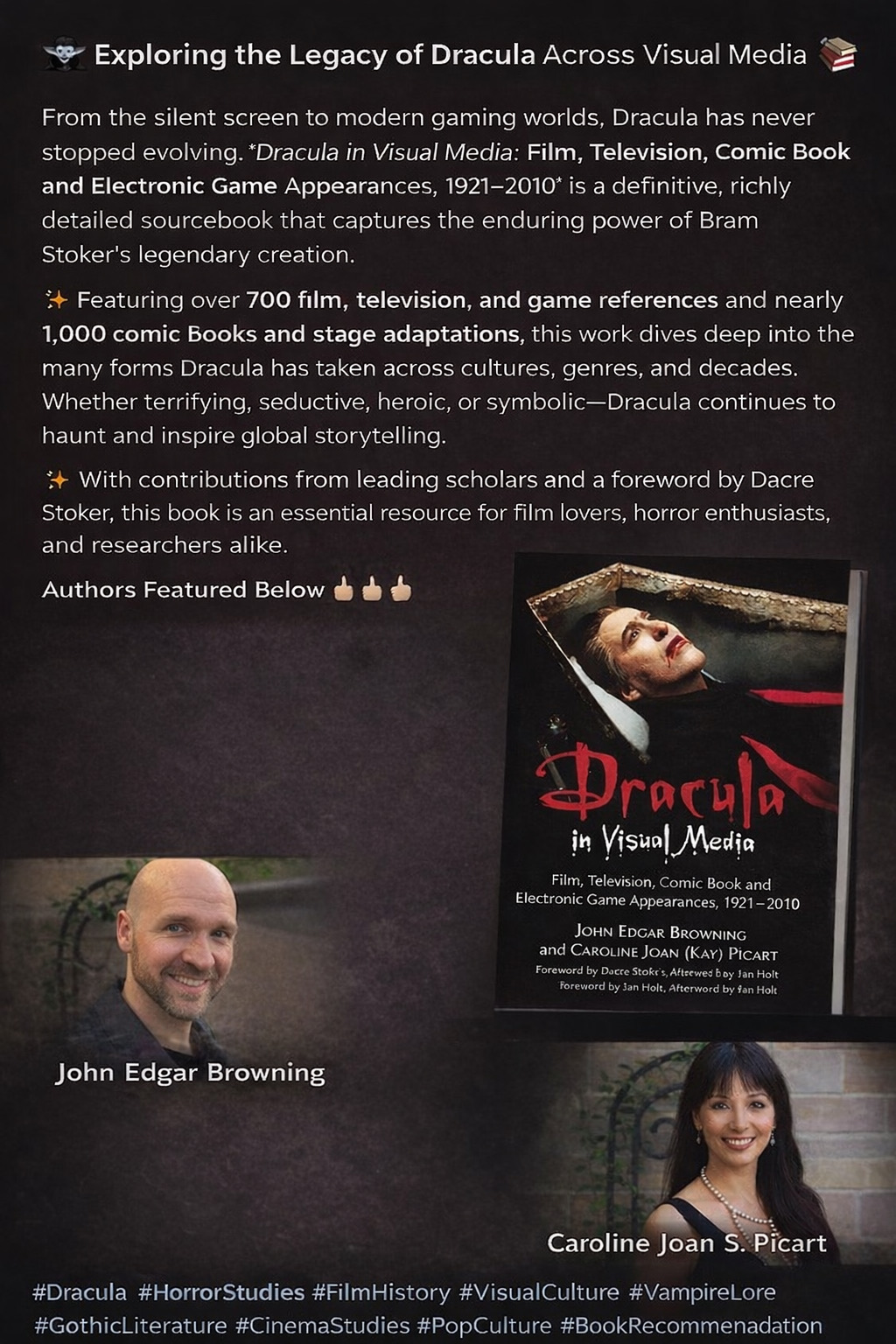
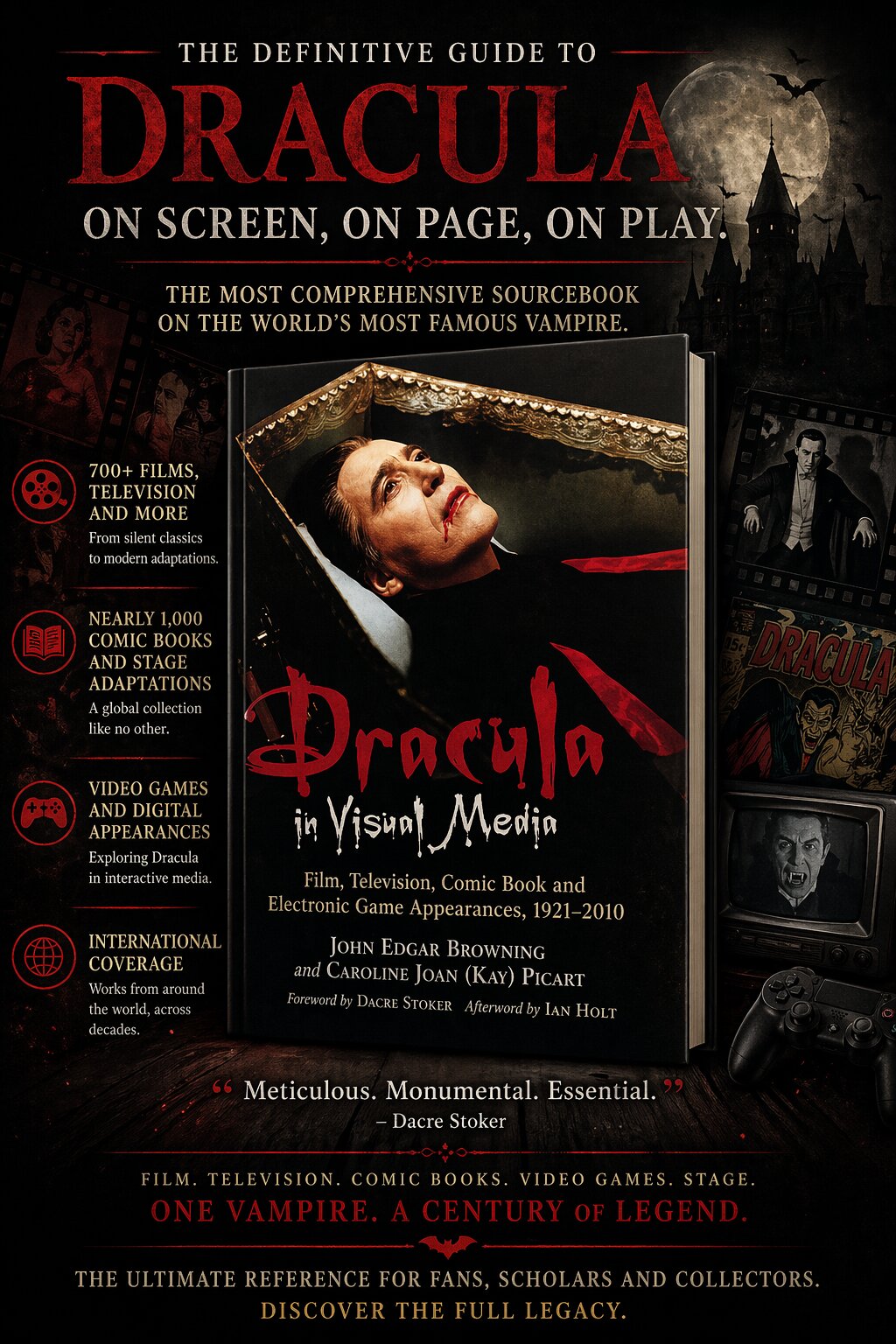
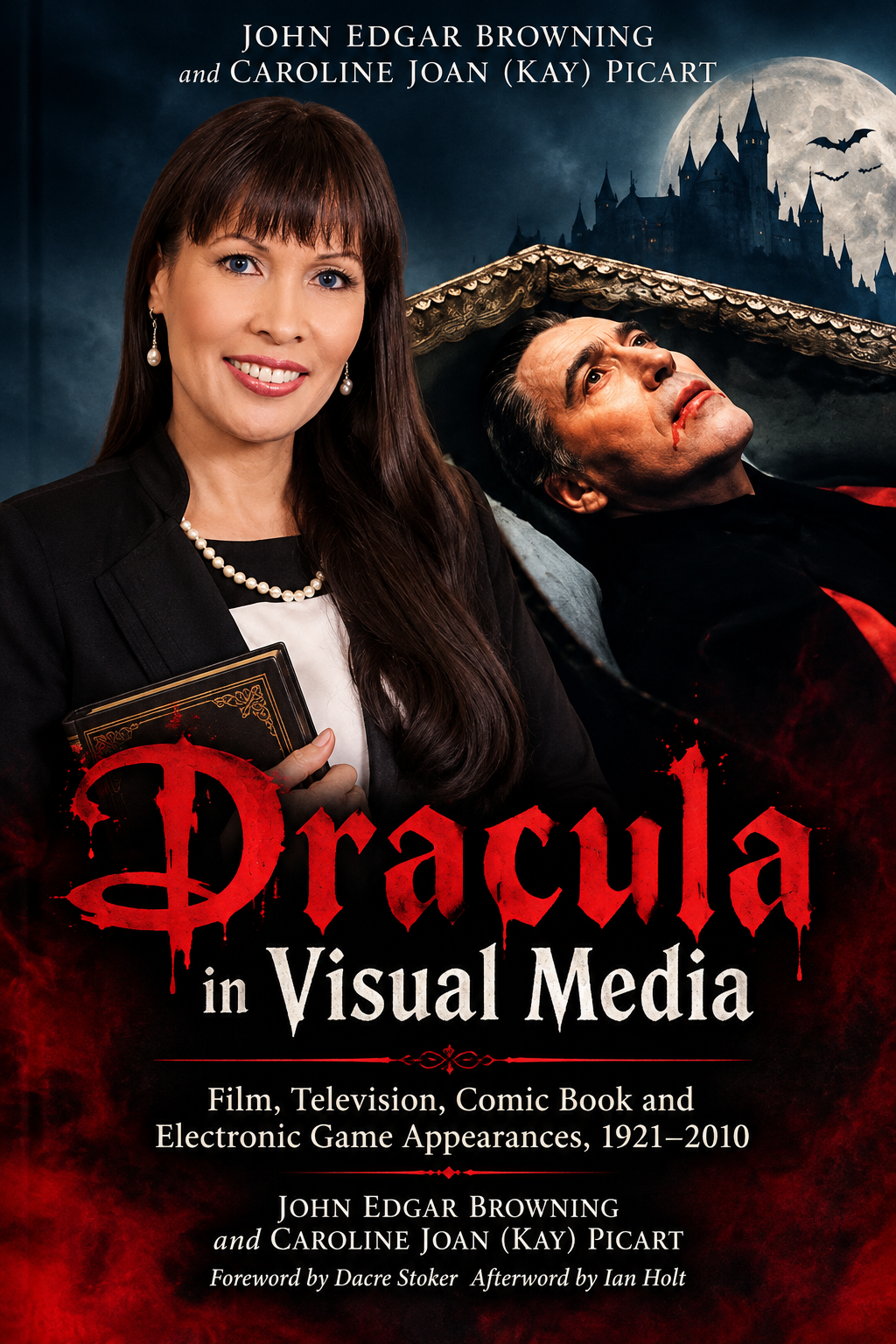
- Podcast on Dracula in Visual Media Film, Television, Comic Book and Electronic Game Appearances. Direct Link
- Dracula in Visual Media by Caroline Joan “Kay” S. Picart & John Edgar Browning (Review by The Books Cafe, October 2025)
- A Monumental Chronicle of the World’s Most Enduring Vampire For over a century, Count Dracula has made his presence felt in every aspect of popular culture, and Dracula in Visual Media serves as the most comprehensive record of his cinematic and cultural legacy. Co-authored by Caroline Joan “Kay” S. Picart and John Edgar Browning, this significant reference work encapsulates the complete journey of the vampire through nearly a thousand adaptations across film, television, video games, theater, and comics from 1921 to 2010. What sets this volume apart is its remarkable equilibrium between scholarly rigor and accessibility. While it is meticulously organized, it also unfolds as a cultural journey through a century of visual storytelling, illustrating how Stoker’s creation has been transformed to reflect evolving social values, fears, and fantasies. From German Expressionism to Japanese anime, from Hammer horror to contemporary digital reinterpretations, Dracula in Visual Media presents the vampire as both a historical constant and a reflection of human change. With contributions from esteemed experts such as Dacre Stoker, David J. Skal, Laura Helen Marks, and Mitch Frye, the book exceeds the expectations of a conventional filmography. It offers cultural context, critical analysis, and a profound understanding of how Dracula endures as a global icon—seductive, frightening, and perpetually reimagined. Awarded the prestigious Lord Ruthven Award for excellence in vampire studies, this work solidifies its status as the ultimate guide to Dracula’s cinematic and artistic immortality. Alongside Picart and Browning’s Speaking of Monsters and Draculas, Vampires & Other Undead Forms, this volume is part of an extraordinary trilogy that delves into horror, mythology, and cultural identity. Dracula in Visual Media is not just a compilation of adaptations—it is a homage to the lasting influence of storytelling and the shadow it casts over our shared imagination.
- Dracula in Visual Media by Caroline Joan Kay S. Picart & John Edgar Browning (Review by Kindle Library, July 2025)
- For over a century, Count Dracula has been a haunting presence on screens, in literature, and on stages worldwide—and Dracula in Visual Media serves as the definitive record of that legacy. Co-authored by Caroline Joan Kay S. Picart and John Edgar Browning, this extensive sourcebook is vital for enthusiasts of Dracula, researchers in pop culture, and scholars of horror alike. Covering nearly a thousand adaptations across film, television, video games, theater, and comics from 1921 to 2010, the book carefully chronicles how Bram Stoker’s iconic vampire has been reinterpreted across various cultures, formats, and genres. From cult classics to lesser-known animations, and from erotic thrillers to documentaries, Dracula’s changing presence is documented with scholarly rigor and accuracy. Featuring contributions from esteemed experts such as Dacre Stoker, David J. Skal, Laura Helen Marks, Mitch Frye, and others, this publication transcends mere cataloging—it offers a significant cultural examination of Dracula’s persistent impact.
- Dracula in Visual Media received the esteemed Lord Ruthven Award for excellence in vampire studies. Additionally co-edited by Picart and Browning:
- Speaking of Monsters: A Teratological Anthology An interdisciplinary exploration of how “monster-talk” influences media, policy, and cultural narratives.
- Draculas, Vampires & Other Undead Forms A cross-genre anthology that investigates Dracula and vampire figures through global, gendered, and genre-specific perspectives. Collectively, these works create a compelling trilogy of academic insight into horror, mythology, and cultural evolution—essential for those fascinated by the monstrous and the undead.
-
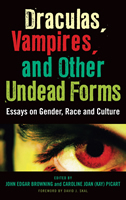
Browning, John Edgar and Caroline Joan (Kay) Picart, Eds. David J. Skal, Forward. Draculas, Vampires, and Other Undead Forms: Essays on Gender, Race and Culture Lanham, MD: Scarecrow Press, May 2009.
Nominated for the Rondo Hatton Award for Film Criticism, 2010.(http://www.rondoaward.com/rondo/rondos.html)
To order, go to Rowman and Littlefield.
Click here for a review of Draculas, Vampires, and Other Undead Forms
Second review: Gale Academic Onefile
Third review: Taliesin's Review (PDF Download)
Cinematic Trailer Video 1 | Cinematic Trailer Video 2 | User Generated Content-
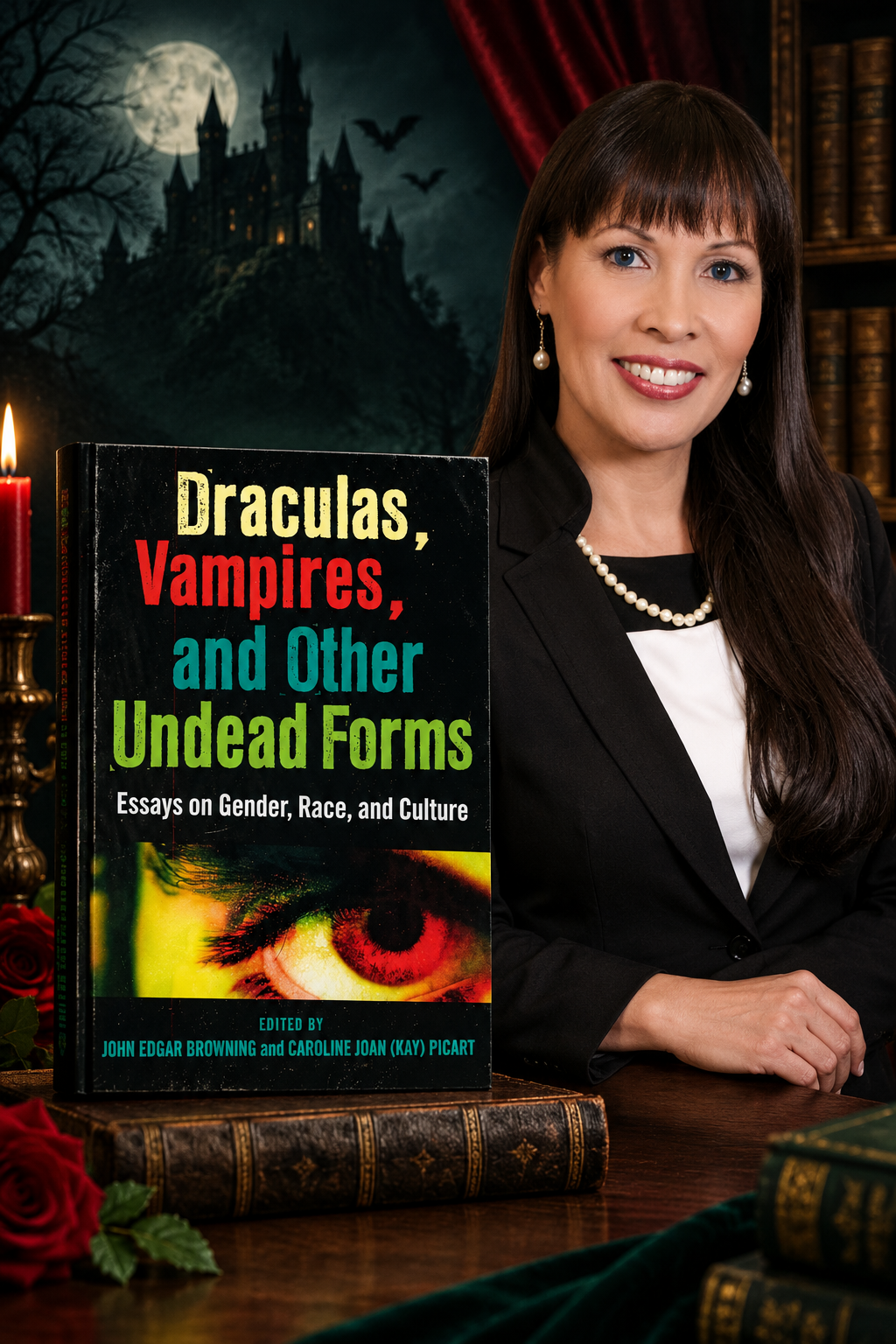
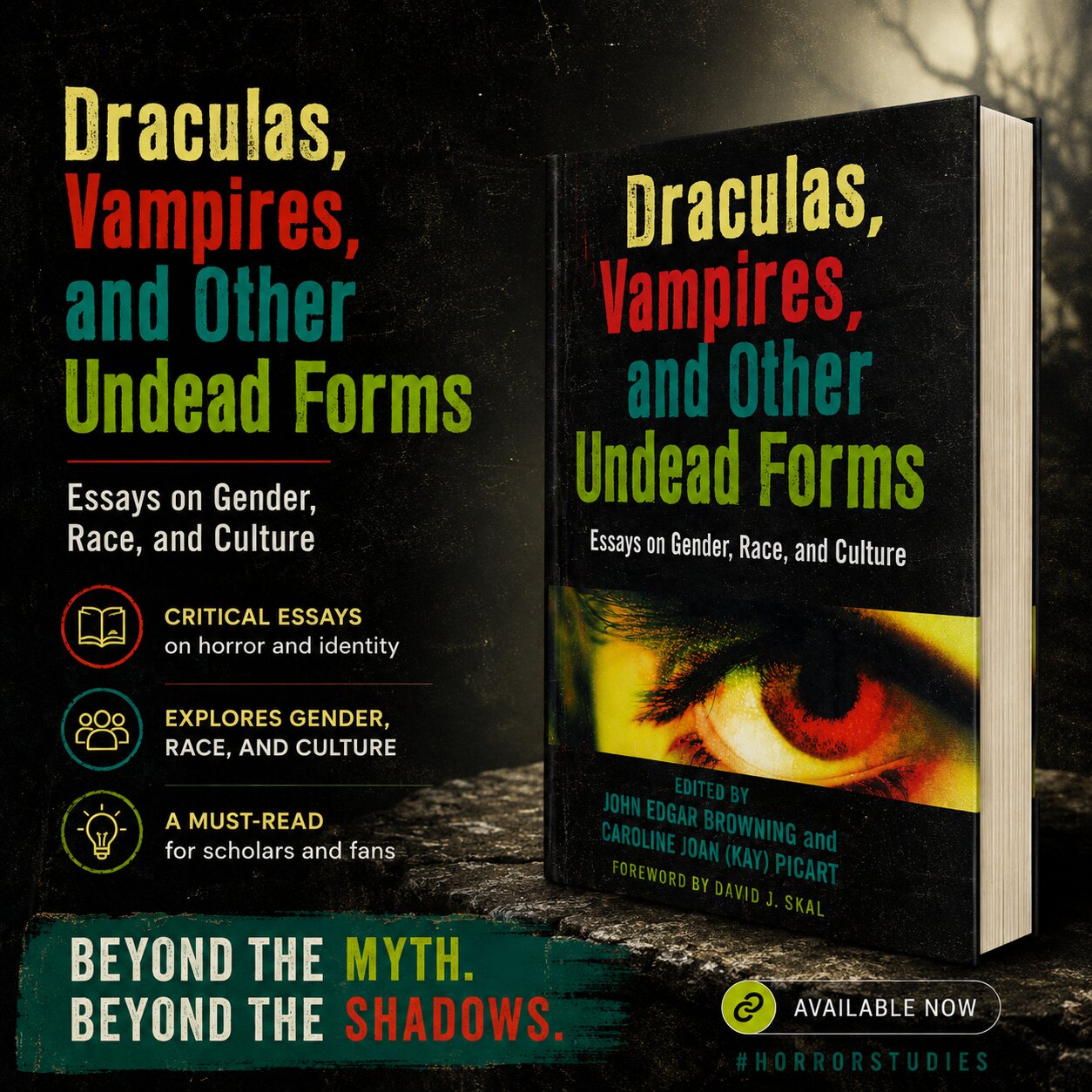
- Draculas, Vampires, and Other Undead Forms by Caroline Joan “Kay” S. Picart & John Edgar Browning (Review by The Books Cafe, October 2025)
- A Scholarly Journey Through the Global Undead Draculas, Vampires, and Other Undead Forms reinterprets our understanding of the vampire myth, extending it well beyond Bram Stoker’s Dracula and its well-known Western interpretations. Edited by Caroline Joan “Kay” S. Picart and John Edgar Browning, this anthology thoroughly investigates the evolution of vampire narratives across different eras, regions, and cultures — transforming from gothic monsters into reflections of social consciousness and identity. What distinguishes this collection is its profound interdisciplinarity. Each essay examines how vampires encapsulate anxieties related to gender, race, sexuality, politics, and national identity. Moving past the iconic representations of Bela Lugosi or Christopher Lee, the contributors highlight interpretations that arise from unexpected sources — Asian anime, European art cinema, Latin American literature, and various other global storytelling traditions. Collectively, these essays illustrate that the vampire is not merely a static figure of horror but a vibrant cultural text, perpetually rewritten to mirror the fears and aspirations of each generation. Picart and Browning curate contributions that merge academic rigor with accessibility, rendering the anthology both intellectually stimulating and appealing to general audiences. The essays trace the transformation of the undead — from predators to victims, from monsters to metaphors — providing insights into humanity’s changing relationship with mortality, desire, and the concept of the “Other.” Rather than concentrating solely on bloodlust, Draculas, Vampires, and Other Undead Forms uncovers how these figures challenge prevailing ideologies, interrogate moral dichotomies, and reveal hidden cultural tensions. It is a work that honors diversity in horror, transforming the vampire into a global citizen of myth.
- Draculas, Vampires, and Other Undead Forms by Caroline Joan Kay S. Picart & John Edgar Browning (Review by Kindle Library, July 2025)
- Bram Stoker’s Dracula continues to exert a significant cultural influence more than a hundred years after its release, and Caroline Joan Kay S. Picart’s anthology Draculas, Vampires, and Other Undead Forms examines how this legacy has progressed well beyond conventional cinema and narrative forms. This insightful collection compiles essays that scrutinize characters inspired by Dracula and vampire folklore as they cross various boundaries—both geographical and conceptual. Spanning from anime to global literature and lesser-known international films, the book provides an academic yet approachable examination of how narratives about the undead are influenced by ethnicity, gender, sexuality, politics, and national identity. Instead of concentrating exclusively on mainstream representations such as those from Universal or Hammer Studios, this volume highlights the depth of reinterpretations arising from non-Anglo cultures and unconventional media. These vampires are not merely gothic symbols of dread; they serve as reflections of cultural fears, historical traumas, and shifting societal standards. For readers fascinated by horror studies, global cinema, or cultural theory, this collection serves as an entry point into a wider, more varied vampire mythology. Draculas, Vampires, and Other Undead Forms invites us to reconsider our understanding of the undead—making it a crucial read for those in search of innovative, critical insights into the nocturnal beings.
- Picart, Caroline J.S. and David Frank (with Introductions by Dominick LaCapra and Edward Ingebretsen) Frames of Evil: Holocaust as Horror in American Film Carbondale, IL: Southern Illinois University Press, 2007. Click here for more information | Cinematic Trailer Video 1 | Cinematic Trailer Video 2 | User Generated Content
- Frames of Evil: The Holocaust as Horror in American Film by Caroline Joan S. Picart and David Frank, Cinematic Trailer Video Click here
-
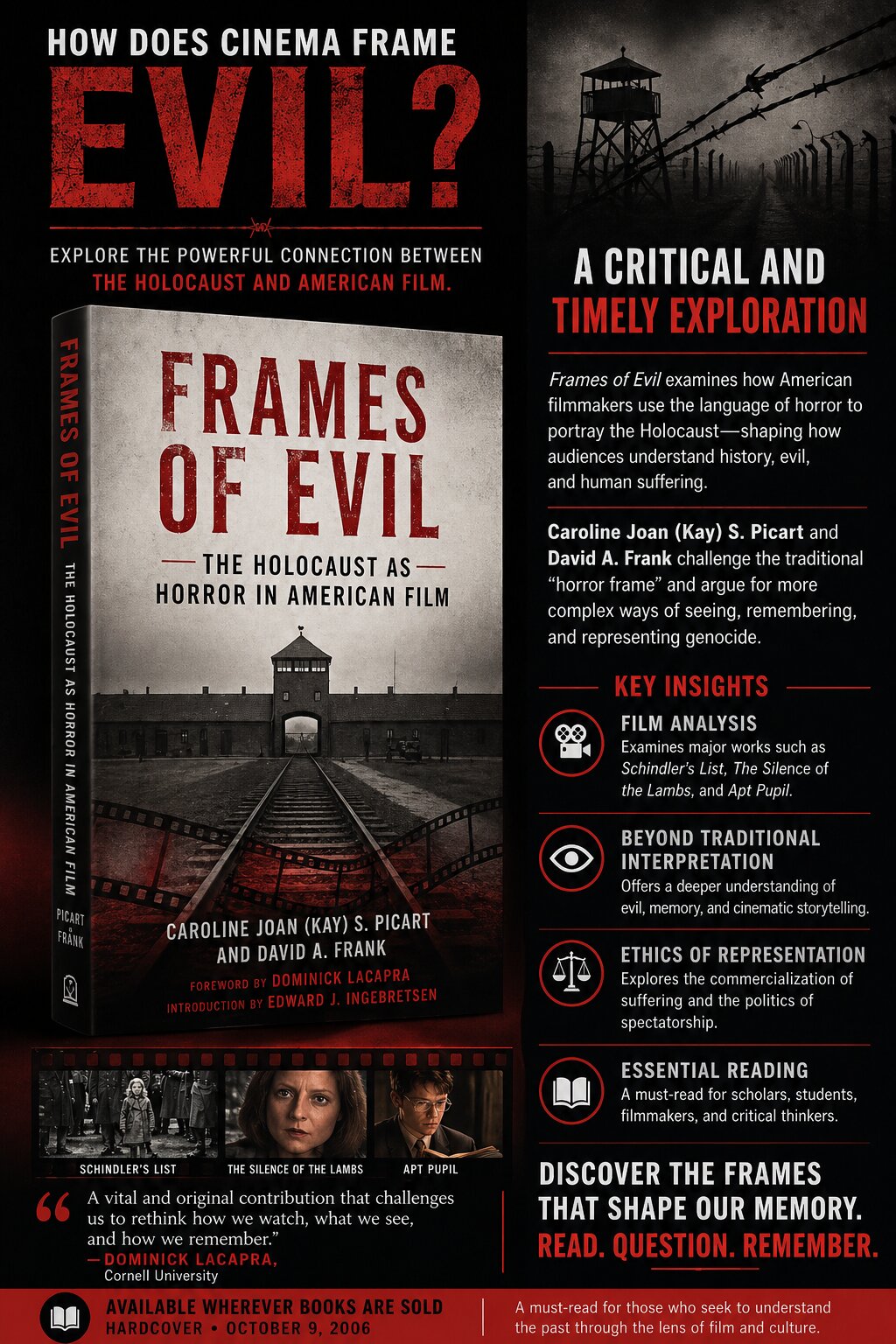
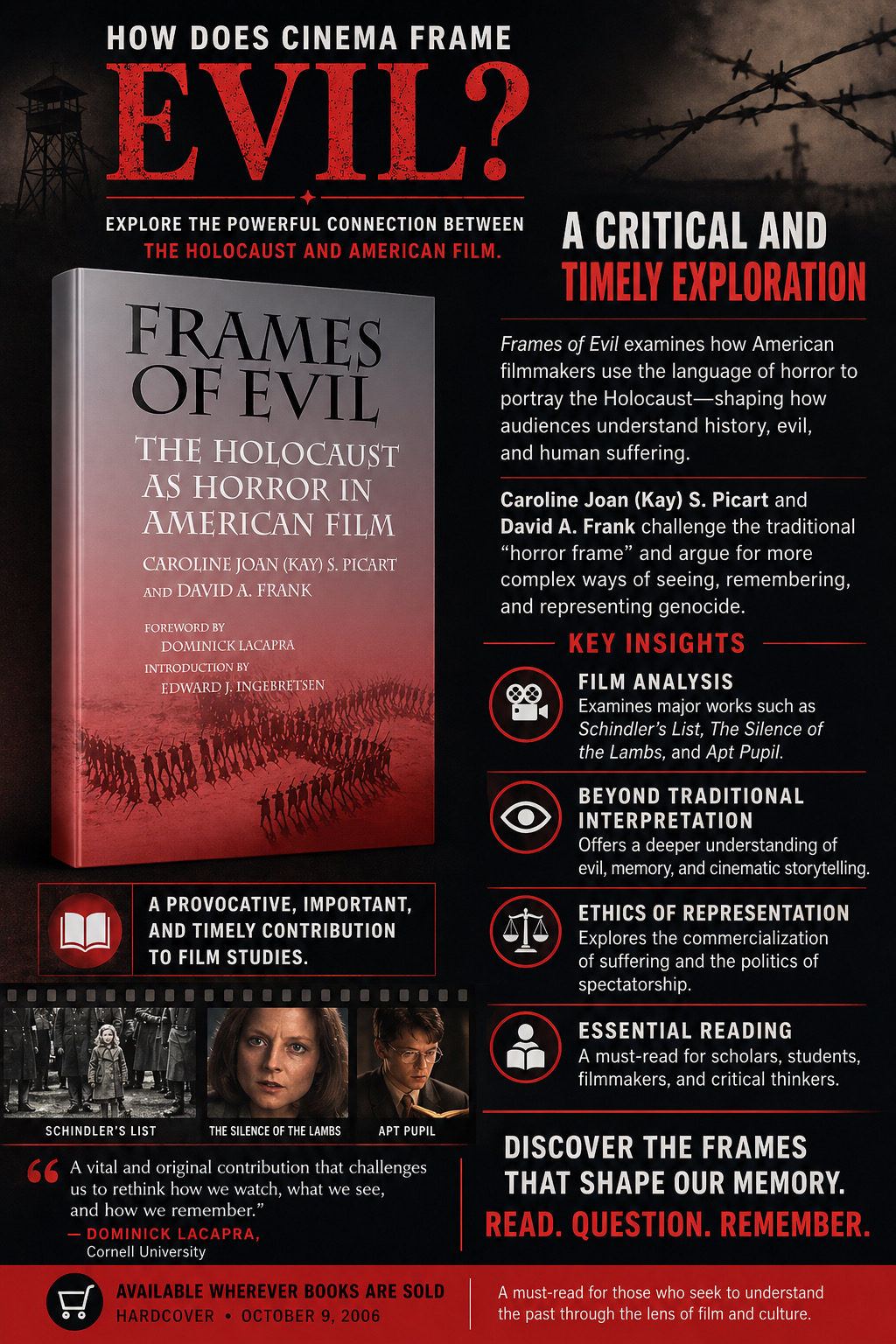
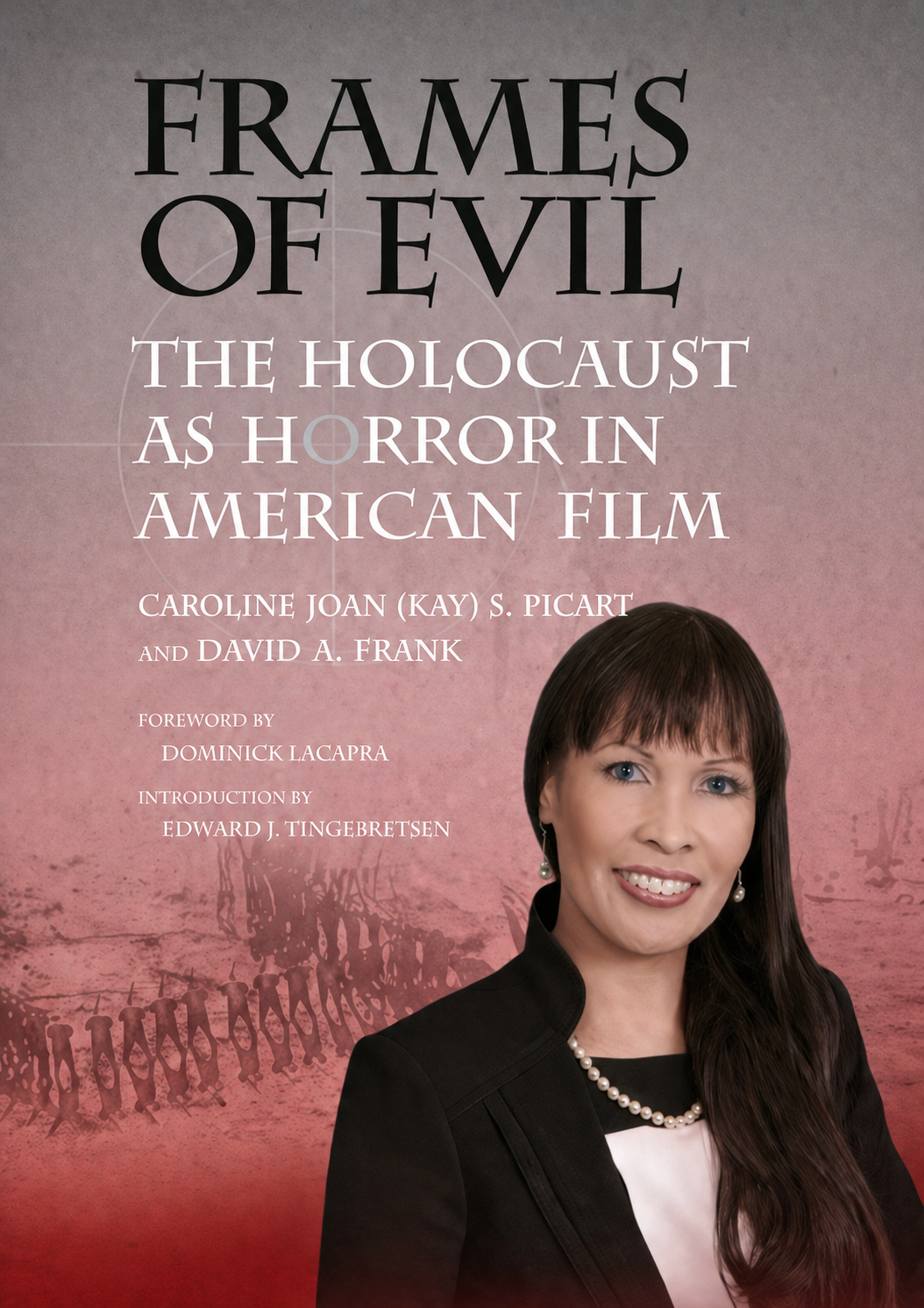
- Frames of Evil: The Holocaust as Horror in American Film by Caroline Joan (Kay) S. Picart and David A. Frank (Review by Jithendrajithu, March 2026)
- The Holocaust Film Sourcebook is less a conventional book and more an expansive scholarly archive that invites readers to confront how cinema has grappled with one of history’s most devastating atrocities. Edited by Caroline Joan S. Picart, this two-volume work doesn’t attempt to offer a single interpretation of Holocaust representation. Instead, it opens up a wide-ranging conversation about memory, ethics, and the limits of visual storytelling. From the outset, it becomes clear that this is not just about films—it is about how societies remember, process, and sometimes struggle to represent trauma.
What immediately stands out is the extraordinary breadth of the sourcebook. It goes far beyond widely recognized films like Schindler's List, Life Is Beautiful, and The Pianist, incorporating a vast range of cinematic works including documentaries, lesser-known international productions, and even propaganda pieces. This inclusivity allows readers to see how representations of the Holocaust have evolved over time, shaped by cultural, political, and historical contexts. The result is a work that feels comprehensive without being overwhelming, as it carefully organizes an immense amount of material into a coherent and navigable structure.
Beyond its scope, the book’s real strength lies in its critical depth. It does not treat films as mere reflections of history, but as active participants in shaping how that history is understood. Through its essays and analyses, the sourcebook raises difficult but necessary questions: Can cinema ever truly do justice to such immense suffering? Where is the line between education and exploitation? These questions linger throughout the text, encouraging readers to engage with Holocaust cinema not passively, but with a heightened sense of awareness and responsibility.
Another notable feature is the book’s utility as a research and teaching tool. The detailed filmographies, production histories, and curated bibliographies make it an invaluable resource for students and scholars alike. At the same time, Picart ensures that the material is not confined to academic circles. The writing, while informed and rigorous, remains approachable enough for dedicated general readers who are interested in film history or cultural studies. This balance between accessibility and scholarly depth is one of the book’s most impressive achievements.
Ultimately, The Holocaust Film Sourcebook leaves a profound and lasting impression because it refuses to simplify its subject. It acknowledges the complexity, sensitivity, and ongoing relevance of Holocaust representation in cinema. Rather than providing easy answers, it offers a framework for understanding how films contribute to collective memory—and how they can both illuminate and obscure historical truth. It is a demanding but deeply rewarding work, one that underscores the power of film not just to tell stories, but to shape the way we remember and reckon with the past. - Frames of Evil: The Holocaust as Horror in American Film by Caroline Joan (Kay) S. Picart and David A. Frank (Review by The Books Cafe, October 2025)
- Frames of Evil: The Holocaust as Horror in American Film presents a bold and intellectually thorough examination of how American cinema transforms one of history’s most horrific realities into a visual and emotional experience. Instead of merely concentrating on cinematic techniques or historical fidelity, the authors explore the disquieting intersection where horror and history converge—a realm where morality, memory, and media intersect. The authors contend that American filmmakers frequently employ the aesthetics of horror—dark settings, monstrous antagonists, and narrative suspense—to make the Holocaust understandable, or at least emotionally relatable, to broad audiences. In this manner, films such as Schindler’s List, Apt Pupil, and even The Silence of the Lambs engage in a cultural trend: converting systemic evil into a spectacle shaped by recognizable tropes of fear and intrigue. This, according to Picart and Frank, represents both the strength and the peril of cinematic storytelling—it has the potential to humanize tragedy, yet it can also distort it. What distinguishes this book is its unwillingness to accept simplistic conclusions. The authors traverse the ethical complexities of representation with academic rigor and moral sensitivity. They acknowledge that horror imagery can serve as a potent vehicle for empathy and remembrance—but they also reveal how it risks aestheticizing atrocity, transforming genocide into a consumable narrative. Each chapter prompts the reader to interrogate not only what is being depicted but also why and how we opt to observe. Augmented by striking film stills and thoroughly researched arguments, Frames of Evil serves as much as a study of cultural conscience as it does of cinema. It compels us to reflect on whether cinema’s obsession with evil clarifies or obscures our comprehension of it.
- Frames of Evil: The Holocaust as Horror in American Film by Caroline Joan S. Picart (Review by Kindle Library, August 2025)
- In Frames of Evil, Caroline Joan (Kay) S. Picart and David A. Frank confront a daring and disquieting inquiry: How has American cinema chosen to depict the Holocaust, and what occurs when it adopts the narrative and visual conventions of horror for this purpose? Their response is both thought-provoking and thoroughly researched, challenging the notion that a singular ‘classic horror’ perspective can adequately capture the enormity of genocide. The authors contend that numerous significant Holocaust films—from Schindler’s List to The Silence of the Lambs and Apt Pupil—heavily rely on Gothic and horror elements to portray evil. Nazis are frequently depicted as archetypal monsters, evil is assigned a tangible and nearly supernatural ‘face,’ and viewers are led through a recognizable structure that provokes fear, disgust, and catharsis. However, this method risks oversimplifying the historical truth, reducing systemic atrocity to a mere spectacle of villainy. Through meticulous, critical analyses, Picart and Frank demonstrate how Schindler’s List, for example, disguises itself in the aesthetics of historical docudrama while employing the cinematic techniques of horror. They highlight how such framing can encourage audiences to consume suffering as narrative entertainment while evading a more profound engagement with the sociopolitical forces that facilitated the Holocaust. The book further explores the commercial exploitation of atrocity imagery, posing challenging questions about whether cinematic representations of genocide effectively become commodities for audience consumption. Enhanced by thirty-six stills, the visual analysis bolsters the authors’ assertion that the conventional ‘monster’ framing—while impactful—must be complemented with alternative viewpoints to fully grasp the complex nature of evil and mass violence. Frames of Evil transcends mere film criticism—it serves as a call to broaden the ways we interpret and comprehend cinematic representations of historical trauma.
- Dr. Caroline Picart Citation: from Spectra: Publication of the National Communication Association Trauma and Its Vicissitudes - Highlighted Version (HTML)
- Review by American Cinematographer Magazine, January 2008
- Editor's Choice Review of Selected Books from Choice
Reviews Online:
Review by L. D. Talit, Central Connecticut State University -
Picart, C.J.S. and Cecil Greek, eds, Monsters In and Among Us: Towards a Gothic Criminology (Fairleigh Dickinson University Press, 2007).
Click here for more information | Cinematic Trailer Video 1 | Cinematic Trailer Video 2 | Cinematic Trailer Video 3 | User Generated Content
-
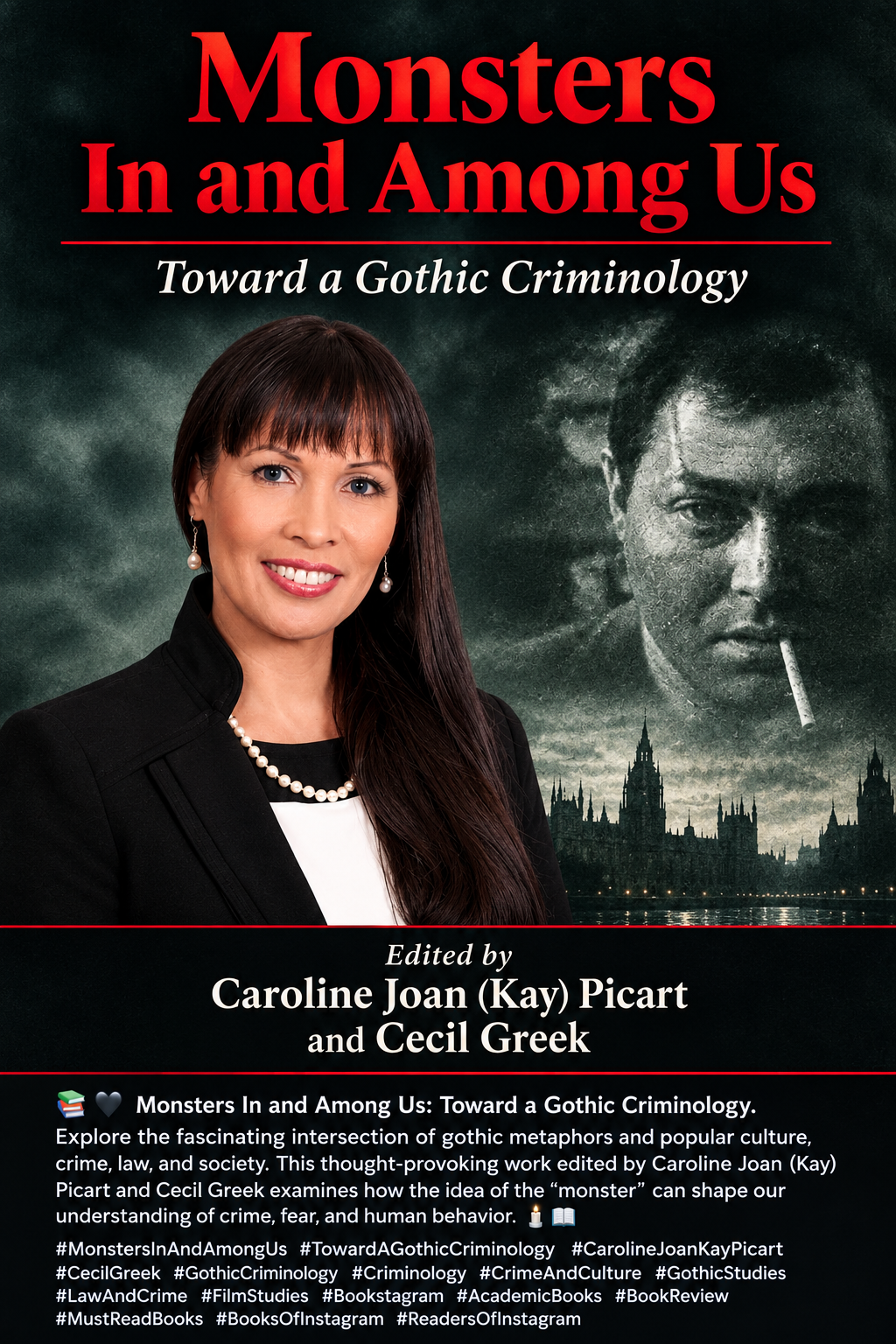
- Monsters In and Among Us: Toward a Gothic Criminology by Caroline Joan Picart co-edited with Cecil Greek (Review by Jithendrajithu, March 2026)
- Monsters in and Among Us: Toward a Gothic Criminology is a bold and unconventional collection that reimagines the study of crime through the lens of gothic imagination and cultural symbolism. Edited by Caroline Joan S. Picart, the book challenges the reader to rethink the familiar boundaries between criminal behavior and cultural narrative. Instead of presenting crime as purely a legal or sociological issue, it suggests that our understanding of deviance is deeply shaped by the stories we tell—stories filled with monsters, fear, and moral ambiguity.
One of the most striking qualities of this collection is its ability to bridge seemingly distant fields. The essays move fluidly between criminology, film analysis, and psychological theory, revealing how popular culture both reflects and reinforces societal anxieties. For instance, discussions around films like Dirty Harry highlight how ideas of justice and masculinity are often framed in stark, almost mythic terms. Similarly, references to The Man Who Knew Too Much illustrate how suspense and paranoia mirror real-world fears about control and vulnerability. These connections make the book feel dynamic and layered, rather than confined to a single discipline.
What gives the book its intellectual weight is its exploration of how the label of “monster” functions within society. The essays argue that categorizing individuals—whether serial offenders, terrorists, or marginalized groups—as monstrous serves a purpose: it creates distance, simplifies complexity, and reinforces social norms. However, this process can also obscure the underlying causes of crime, reducing human behavior to something almost supernatural. This critical perspective encourages readers to question not only who we call monsters, but why we feel the need to do so.
Another compelling dimension is the book’s engagement with the psychological and symbolic aspects of fear. By drawing parallels between real-life criminals and gothic archetypes like vampires or uncanny doubles, the collection reveals how deeply ingrained these images are in our collective consciousness. These comparisons are not merely stylistic—they expose how narratives of horror shape public perception, media coverage, and even policy decisions. The result is a reading experience that feels both unsettling and illuminating, as it uncovers the hidden narratives behind everyday assumptions about crime.
In the end, Monsters in and Among Us stands out as a thought-provoking and intellectually adventurous work. It does not offer easy answers or neat conclusions; instead, it invites readers to sit with complexity and ambiguity. By merging gothic theory with criminology, Picart and her contributors open up new ways of thinking about justice, identity, and societal fear. It is a challenging but rewarding read, particularly for those interested in how culture and crime intersect in ways that are often overlooked yet profoundly influential. - Monsters In and Among Us: Toward a Gothic Criminology by Caroline Joan Picart co-edited with Cecil Greek (Review by The Books Cafe, October 2025)
- Monsters In and Among Us: Toward a Gothic Criminology presents a daring and engaging investigation into the societal construction of monsters—and how these constructs unveil our profound fears, fascinations, and contradictions. By merging the haunting charm of Gothic storytelling with the analytical depth of criminology, this anthology explores the notion that horror transcends fiction, permeating our news cycles, political discourse, and collective consciousness. At its essence, the book introduces the idea of "Gothic criminology"—a framework that scrutinizes how the macabre aesthetics and emotional resonance of Gothic narratives influence our perceptions of real-world violence, justice, and authority. Picart and Greek contend that the very elements that render Gothic fiction so captivating—dark desires, moral ambiguity, obsession, and terror—are reflected in the societal narration and sensationalism surrounding crime. From media spectacles such as the O. J. Simpson trial to the portrayal of terrorism and disease, the Gothic’s impact is woven into the fabric of our culture. Picart’s prose, complemented by Greek’s sociological perspective, meticulously unpacks this phenomenon with grace and accuracy. They illustrate how television, film, and journalism elevate criminals to iconic status, transform victims into symbols, and convert public fear into a form of entertainment. The distinction between moral examination and voyeurism becomes indistinct, leading audiences to experience both horror and fascination—a duality that epitomizes the Gothic imagination itself. The compelling nature of Monsters In and Among Us lies in its extensive interdisciplinary scope. The authors intricately connect film criticism, cultural theory, media studies, and sociology to reveal how Gothic archetypes—vampires, demons, mad scientists—re-emerge in contemporary forms through political rhetoric, celebrity scandals, and media sensationalism. They propose that even the most ordinary headlines are imbued with Gothic sensibilities.
- Monsters In and Among Us: Toward a Gothic Criminology by Caroline Joan Picart co-edited with Cecil Greek (Review by Kindle Library, August 2025)
- In Monsters In and Among Us, Caroline Joan Picart guides readers through the murky intersection of horror fiction and real-world crime, politics, and media culture. This collection of essays presents the idea of “Gothic criminology,” a framework that helps us comprehend how our intrigue with the monstrous is intricately linked to both entertainment and the public domain. Picart contends that Gothic elements—bloodlust, compulsion, vengeance, and unchecked power—extend beyond the confines of literature and cinema. They infiltrate the narratives surrounding actual events, from notorious criminal trials like O. J. Simpson’s to portrayals of terrorism, AIDS, and environmental disasters. In these stories, antagonists often acquire almost mythical attributes, malevolence transforms into a captivating spectacle, and the Gothic’s fusion of fear and allure influences the manner in which tales are narrated and interpreted. The essays transition seamlessly among film critique, criminology, cultural studies, and sociology, arguing that our societal craving for “monsters” is as much about identity and politics as it is about entertainment. Hollywood thrillers and true-crime narratives utilize a shared visual and storytelling language that amplifies drama, simplifies moral distinctions, and obscures the boundary between reality and fiction. Even public policy and news coverage, as Picart posits, draw from Gothic conventions to present events in ways that evoke intense emotional responses. What distinguishes Monsters In and Among Us is its interdisciplinary methodology. Picart references instances from mainstream films, television news, political discourse, and even talk shows like Oprah to illustrate how profoundly the Gothic has infiltrated American thought. The book’s extensive scope renders it both intellectually robust and culturally pertinent, appealing to academics and inquisitive readers alike. By illustrating how Gothic narratives influence our understanding of crime, justice, and morality, Picart encourages us to reevaluate the impact of these stories.
- A Review by Roger C. Schlobin, Journal of the Fantastic in the Arts 20:1 (2009): 144-146.
Download PDF Review
- Picart, Caroline J.S. From Ballroom to DanceSport: Aesthetics, Athletics and Body Culture. Albany,
NY: State University of New York Press, 2005.
Cinematic Trailer Video 1 | Cinematic Trailer Video 2 | User Generated Content
- From Ballroom to DanceSport: Aesthetics, Athletics and Body Culture by Caroline Joan S. Picart Cinematic Trailer Video Click here
-
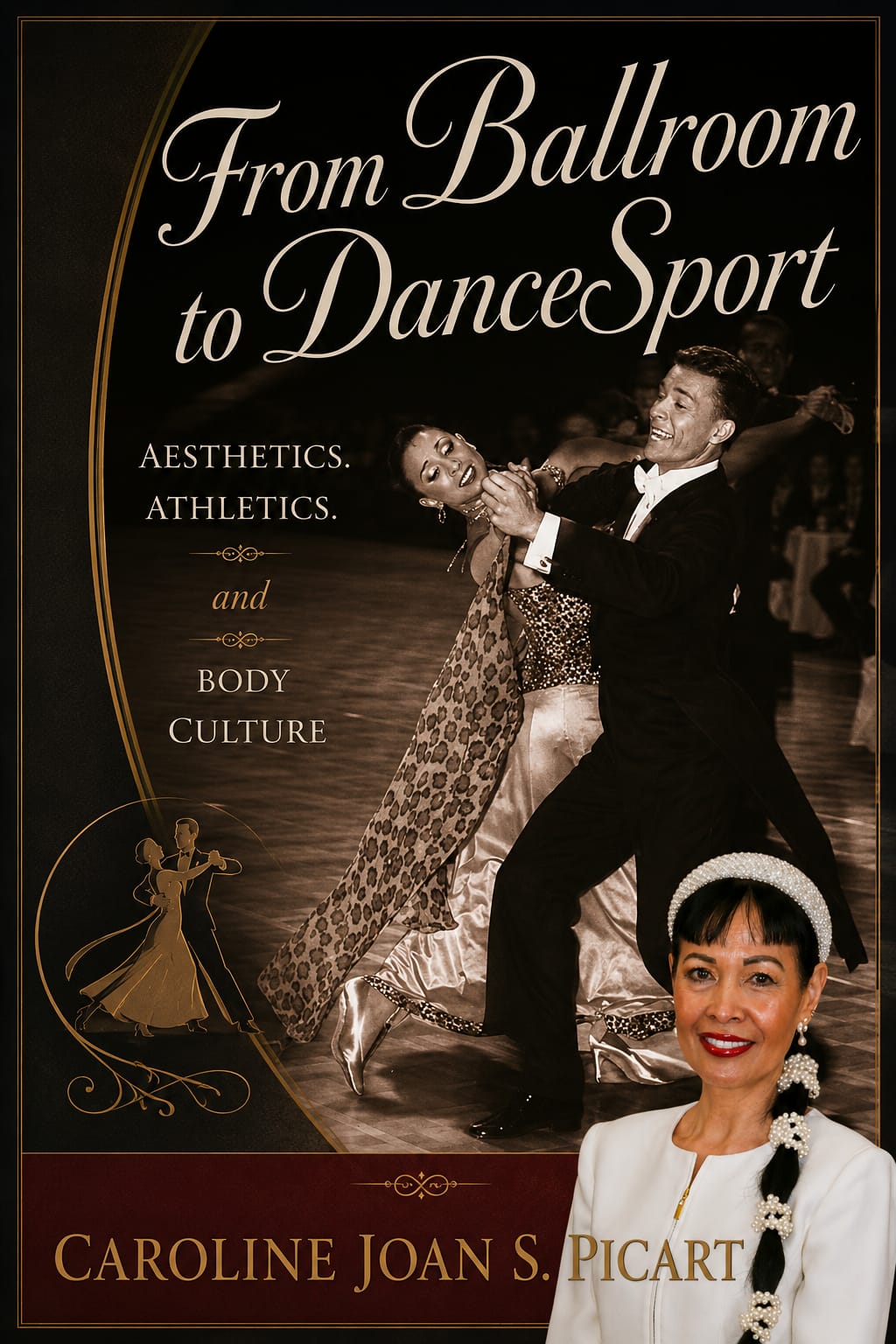
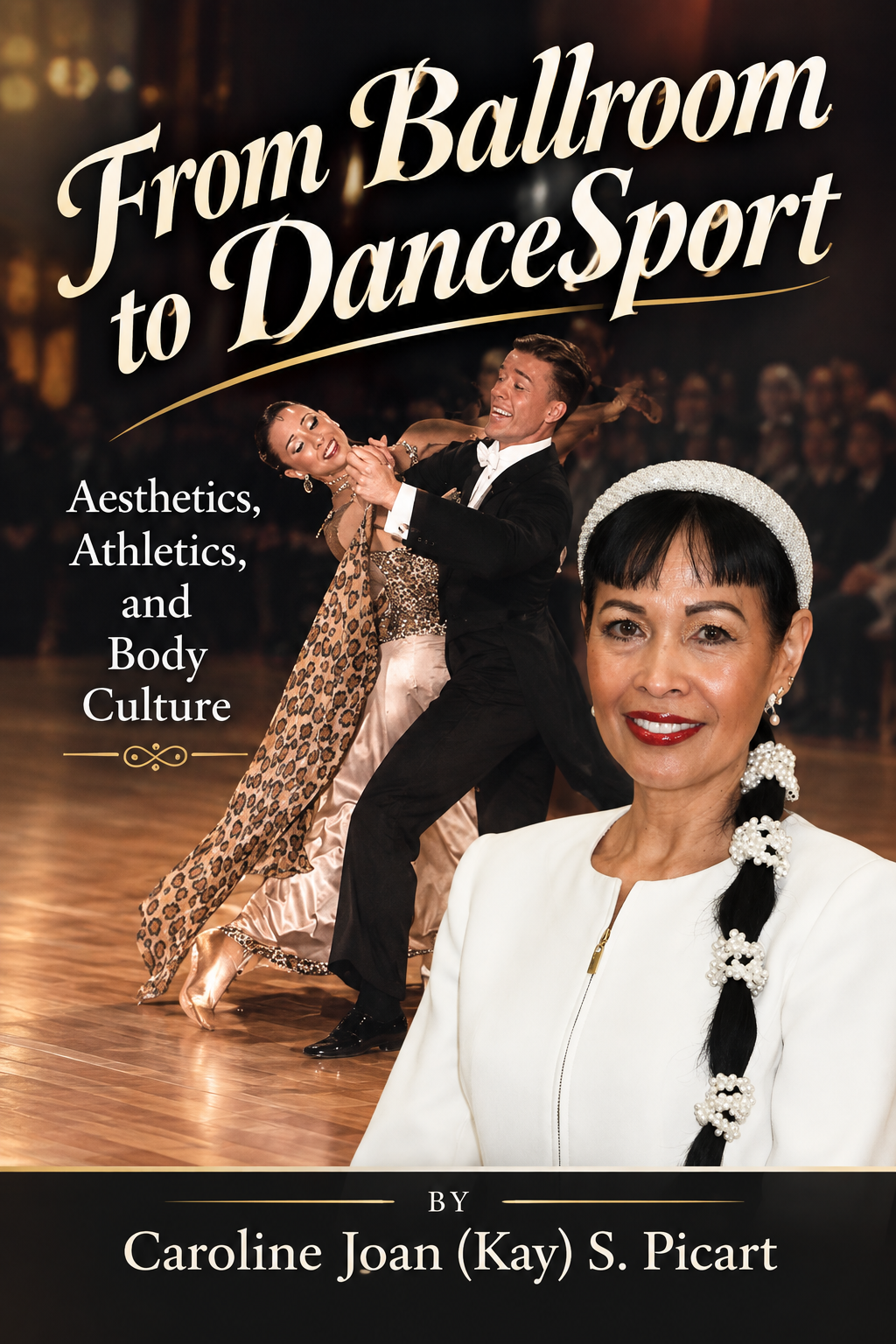
- From Ballroom to DanceSport: Aesthetics, Athletics, and Body Culture by Caroline Joan S. Picart (Review by Jithendrajithu, March 2026)
- This book offers a compelling and intellectually engaging look at the evolution of ballroom dance into a competitive global sport. What makes this book particularly distinctive is Picart's position as both an academic and an experienced dancer, which allows her to blend theory with firsthand insight. The result is a narrative that feels grounded, reflective, and deeply informed, offering readers a perspective that goes beyond surface-level appreciation of dance.
A central focus of the book is the transformation of ballroom into DanceSport, and Picart explores this shift with nuance and depth. She examines how the graceful, expressive nature of traditional ballroom has increasingly been reshaped by the demands of athletic competition, standardized judging, and global visibility. This evolution raises important questions about identity and purpose-whether dance remains an art form or becomes something closer to a regulated sport. The discussion surrounding its potential inclusion in the Olympic Games adds further complexity, highlighting tensions between artistic freedom and institutional structure.
What elevates the book is its exploration of the body as a cultural and political site. Picart delves into how dancers are presented and perceived, analyzing how race, gender, class, and nationality influence both performance and reception. She argues that dance is not just movement, but a form of expression shaped by societal expectations and power dynamics. This perspective encourages readers to see ballroom and DanceSport not only as entertainment, but as reflections of broader cultural narratives.
The writing is thoughtful and layered, combining academic analysis with accessible examples from competitions and media portrayals. While some sections lean heavily into theory, Picart consistently ties her arguments back to real-world practices, making the material easier to engage with. - From Ballroom to DanceSport: Aesthetics, Athletics, and Body Culture by Caroline Joan S. Picart (Review by The Books Cafe, October 2025)
- Where Elegance Converges with Strength on the International Stage In From Ballroom to DanceSport: Aesthetics, Athletics, and Body Culture, Caroline Joan S. Picart presents a remarkable, multifaceted analysis of the evolution of the sophisticated realm of ballroom dance into the fiercely competitive and media-centric phenomenon known as DanceSport. Leveraging her unique dual expertise as both an academic and a professional dancer, Picart encapsulates the tension, beauty, and politics that drive this transformation from a social art form to a global spectacle. Through thorough cultural examination, Picart demonstrates that DanceSport transcends mere movement or technique—it embodies profound conflicts surrounding identity, gender, race, class, and nationalism. As dance competitions evolve into televised events and initiatives for Olympic inclusion gain traction, she investigates how the dancing body emerges as a locus of power, discipline, and desire. Costumes, choreography, and presentation are analyzed not solely as aesthetic decisions, but as performances influenced by commercial interests and cultural norms. What sets Picart’s work apart is her capacity to blend theoretical rigor with personal experience. Her insider perspective on dance lends the book authenticity and vibrancy, while her scholarly approach situates DanceSport within larger discussions about media impact, globalization, and embodiment. The outcome is a revealing depiction of how dancers balance artistry and athleticism in a landscape increasingly dominated by spectacle and consumerism. Picart’s writing is both graceful and sharp, encouraging readers to view dance as more than mere entertainment—it serves as a dynamic medium of power, expression, and social negotiation. From Ballroom to DanceSport is a must-read for anyone interested in performance studies, dance history, gender theory, or visual culture.
- From Ballroom to DanceSport: Aesthetics, Athletics, and Body Culture by Caroline Joan S. Picart (Review by Kindle Library, July 2025)
- In From Ballroom to DanceSport, Caroline Joan S. Picart presents a captivating and insightful analysis of the evolution of traditional ballroom dancing into the contemporary, athletic phenomenon known as DanceSport. Drawing from her distinctive viewpoint as both an academic and an experienced dancer, Picart investigates how this transition mirrors wider cultural conflicts related to gender, race, class, nationalism, and the influence of media. As televised dance competitions gain popularity and the movement to recognize DanceSport as an Olympic event intensifies, Picart examines the aesthetic and political intricacies inherent in the competitive dance sphere. She uncovers how the bodies participating in this domain are not merely moving to music but are also imbued with significance—sexualized, racialized, and frequently commodified for mass consumption. Choreography, costumes, and performance techniques are all designed to enthrall audiences, utilizing melodramatic narratives and commercial allure to enhance engagement. What distinguishes this work is Picart’s skill in harmonizing thorough academic scrutiny with engaging, vivid portrayals of dance culture from an insider’s perspective. She elucidates how ballroom dancing has evolved beyond mere grace and elegance to encompass athleticism, performance politics, and the construction of identity on a global platform. This book is a vital resource for students and scholars in the fields of dance, performance studies, media, and cultural studies, as well as for anyone intrigued by the realities behind the sequins and spotlights. Picart masterfully captures the dynamic, tension-laden transition from ballroom to DanceSport, making a persuasive argument for dance as both an artistic expression and a lens through which societal dynamics can be examined.
- Review, "From Ballroom to DanceSport - Aesthetics, Athletics and Body Culture" Gregory J. Thompson, The Journal of Popular Culture Vol. 40, Issue 6, Page 1099, December, 2007
Dr. Picart's new book, From Ballroom t o DanceSport: Aesthetics, Athletics, and Body Culture - Review, "From Ballroom to DanceSport - Aesthetics, Athletics and Body Culture" Attitude: The Dancer's Magazine, Vol. 20, No. 1, Spring
2006, pp. 58-59.
- From Ballroom to DanceSport -- Reviewed by Fred Mason, University of New Brunswick, 2006
- Ranked 16 out of the first 25 most ordered books on danceSport at Amazon.com; see http://www.amazon.ca/gp/bestsellers/books/1099222
Review at www.idrottsforum.org: http://www.idrottsforum.org/reviews/items/norsan_picart.html - Picart, C.J.S. Inside Notes from the Outside (Lanham, MD: Lexington Press/Rowman and Littlefield, 2004)
- Cinematic Trailer Video 1 | Cinematic Trailer Video 2 | Cinematic Trailer Video 3 | Cinematic Trailer Video 4
- Podcast on Inside Notes from the Outside with the Mr. Speaker Speaks podcast, October 28, 2025. Direct Link
-
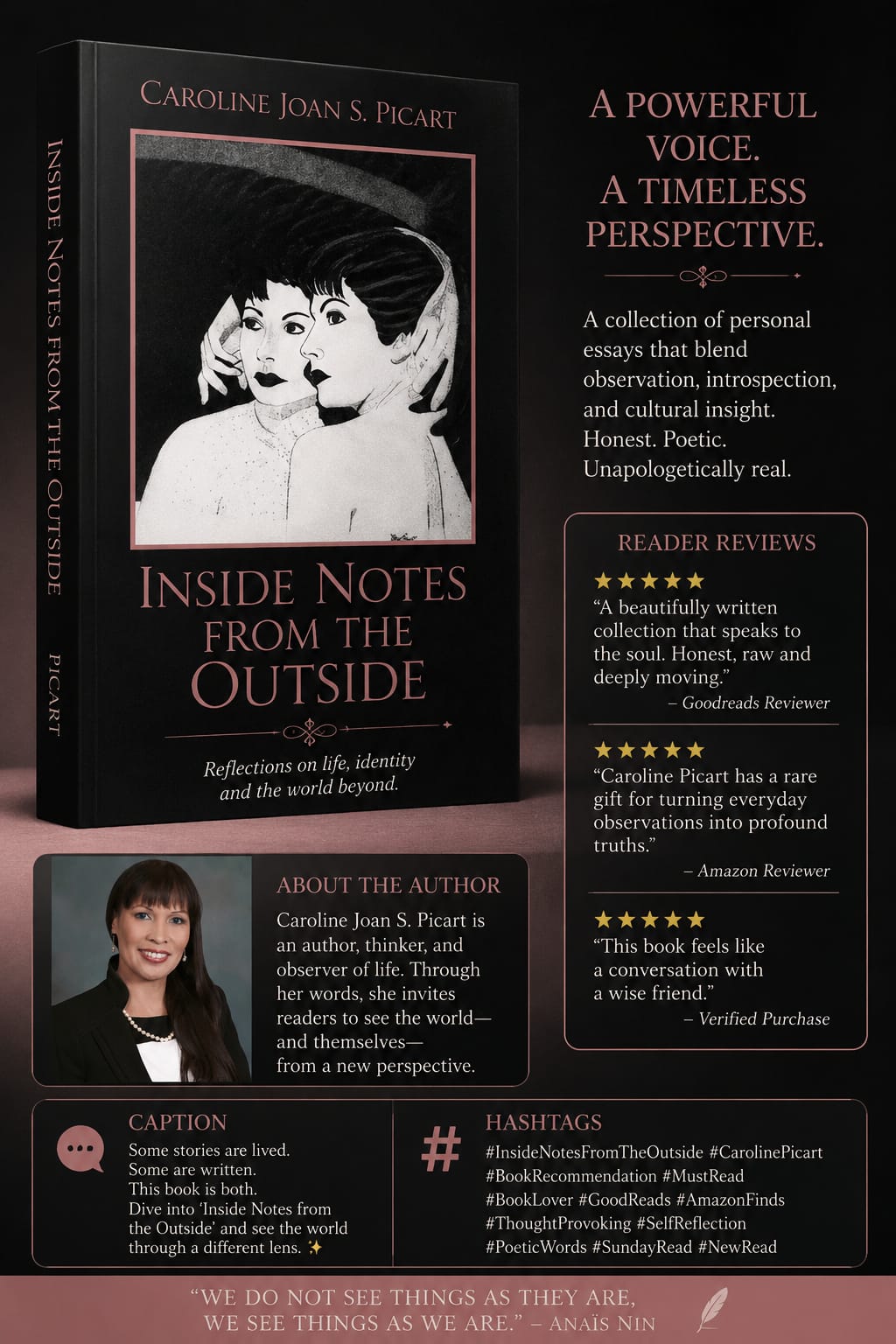
- Inside Notes from the Outside by Caroline Joan S. Picart (Review by The Books Cafe, October 2025)
- Inside Notes from the Outside presents a remarkable blend of memoir, philosophy, and cultural introspection—an intimate yet intellectually stimulating exploration of identity, belonging, and transformation. Through a distinctive combination of personal letters, diary excerpts, essays, and visual art, Picart creates a complex mosaic of her experiences as a woman navigating diverse cultural, racial, and intellectual realms. Having been raised in the Philippines and later influenced by her education in England and the United States, ultimately finding herself in the nuanced position of an immigrant in multicultural America, Picart’s voice embodies both detachment and profound connection. Her insights delve into the experience of living between worlds—never entirely within, nor completely outside—and how power, prejudice, and perception continually evolve based on who observes, listens, or defines. In contrast to conventional memoirs that focus on linear narratives, Inside Notes from the Outside flourishes in its intricate complexity. Picart intertwines the personal with the theoretical, blending emotional revelations with incisive analysis. Her investigation of identity does not conform to rigid classifications; rather, it uncovers how concepts of race, gender, and class are dynamic, often intersecting in surprising and transformative manners. Each entry serves as a contemplation on the unseen boundaries—cultural, emotional, and intellectual—that influence the human experience. What renders the book particularly engaging is Picart’s determination to avoid oversimplification. Her tone transitions effortlessly from poetic vulnerability to stringent critique, fostering a conversation between the self and society that resonates on both personal and universal levels. Her reflections on love, alienation, and resilience encourage readers not only to observe her journey but also to identify reflections of their own. In the end, Inside Notes from the Outside surpasses the confines of autobiography.
- Inside Notes from the Outside by Caroline Joan S. Picart (Review by Kindle Library, August 2025)
- In Inside Notes from the Outside, Caroline Picart presents an exceptional work that transcends the boundaries of memoir, cultural critique, and philosophical exploration. Composed of letters, diary entries, newspaper articles, and visual art, this profoundly personal yet academic text functions as both an autoethnography and a contemplation on identity. Having been raised in the Philippines, educated in England and the United States, and subsequently navigating life in multicultural America as a 'foreigner' married to an American, Picart’s insights encapsulate the intricacies of existing between diverse worlds. Her narrative addresses how race, gender, class, and cultural differences influence both personal and professional experiences, while resisting oversimplified views of power as static and unidimensional. Rather, she portrays power as a fluid, intricate matrix—sometimes apparent, sometimes concealed, and perpetually evolving. The book's allure lies in its capacity to intertwine the personal with the analytical. Picart candidly discusses her own challenges regarding belonging, love, and cultural negotiation, while concurrently placing these experiences within wider philosophical and social contexts. The outcome is a text that serves not only as an introspective voyage but also as a reflection of the broader immigrant and minority experience in America. Her writing invites readers to engage in a conversation with her past, her heritage, and her developing identity. At times raw and vulnerable, and at other times sharply critical, the book illustrates how personal narratives can shed light on larger issues of cultural politics and social identity. By integrating autobiography with intellectual inquiry, Picart encourages readers to rethink how categories such as race and culture are constructed, contested, and experienced. Inside Notes from the Outside stands as both a profoundly human narrative and a scholarly contribution, rendering it essential for readers with an interest in cultural studies, philosophy, and identity politics.
- Review by Jennifer Friedlander, "Politics Inside-Out," Review of Communication, Vol. 5, Nos. 2-3, April-July 2005, pp. 156-158.
- Picart, Caroline J. S. The Holocaust Film Sourcebook (Fiction, Documentary, Propaganda) 2 Volumes. (Westport, CT and London, England: Praeger, 2004).
- The Holocaust Film Sourcebook by Caroline Joan S. Picart Cinematic Trailer Video 1 | Cinematic Trailer Video 2 | Cinematic Trailer Video 3 | Cinematic Trailer Video 4 | User Generated Content
-

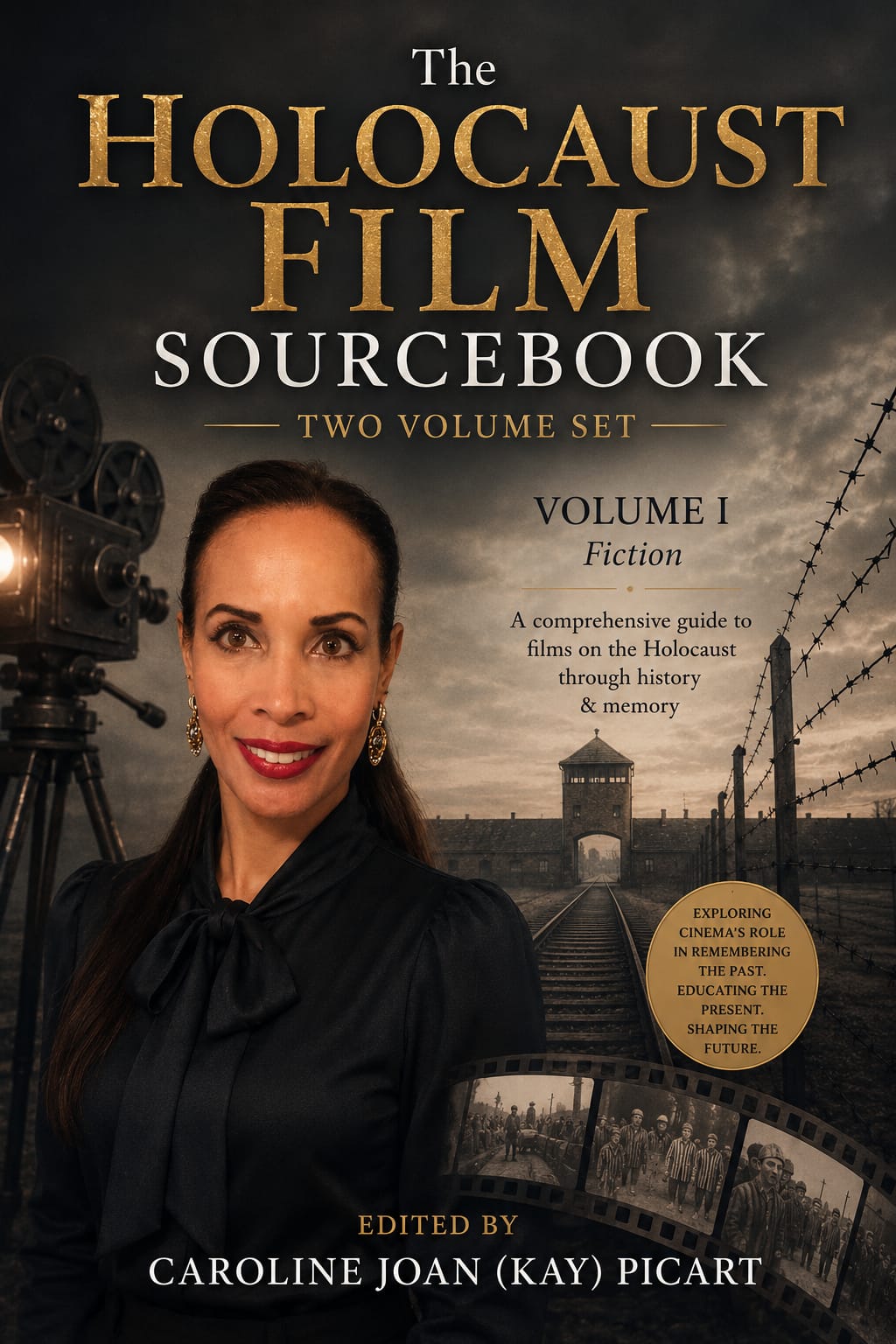

- The Holocaust Film Sourcebook by Caroline Joan S. Picart (Review by The Books Cafe, October 2025)
- The Holocaust Film Sourcebook stands as a significant accomplishment—an essential resource that transforms our approach to studying, teaching, and comprehending the cinematic representation of the Holocaust. Encompassing two volumes, this extensive work provides much more than a mere catalog; it functions as both a historical repository and a critical reflection on how film engages with the portrayal of humanity’s most harrowing chapter. Picart’s academic work combines meticulous documentation with profound intellectual insight. She charts the development of Holocaust cinema from its earliest visual representations and postwar documentaries to the intricate, often contentious narratives of contemporary filmmaking. Readers are introduced to a wide array of works—from educational and propaganda films to international interpretations that push the limits of genre and representation. Each entry includes production information, bibliographies, and contextual essays that place the films within larger cultural and ethical discussions. What sets this sourcebook apart is its equilibrium between empirical precision and philosophical exploration. Picart confronts challenging questions head-on: How can filmmakers ethically portray mass suffering? Where is the boundary between remembrance and exploitation? Is it possible for the cinematic medium to adequately represent the unfathomable reality of genocide? Her nuanced answers illuminate both the potential and the risks of visual storytelling when addressing historical trauma. The Sourcebook’s accessibility is among its most significant advantages. Scholars will appreciate its comprehensive references; educators will regard it as an invaluable resource for teaching; and general readers will develop a richer understanding of how collective memory is influenced by film. Picart’s voice—clear, reflective, and profoundly empathetic—leads readers through the sensitive endeavor of engaging with art that emerges from atrocity.
- The Holocaust Film Sourcebook (Two Volume Set) by Caroline Joan S. Picart (Review by Kindle Library, August 2025)
- Caroline Picart’s The Holocaust Film Sourcebook represents a significant and essential addition to the fields of Holocaust studies and film scholarship. This two-volume work serves as the first all-encompassing guide to the extensive and intricate array of films that explore one of history’s most tragic periods. While contemporary viewers may recognize acclaimed films such as Schindler’s List, Life Is Beautiful, and The Pianist, Picart meticulously illustrates that Holocaust cinema has roots that extend back many decades, including fiction, documentary, and propaganda films that have influenced cultural memory. The remarkable aspect of this sourcebook lies in its extensive scope and thoroughness. It not only catalogs hundreds of films but also includes production histories, bibliographies, filmographies, and insightful essays on key works. By merging archival precision with critical analysis, Picart guarantees that the text serves both as a reference resource and as a profound examination of the ethical, artistic, and historical implications of Holocaust representation. The book confronts challenging inquiries: Can cinema genuinely depict the reality of genocide? Which types of narratives are the most effective—or the most responsible—in portraying atrocities? How does the act of representation itself risk exploitation, oversimplification, or distortion? By addressing these questions, Picart provides a nuanced viewpoint, acknowledging both the influence and the constraints of film in shaping collective awareness. Crucially, the sourcebook is designed to be accessible to a variety of audiences. For scholars, it offers a meticulously structured archive; for film aficionados, it brings attention to lesser-known films that merit recognition; for educators and researchers, it presents a guide to navigate the intricate interplay of art, history, and memory. In conclusion, The Holocaust Film Sourcebook transcends being merely a catalog—it serves as a guide to understanding how cinema engages with one of humanity’s most profound tragedies.
- Review by Richard Raskin, "Holocaust Film," Review of Communication, Vol. 4, Nos. 3-4, July-October 2004, pp. 304-307.
- Reviews
by Choice and BookList
- Reviews and Information from Greenwood.com: http://www.greenwood.com/catalog/C7850.aspx
- Listing on ThatTechnicalBookstore.com:
- Listing: The Research Assistance and Reference blog of Furman University Libraries
- Picart, C.J.S., Remaking
the Frankensteinian Myth on Film: Between Laughter and Horror (Albany,
NY: State University of New York Press, 2003). Nominated for the 2004
National Communication Association Rhetoric and Communication Emerging
Scholar Award.
- Cinematic Trailer Video 1 | Cinematic Trailer Video 2 | User Generated Content
-
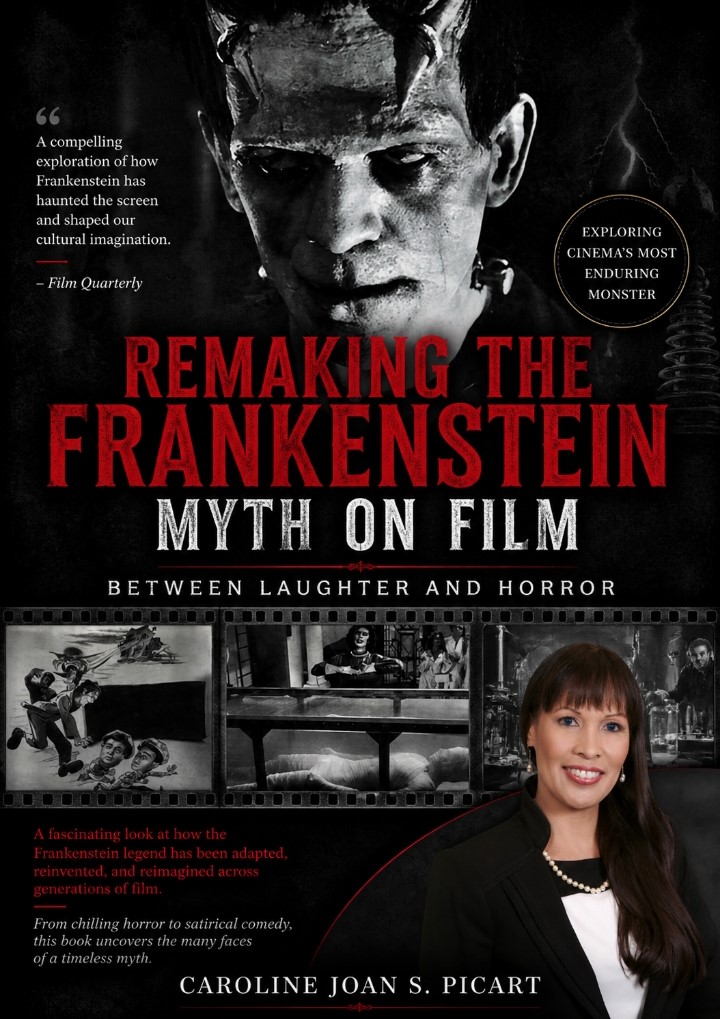
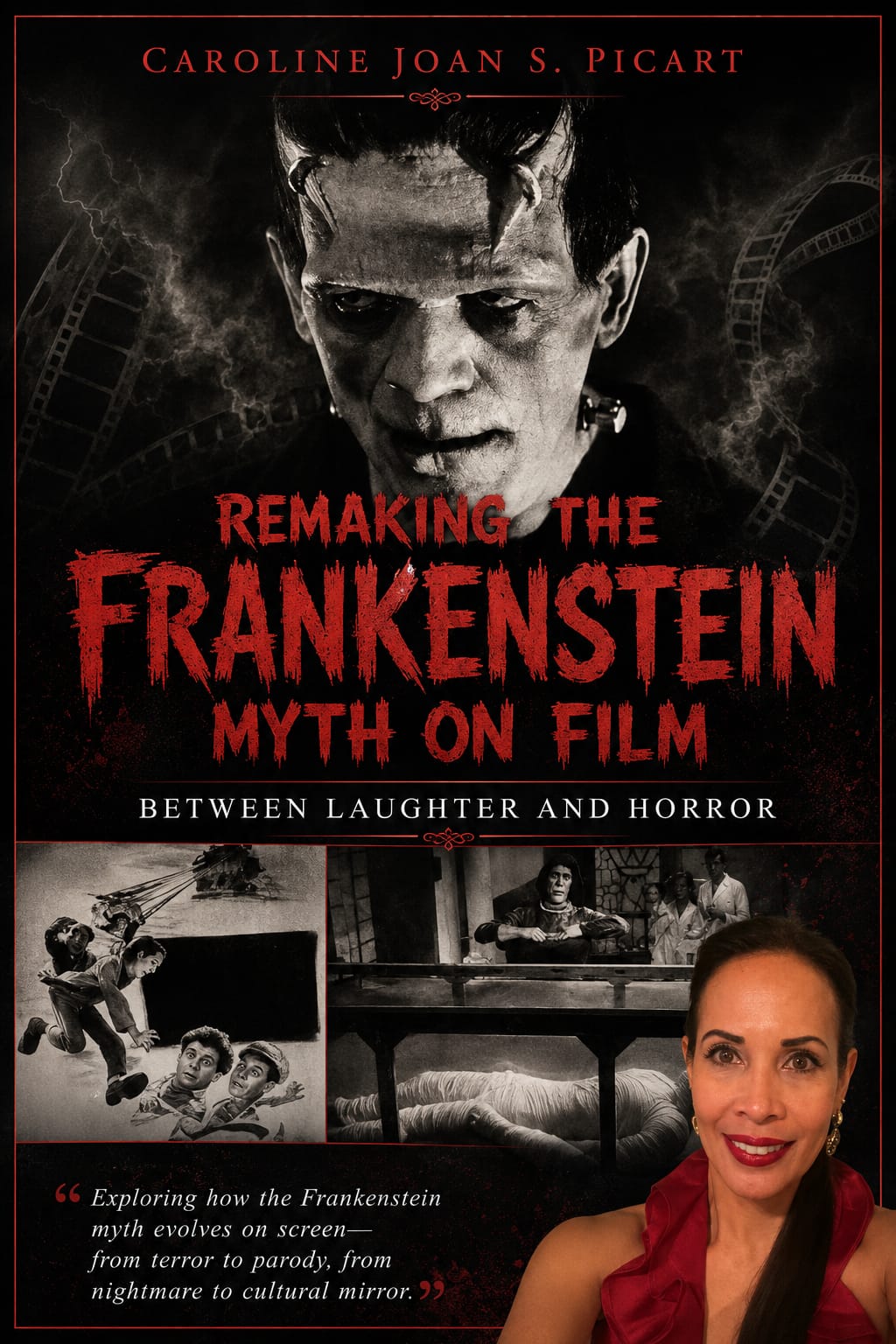
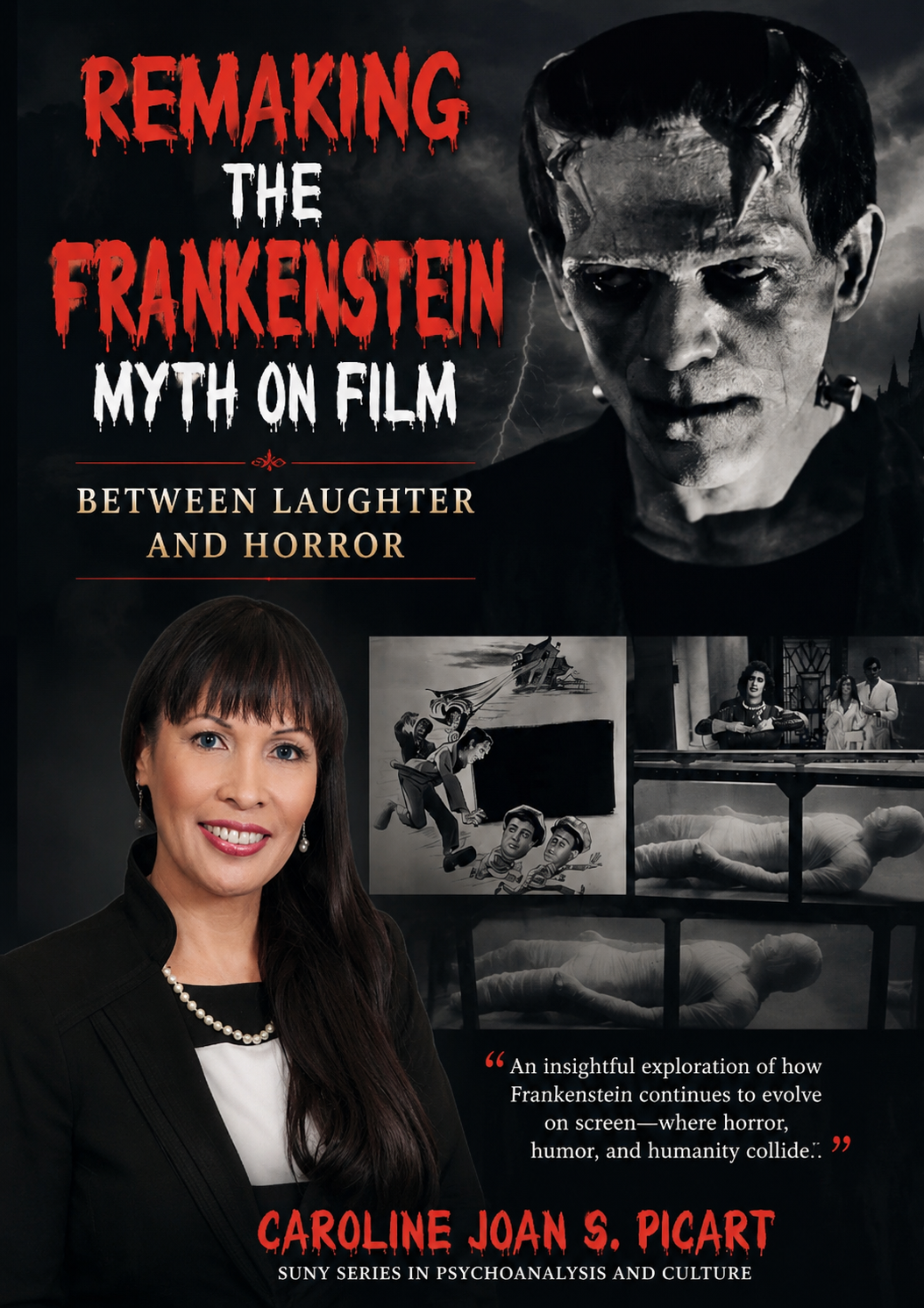
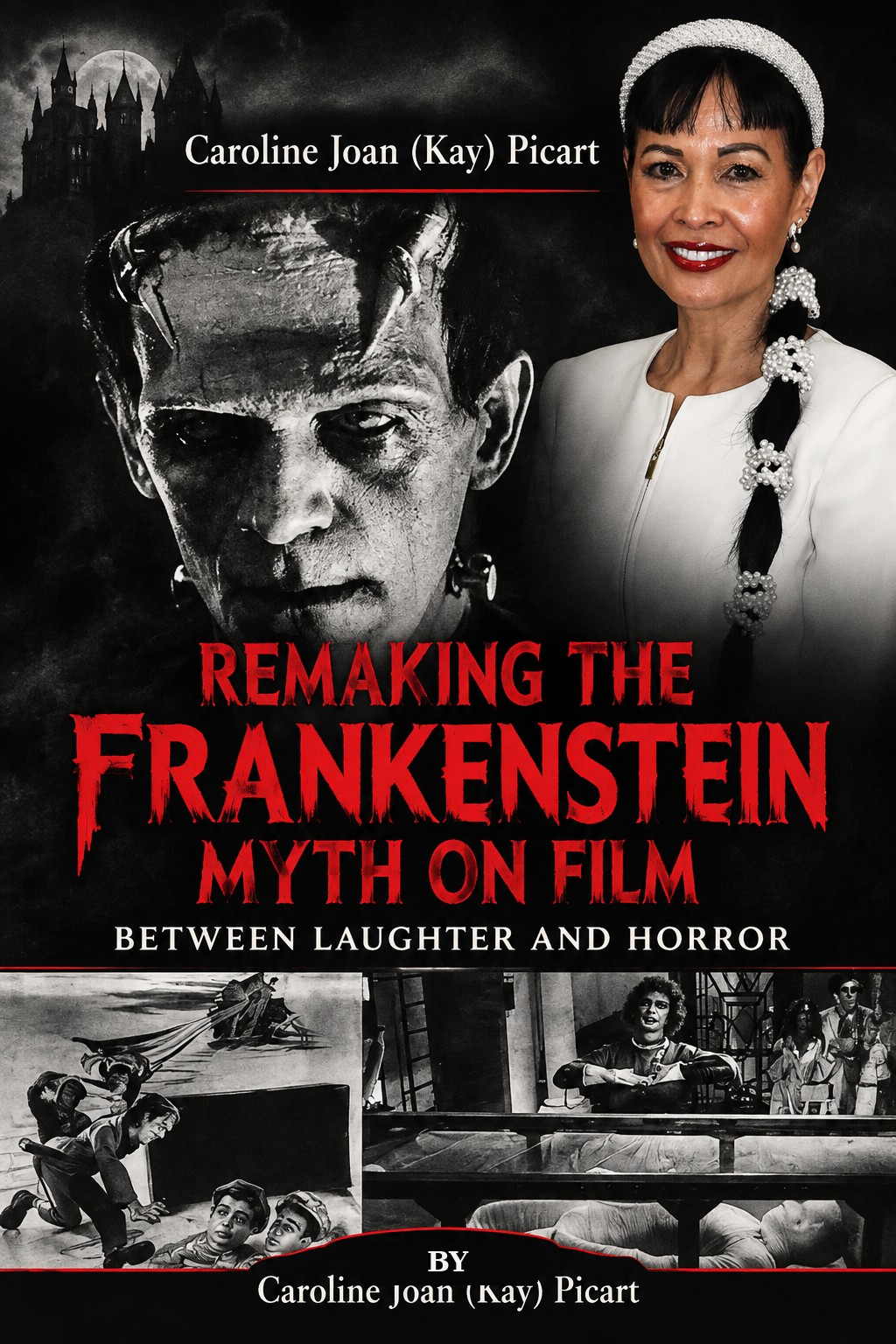
- Podcast on the Cinematic Rebirths of Frankenstein: Universal, Hammer and Beyond, The Frankenstein Film Sourcebook, and Remaking the Frankenstein Myth on Film. Direct Link
- Reinterpreting the Frankenstein Myth in Cinema: Between Humor and Terror by Caroline Joan S. Picart (Review by Jithendrajithu, March 2026)
- Remaking the Frankenstein Myth on Film: Between Laughter and Horror offers a deeply engaging and intellectually nuanced reexamination of one of the most adaptable myths in modern storytelling. In this work, Caroline Joan S. Picart steps away from the expected confines of Gothic horror and instead explores how the Frankenstein narrative has migrated across genres, finding new life in comedy, science fiction, and hybrid cinematic forms. This fresh angle immediately makes the book stand out, inviting readers to reconsider not just the monster itself, but the cultural flexibility that has kept it relevant for centuries.
What gives the book its richness is the breadth of films it engages with, particularly those that might not traditionally be associated with Frankenstein’s legacy. From the satirical genius of Young Frankenstein to the cult flamboyance of The Rocky Horror Picture Show, Picart illustrates how humor can coexist with horror in ways that deepen, rather than diminish, the myth’s impact. At the same time, her inclusion of science fiction classics like Blade Runner and The Terminator expands the discussion, showing how the essence of Frankenstein’s story—creation, control, and unintended consequences—continues to shape narratives about artificial life and technological ambition.
Picart’s analytical approach is both sophisticated and thought-provoking, particularly in her use of psychoanalytic and cultural frameworks. She examines how these films reflect evolving societal anxieties about identity, gender, and the boundary between the natural and the artificial. The monster, in this sense, becomes a mirror—one that reflects humanity’s fears of its own creations and its discomfort with difference. Her interpretations encourage readers to see these films not merely as entertainment, but as cultural texts that reveal deeper psychological and social tensions.
Another compelling dimension of the book is its attention to the creative process behind filmmaking. By exploring script variations, deleted scenes, and promotional strategies, Picart sheds light on how the Frankenstein myth is consciously reshaped to resonate with different audiences. This behind-the-scenes perspective adds an extra layer of depth, demonstrating that the endurance of the myth is not accidental but carefully constructed through artistic and commercial decisions. It also highlights how meaning is negotiated not just by creators, but by the cultural context in which these films are received.
In the end, this book succeeds in showing why the Frankenstein myth refuses to fade. It is not simply a story about a monster, but a flexible narrative framework through which each generation confronts its own fears and desires. Picart’s writing is insightful without being inaccessible, making complex ideas feel both engaging and relevant. Remaking the Frankenstein Myth on Film ultimately leaves the reader with a renewed appreciation for the power of storytelling—and for the ways in which even the most familiar myths can continue to evolve in surprising and meaningful ways. - Reinterpreting the Frankenstein Myth in Cinema: Between Humor and Terror by Caroline Joan S. Picart (Review by The Books Cafe, October 2025)
- The Monster as Mirror of Humanity In Reinterpreting the Frankenstein Myth in Cinema: Between Humor and Terror, Caroline Joan S. Picart presents a compelling and insightful examination of one of literature and film’s most iconic figures — Frankenstein’s creature. By tracing its evolution from Mary Shelley’s Gothic vision to contemporary interpretations, Picart investigates how the monster has come to symbolize the cultural, ethical, and psychological concerns of various periods. What sets this work apart is its fluid integration of psychoanalysis, film theory, and cultural critique. Picart analyzes how cinematic representations—from James Whale’s eerie 1931 Frankenstein to Mel Brooks’s comedic Young Frankenstein—illuminate humanity’s changing relationship with science, technology, and the limits of creation. Through this perspective, Frankenstein’s monster transforms into not just a source of fear but a profound reflection on isolation, identity, and the delicate boundary between genius and arrogance. Picart’s examination delves into the relationship between horror and humor, illustrating how laughter and dread coexist in the retelling of this narrative. Her psychoanalytic interpretation unpacks themes of repression, guilt, and the corporeal, exploring how monstrosity mirrors internal struggles regarding power, accountability, and ethical breaches. Each film adaptation, she contends, reinterprets the essence of humanity — and the nature of monstrosity. Crafted with intellectual clarity and stylistic elegance, Reinterpreting the Frankenstein Myth in Cinema goes beyond film history to serve as a broader reflection on creativity, ethics, and emotion. Picart’s skill in merging academic rigor with cultural understanding renders the book both enlightening and approachable.
- Reinterpreting the Frankenstein Myth in Cinema by Caroline Joan S. Picart (Review by Kindle Library, July 2025)
- Few myths possess the lasting cinematic influence of Mary Shelley’s Frankenstein. In Reinterpreting the Frankenstein Myth in Cinema: Between Humor and Terror, Caroline Joan S. Picart thoroughly investigates the evolution of the iconic monster on screen—transcending its Gothic origins to emerge as a multifaceted figure that balances horror, comedy, science, and existential anxiety. What distinguishes this work is its rich blend of psychoanalysis, film theory, and cultural critique. Picart carefully analyzes how Frankenstein’s cinematic legacy—from James Whale’s 1931 classic to comedic adaptations like Young Frankenstein—unveils shifting anxieties surrounding science, technology, identity, and the human experience. She illustrates that the Frankenstein myth extends beyond a mad scientist and his creation; it serves as a reflection of the societal fears and ethical dilemmas faced by each generation. The book traverses film interpretations over the decades, examining how directors portray monstrosity through visual and narrative transformations, frequently merging horror with satire. Utilizing psychoanalytic theory, Picart delves into themes of repression, guilt, the body, and power—encouraging readers to ponder who the true monster is. Picart’s prose is dense yet rewarding, scholarly but accessible. She does not merely recount film history; she critiques and recontextualizes it, providing readers with a nuanced perspective on how Frankenstein functions as a cultural and psychological archetype. Whether you are an enthusiast of horror films, a scholar in cultural studies, or an individual intrigued by the transformation of myth in contemporary media, this book is a must-read. Reinterpreting the Frankenstein Myth in Cinema is an outstanding contribution to Frankenstein scholarship, exploring how humor and fear frequently coexist—particularly regarding what we dread within ourselves and the future we forge.
- John W. Howard III, "Remaking the Frankenstein Myth on Film: Between Laughter and Horror," Women and Language, Vol 28, No. 2, p. 42.
- Powell's Book's Listing: http://www.powells.com/biblio?isbn=0791457702
- UC Berkeley Library Frankenstein and Dracula Bibliography:
- Online Acticle by Publisher's Weekly:
- TesiOnline Frankenstein Bibliography: http://www.tesionline.it/consult/bibliografia.jsp?idt=9745
- Caversham Booksellers listing with information and reviews: http://www.cavershambooksellers.com/searchresults.php?...
- University of Central Florida Suggested Reading List - Frankenstein:
- Dr. Kay Picart Citation: The State of the Art in Feminist Scholarship in Communication (PDF) Highlighted Version(HTML) - Click Here
- Picart, Caroline J. S. The Cinematic Rebirths of Frankenstein: Universal, Hammer and Beyond. Westport, CT and London, England: Praeger, 2001, Featured at a spotlight on scholarship session, National Communication Association, November 2001. Nominated for the National Communication Association Diamond Anniversary Award and the National Communication Association Golden Anniversary monograph award (2002)
- Cinematic Trailer Video 1 | Cinematic Trailer Video 2
- Podcast on the Cinematic Rebirths of Frankenstein: Universal, Hammer and Beyond, The Frankenstein Film Sourcebook, and Remaking the Frankenstein Myth on Film. Direct Link
-
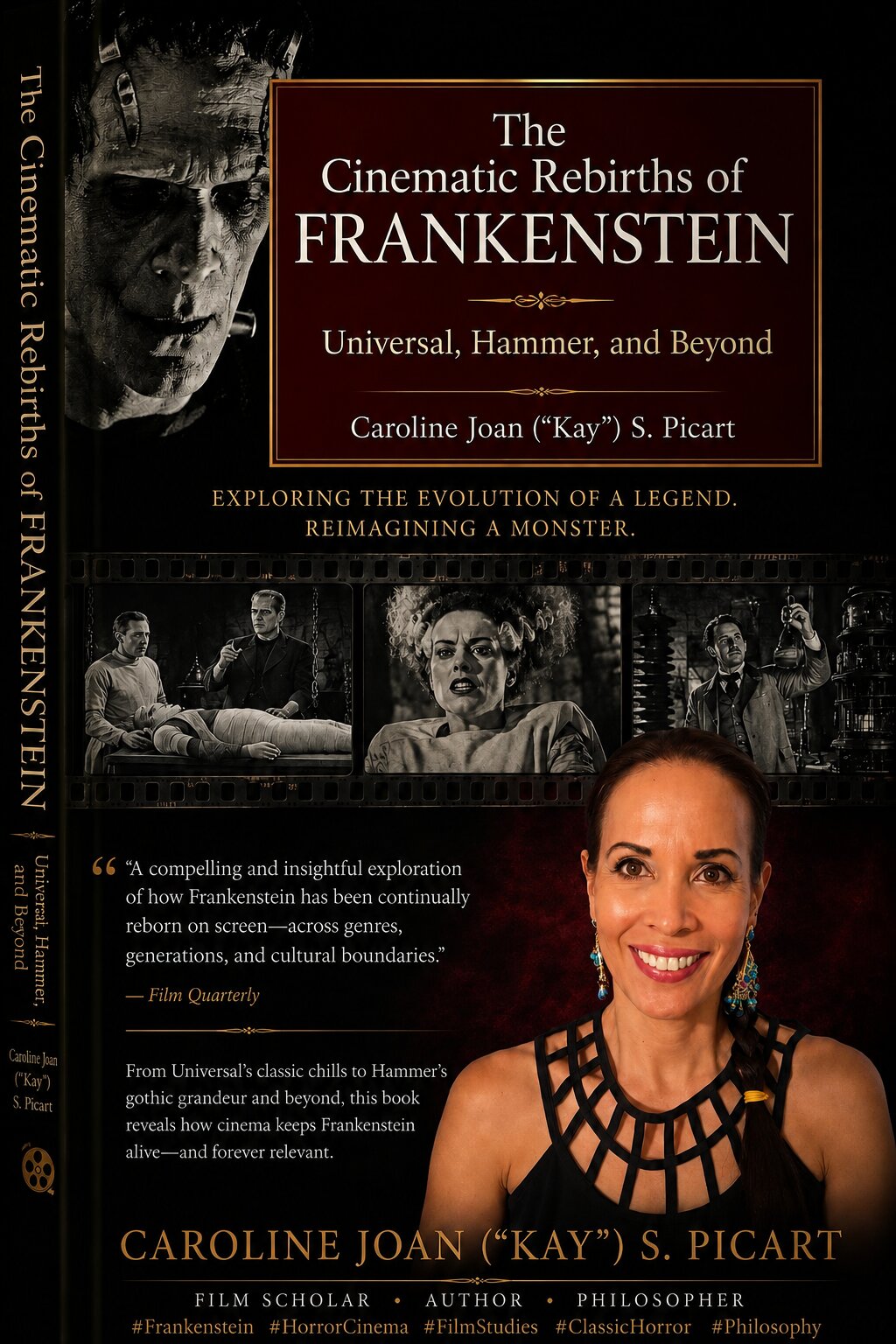
- The Cinematic Rebirths of Frankenstein: Universal, Hammer, and Beyond by Caroline Joan S. Picart (Review by The Books Cafe, October 2025)
- The Cinematic Rebirths of Frankenstein serves as an insightful and intricately layered analysis of how a singular myth—Mary Shelley’s Frankenstein—has persistently transformed to embody the essence of each cinematic period. Instead of merely tracking the monster’s visual changes over the years, Picart explores the cultural, philosophical, and aesthetic currents that sustain the narrative in our shared consciousness. From the groundbreaking Universal films of the 1930s, featuring Boris Karloff’s iconic performance, to the lush Gothic productions of Hammer Studios and the psychologically nuanced adaptations of contemporary times, Picart meticulously charts Frankenstein’s continual evolution with both accuracy and creativity. Each version, she posits, transcends a mere reimagining of Shelley’s text, serving instead as a mirror to evolving societal fears—concerning science, ethics, sexuality, and the delicate line separating the human from the inhuman. What distinguishes Picart’s analysis is its breadth and integration. She navigates seamlessly through classical mythology, cinematic evolution, psychoanalytic perspectives, and cultural critique. By drawing connections between the myth of Frankenstein’s forbidden creation and ancient narratives such as the rebirth of Dionysus, she uncovers how humanity’s intrigue with transgression and change predates the advent of cinema. Her interdisciplinary approach enables readers to perceive the Frankenstein myth not as a fixed horror story, but as a dynamic philosophical discourse regarding the implications of creating life—and the act of playing god. Picart also meticulously considers the tangible aspects of filmmaking—production limitations, visual aesthetics, marketing approaches—demonstrating how both industrial and artistic decisions influence cultural significance.
- The Cinematic Rebirths of Frankenstein: Universal, Hammer, and Beyond by Caroline Joan S. Picart (Review by Kindle Library, August 2025)
- Caroline Picart’s The Cinematic Rebirths of Frankenstein offers an expansive and insightful exploration of one of cinema’s most enduring narratives. From the haunting black-and-white world of James Whale’s Frankenstein (1931) to Kenneth Branagh’s ambitious Mary Shelley’s Frankenstein (1994), Picart traces the many reincarnations of the monster and his maker, showing how each generation reshapes the tale to reflect its own fears and desires. What sets this study apart is its ability to weave together aesthetic, cultural, psychological, and mythic perspectives into a cohesive whole. Rather than viewing Frankenstein films simply as horror entertainment, Picart positions them as cultural mirrors—texts that reveal anxieties about gender roles, racial difference, and the unsettling power of science and technology. By linking the cinematic narrative back to ancient mythology, beginning with the tale of Dionysus’s unusual birth from the thigh of Zeus, she underscores the timeless resonance of creation myths and their darker implications. The book covers a remarkable range: the iconic Universal classics of the 1930s, the vivid Gothic reimaginings of Hammer Studios in the 1950s and 1960s, and the later interpretations that blur the lines between horror, science fiction, and psychological drama. Picart draws on primary materials such as scripts, posters, and production histories, grounding her analysis in the lived realities of film production while still offering rigorous scholarly critique. One of the book’s strengths lies in its accessibility. It moves seamlessly between academic insight and popular commentary, making it engaging for both scholars of film and casual enthusiasts of the Frankenstein myth. Each chapter reminds us that Frankenstein is more than a monster story—it is a cultural canvas onto which each era projects its own questions about creation, morality, and humanity’s limits. With depth and clarity, The Cinematic Rebirths of Frankenstein demonstrates why this tale continues to be reborn on screen.
- Review by: Robert E. Terrill, "Visioning
Frankenstein: Rebirth and Reanimation," The Review of Communication
3.1 (January 2003): 94-98
- "Frank-in-Books" Frankenstein Bibliography:
- Amazon.com listing: http://www.amazon.com/gp/product/0313313504/...
- Stetson Library Frankenstein Bibliography:
- Eastern Illinois University- Frankenstein Resources: http://www.library.eiu.edu/exhibits/frankenstein/resources/
- Arizona Health Sciences Library Frankenstein Reading List: http://www.ahsl.arizona.edu/frankenstein/reading-list-adult.htm
- Baylor Library Frankenstein Bibliography:
- Latrobe University Further Reading for Genre Studies
- Picart, Caroline J. S., Jayne Blodgett and Frank Smoot. A Frankenstein Film Sourcebook. Westport, CT and London, England: Greenwood, 2001.
- Cinematic Video Trailer 1 | Cinematic Video Trailer 2
- Podcast on the Cinematic Rebirths of Frankenstein: Universal, Hammer and Beyond, The Frankenstein Film Sourcebook, and Remaking the Frankenstein Myth on Film. Direct Link
-
- The Frankenstein Film Sourcebook by Caroline S. Picart, Frank Smoot & Jayne Blodgett (Review by The Books Cafe, October 2025)
- Charting the Cinematic Journey of a Monster The Frankenstein Film Sourcebook is recognized as one of the most thorough and captivating investigations into Mary Shelley’s timeless creation throughout the global cinematic landscape. Co-written by Caroline S. Picart, Frank Smoot, and Jayne Blodgett, this significant reference work connects the realms of academic inquiry and popular appreciation, providing a definitive resource on the evolution of Frankenstein’s creature in film, culture, and imagination. Spanning over 200 films—from Universal’s classic black-and-white features to innovative reinterpretations such as The Rocky Horror Picture Show, Blade Runner, The Terminator, and Alien—the book illustrates how Shelley’s myth has consistently adapted to emerging technologies, societal fears, and artistic perspectives. Each entry is accompanied by comprehensive production notes, information about the cast and crew, and succinct plot summaries, while the inclusion of archival materials like posters, scripts, and historical documents offers readers a genuine insight into cinematic history. What distinguishes this volume from a simple catalog is its analytical depth. Interspersed with essays and thematic explorations, the book delves into recurring themes of creation, identity, and monstrosity. Picart’s insights on gender are especially enlightening, highlighting how female characters—often sidelined in Frankenstein narratives—bring to light profound questions regarding power, authorship, and empathy. The Frankenstein Film Sourcebook excels as both a practical reference and an intellectual exploration. It traces the ways in which Shelley’s 19th-century nightmare has been persistently redefined by each generation’s apprehensions about science, morality, and the human experience. By merging rigorous scholarship with engaging storytelling, Picart and her co-authors honor Frankenstein’s monster not merely as a static symbol of horror, but as a dynamic metaphor for humanity’s unending quest for creation and self-understanding.
- The Frankenstein Film Sourcebook by Caroline S Picart, Frank Smoot and Jayne Blodgett (Review by Kindle Library, July 2025)
- A comprehensive cinematic exploration of a monster’s transformation across various genres, cultures, and eras. Caroline Picart’s The Frankenstein Film Sourcebook serves as an indispensable resource for those who are enthusiastic about film, horror, and the lasting impact of Mary Shelley’s legendary creature. This work transcends a mere catalog; it connects academic research with popular culture, providing both casual viewers and scholarly researchers with an expansive perspective on Frankenstein’s filmic evolution. Spanning over 200 films—from the classic black-and-white productions of Universal Studios to innovative reinterpretations such as The Rocky Horror Picture Show and science fiction adaptations in the Alien and Terminator series—Picart illustrates the Frankenstein myth as a dynamic symbol, influenced by time, culture, and artistic medium. Each entry features essential information including cast, crew, plot summaries, and production notes, while the addition of scripts, posters, and historical documents enriches the authenticity and depth of the work. What distinguishes this book is its incorporation of focused essays and thematic critiques, which delve into issues of gender, identity, and the shifting perceptions of monstrosity. Picart’s examination of the portrayal of women, in particular, offers a novel and pertinent viewpoint on traditional narratives that frequently highlight male creators and their creations. Whether you are a film historian, a horror aficionado, or investigating the evolution of cultural myths on screen, The Frankenstein Film Sourcebook serves as both a reference guide and a source of enlightenment. It honors the monster not as a static entity, but as a vibrant, cinematic reflection of humanity’s most profound fears and aspirations—thorough, insightful, and meticulously researched from beginning to end.
- Review by: Robert E. Terrill, "Visioning Frankenstein: Rebirth and Reanimation," The Review of Communication 3.1 (January 2003): 94-98
- Newswise Article on this Publication
- ST. LOUIS PUBLIC LIBRARY: PREMIER LIBRARY SOURCES: Frankenstein Bibliography
- Picart, Caroline J.S. Resentment and "the Feminine" in Nietzsche's Politico-Aesthetics. State College, Pennsylvania: The Pennsylvania State University Press, 1999. Nominated for Second American Philosophical Association Book Prize for Younger Scholars; the American Metaphysical Society, John Findlay Prize; and a Current Research Session, Society for Phenomenology and Existential Philosophy, (2001 and 2002).
- Cinematic Trailer Video Part 1 | Cinematic Trailer Video Part 2 | Cinematic Trailer Video Part 3 | Cinematic Trailer Video Part 4 | User Generated Content 1 | User Generated Content 2
- Podcast on Resentment and the Feminine in Nietzsche's Politico-Aesthetics and Thomas Mann and Friedrich Nietzsche: Eroticism, Death, Music and Laughter. Direct Link
-
- Resentment and the ‘Feminine’ in Nietzsche’s Politico-Aesthetics by Caroline Joan S. Picart (Review by The Books Cafe, October 2025)
- Unraveling Power, Gender, and Philosophy In Resentment and the ‘Feminine’ in Nietzsche’s Politico-Aesthetics, philosopher Caroline Joan S. Picart presents a remarkably original investigation into one of Nietzsche’s most contentious and philosophically profound aspects—his approach to the concept of the “feminine.” Long regarded as either misogynistic or ironic, Nietzsche’s comments regarding women have frequently been interpreted in a simplistic manner. However, Picart refrains from both justification and condemnation. Instead, she examines what Nietzsche’s evolving conception of the “feminine” discloses about his wider political, aesthetic, and emotional context. Employing a genealogical approach, Picart delineates Nietzsche’s changing representations of mythic femininity—from creative and life-giving figures to hostile, destructive ones—aligning these shifts with the philosopher’s increasing awareness of ressentiment. She effectively connects these symbolic transformations to Nietzsche’s personal solitude, artistic disappointments, and escalating disenchantment with modernity, illustrating how gendered imagery serves as a reflection of his philosophical conflicts. What distinguishes this study is its commitment to avoiding the reduction of Nietzsche to a mere caricature. Picart contextualizes his discourse on the “feminine” within a broader critique of power, art, and culture, uncovering how his gender metaphors intertwine with his political aesthetics. Her examination reveals the nuanced ways in which philosophical language can perpetuate exclusionary structures, even as it seeks to overcome them. Richly detailed, elegantly composed, and thoroughly reasoned, Resentment and the ‘Feminine’ in Nietzsche’s Politico-Aesthetics serves as both a critique and a reconstruction. Picart does not simply highlight Nietzsche’s contradictions—she transforms them into a framework for exploring how resentment functions at the core of contemporary thought. For scholars engaged in continental philosophy, gender theory, and aesthetics, this book is an essential contribution.
- Resentment and the ‘Feminine’ in Nietzsche’s Politico-Aesthetics by Caroline Joan S. Picart (Review by Kindle Library, July 2025)
- Philosopher Caroline Joan S. Picart examines one of the most contentious and intricate elements of Nietzsche’s oeuvre in Resentment and the ‘Feminine’ in Nietzsche’s Politico-Aesthetics. Nietzsche’s perspectives on women have historically ignited discussions—often dismissed as misogynistic or defended as ironic—yet Picart adopts a distinct approach. She steers clear of simplistic evaluations and instead probes into what Nietzsche’s shifting application of the ‘feminine’ discloses about his overarching political and aesthetic ideologies. Employing a genealogical approach, Picart traces Nietzsche’s symbolic employment of mythological feminine archetypes—from initial links to regeneration and creativity to progressively antagonistic portrayals that surface in his later writings. The intellectual allure of this book lies in its positioning of these transformations not merely as philosophical oddities, but as integral to Nietzsche’s intensifying resentment—a resentment connected to his personal setbacks, solitude, and disenchantment with modernity. Instead of labeling Nietzsche as merely misogynistic, Picart investigates how his philosophical engagement with femininity intertwines with his wider political concerns and cultural critiques. The outcome is a sophisticated depiction of a thinker whose own conflict with modernity reflects the symbolic aggression directed at the ‘feminine’ in his texts. Picart’s writing is both academic and meticulous, encouraging readers to engage in a critical examination not only of Nietzsche but also of how philosophy itself can embody gendered power dynamics. This book is particularly essential for scholars in gender studies, continental philosophy, and political aesthetics. Resentment and the ‘Feminine’ transcends a mere critique of Nietzsche’s sexism—it serves as a profound inquiry into how philosophy shapes meaning through metaphor and exclusion. It comes highly recommended for those seeking to delve into Nietzsche beyond the surface.
- Review by: Paul Kingsbury, "Resentment and the 'Feminine' in Nietzsche's Politico-Aesthetics," Fall 2000, Vol. 00, No. 1.
- Review by: Thomas Leddy, Journal of Aesthetics and Art Criticism, Volume 61, Number 4, October 2003, pp. 425-428(4);
- Picart, Caroline J. S. Thomas Mann and Friedrich Nietzsche: Eroticism, Death, Music and Laughter. Amsterdam, Netherlands and Atlanta, Georgia: Rodopi (Value Inquiry Book Series), 1999. Nominated for Second American Philosophical Association Book Prize for Younger Scholars.
- Cinematic Trailer Video 1 | Cinematic Trailer Video 2 | Cinematic Trailer Video 3 | User Generated Content
- Podcast with Mr. Speaker Speaks on Resentment and the Feminine in Nietzsche's Politico-Aesthetics and Thomas Mann and Friedrich Nietzsche: Eroticism, Death, Music and Laughter. Direct Link
-
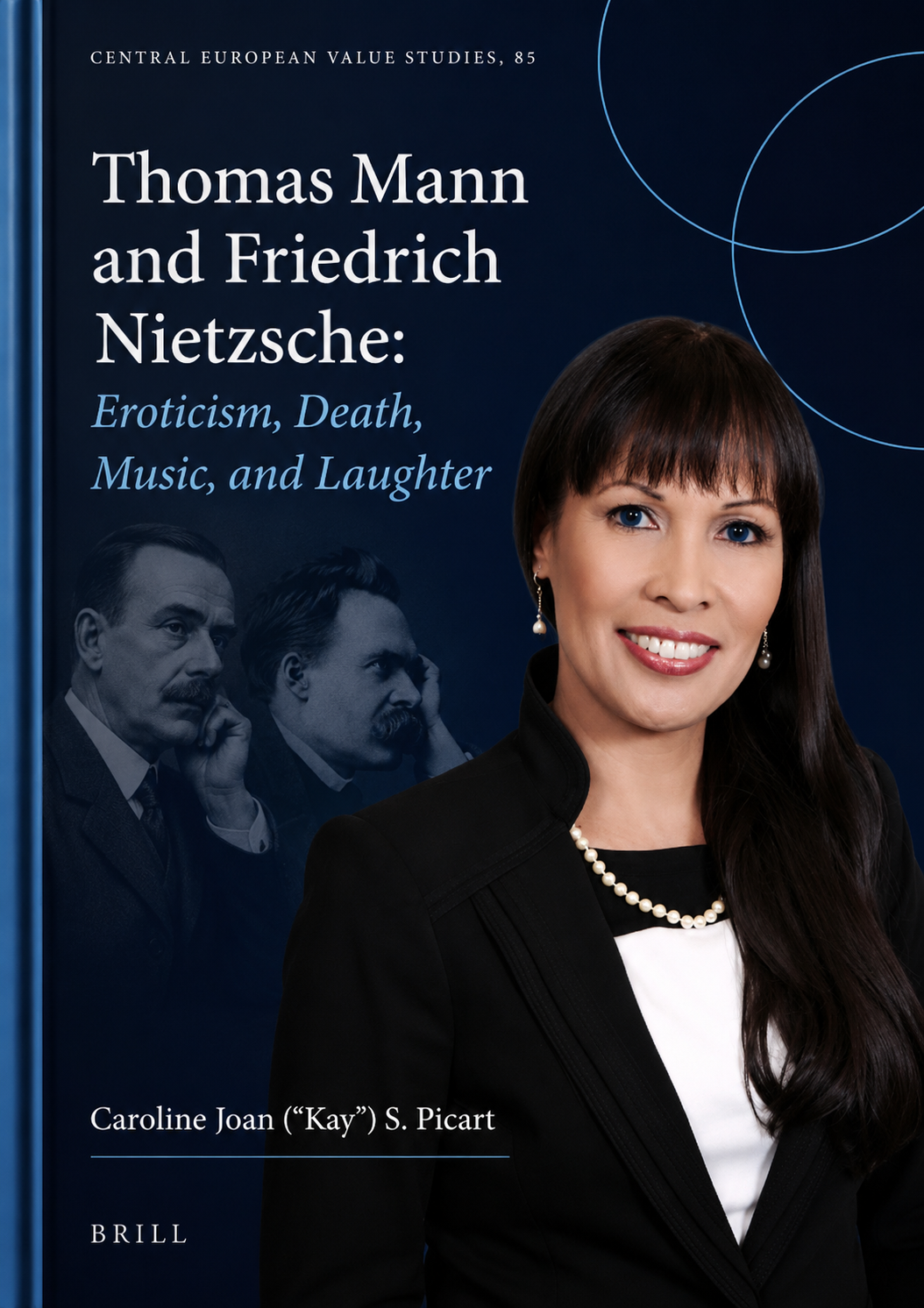
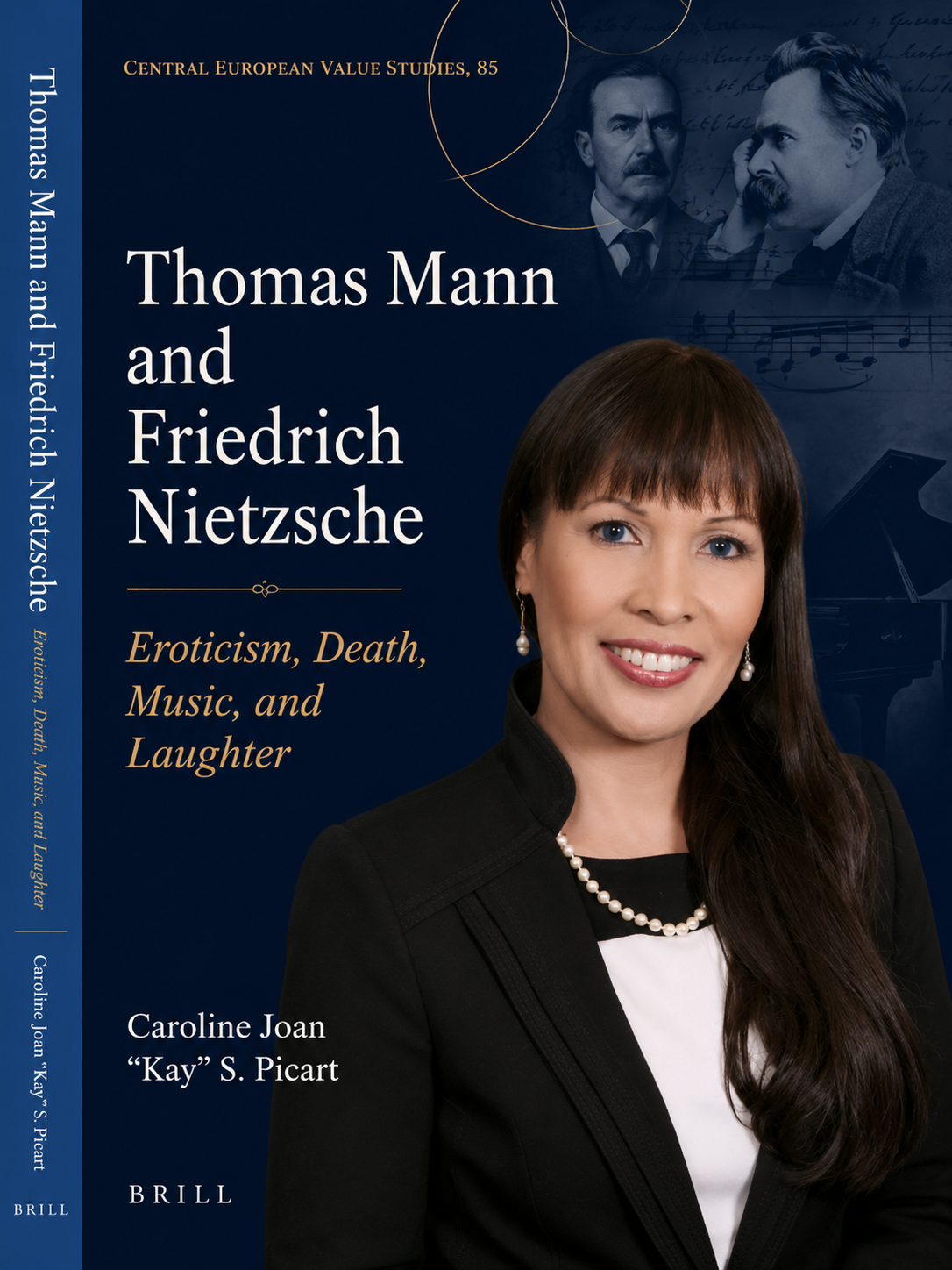
- Thomas Mann and Friedrich Nietzsche: Eroticism, Death, Music, and Laughter by Caroline Joan S. Picart (Review by The Books Cafe, October 2025)
- In her work, Thomas Mann and Friedrich Nietzsche: Eroticism, Death, Music, and Laughter, Caroline S. Picart undertakes a sophisticated intellectual investigation of two giants of contemporary thought—one a philosopher known for his concept of creative destruction, the other a novelist characterized by moral intricacy. Through a refined and profoundly interdisciplinary approach, Picart uncovers how Nietzsche’s revolutionary concepts regarding art, sensuality, and transcendence resonate throughout Mann’s literary creations, influencing their philosophical conflicts and emotional richness. Instead of viewing Nietzsche’s impact on Mann as straightforward or instructional, Picart presents it as a conversation—an elaborate, frequently ambiguous interaction between artistic spirit and philosophical challenge. She illustrates how Mann both embraces and resists Nietzschean philosophy: attracted to its energy, irony, and life-affirming qualities, yet cautious of its perilous charm and its capacity to erode moral limits. This duality, Picart contends, is pivotal to Mann’s artistic journey—it energizes the dialectical force that drives his narratives. Each of Nietzsche’s significant themes—eroticism, death, music, and laughter—acts as a framework through which Picart analyzes Mann’s creative expression. Eroticism emerges as a realm of both freedom and trepidation; death, a confrontation with the limits of existence that paradoxically unveils vitality; music, a representation of transcendence that also invites disintegration; and laughter, the Nietzschean act of defiance against gravity and restraint. By exploring these persistent motifs, Picart sheds light on the conflict between artistic liberty and moral accountability that characterizes Mann’s modernist vision. The book’s primary strength resides in its capacity to integrate literary critique with philosophical exploration. Picart transitions seamlessly between detailed textual analysis and conceptual integration, clarifying intricate ideas without diminishing their significance.
- Thomas Mann and Friedrich Nietzsche: Eroticism, Death, Music, and Laughter by Caroline Joan S. Picart (Review by Kindle Library, August 2025)
- Caroline S. Picart’s work, Thomas Mann and Friedrich Nietzsche, provides a comprehensive and intricate examination of how one of the most significant writers of the twentieth century engaged with the intellectual heritage of one of its most challenging philosophers. By following Nietzsche’s motifs of eroticism, death, music, and laughter throughout Mann’s literary creations, Picart illuminates the intricate dialogue—part legacy, part opposition—that influenced Mann’s political artistry. At its essence, the book addresses ambivalence: Mann’s admiration for Nietzsche’s poetic genius juxtaposed with his desire to distance himself from its potentially destabilizing extremes. Picart uncovers how Nietzsche’s celebration of life, sensuality, and irony permeates Mann’s narratives, even as Mann endeavors to transform these impulses into more measured, politically aware stories. This conflict between inspiration and rejection becomes a hallmark of Mann’s artistic expression. Picart’s critique is both literary and philosophical in nature. She explores Mann’s portrayal of sexuality and desire as realms where Nietzsche’s impact is evident, albeit frequently tempered by Mann’s own prudence and ambivalence. Themes of death and music also arise as pivotal elements—domains of both elevation and peril—while laughter, in its Nietzschean interpretation, serves as a symbol of defiance against gravity and tradition. The study’s appeal lies in its capacity to transcend mere influence mapping. Picart offers a vibrant depiction of dialogue, wherein Mann both perpetuates and renounces Nietzsche’s poetic legacy. The outcome is not merely a depiction of Mann in Nietzsche’s shadow, but also a profound insight into how modernism itself contended with issues of authority, ethics, and the artist’s role in a fragmented society. Intellectually rigorous yet approachable, Thomas Mann and Friedrich Nietzsche is an enriching read for those with an interest in literature, philosophy, or cultural history.
- Review by: Debra B. Bergoffen, "Thomas Mann and Friedrich Nietzsche: Eroticism, Death, Music, and Language (review)" The Journal of Nietzsche Studies - Issue 25, Spring 2003, pp. 92-93. Penn State University Press
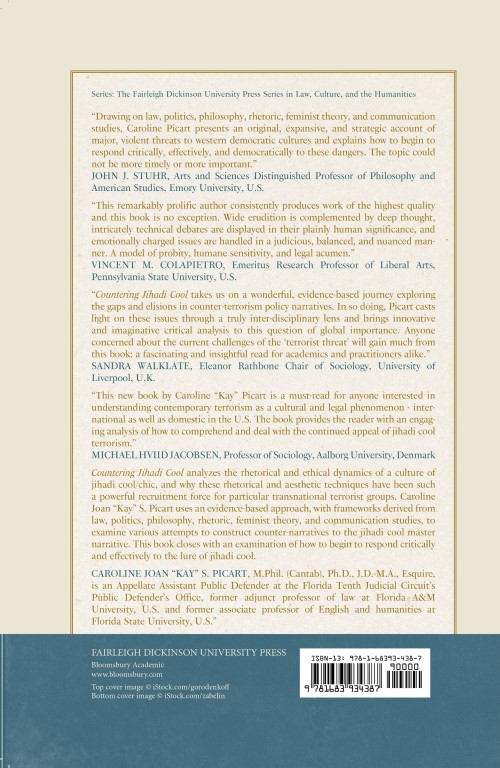
January 2013 issue of Choice (the review publication of the ALA):
Picart and Browning's book is a learned and, in places, intriguing study of monsters, with an emphasis on motion pictures, by established authorities in various fields. The editors divide the pieces more or less evenly into seven sections: "General Theories of Monstrosity" (five essays, including an extract from Stephen Prince's "Dread, Taboo and The Thing," first published in Wide Angle, 1988); "Teratologies of Nationality and Race" (three essays); "In between Fear and Desire" (three); "Queer Theory and Boundary Crossings" (two essays, one of them Judith [Jack] Halberstam's "Seed of Chucky: Transbiology and the Horror Flick"); "Criminology, Law, and Teratologies: Between the Real and the Reel" (four essays); "The Biological Monstrous and Gender: The Human-Animal-Machine Divides" (four); and " Teratologies and Ethics" (three, e.g., an extract from Dominick LaCapra's "Reopening the Question of the Human and the Animal"). The varied choice of authors and subjects leaves nothing to be desired. In addition, a 14-page bibliography, a 13-page index, and notes on contributors add an appropriate finish to this valuable resource. Summing Up: Recommended. Upper-division undergraduates, graduate students, researchers/faculty, and professionals. -- R. Blackwood, emeritus, City Colleges of Chicago
Review by: Adrian Del Caro, "Resentment and the "Feminine" in Nietzsche's Politico-Aesthetics (review)," The Journal of Nietzsche Studies - Issue 25, Spring 2003, pp. 103-105. Penn State University Press.
Books Used for Teaching:
- McKahan, Jason, Picart, Caroline J.S., Thompson, Gregory J. and Field, Kathryn. Multicultural Dimensions of Film: A Reader. 7th Ed. NY: McGraw-Hill, 2001. ISBN: 0-07-251446-9 (Student's Edition and Teacher's Edition, which include companion CDs), July, 2001.
- Picart, Caroline J.S. The Darwinian Shift: Kuhn vs. Laudan. Acton, Massachusetts: Copley, 1997.
- Cinematic Trailer Video 1 | Cinematic Trailer Video 2
-
- Picart, Caroline J.S. An Introduction to Philosophy. Acton, Massachusetts: Copley, 1997
Back to Main Menu
Comments: cjpicart@gmail.com